India-Pakistan ceasefire: The crucial role of DGMOs

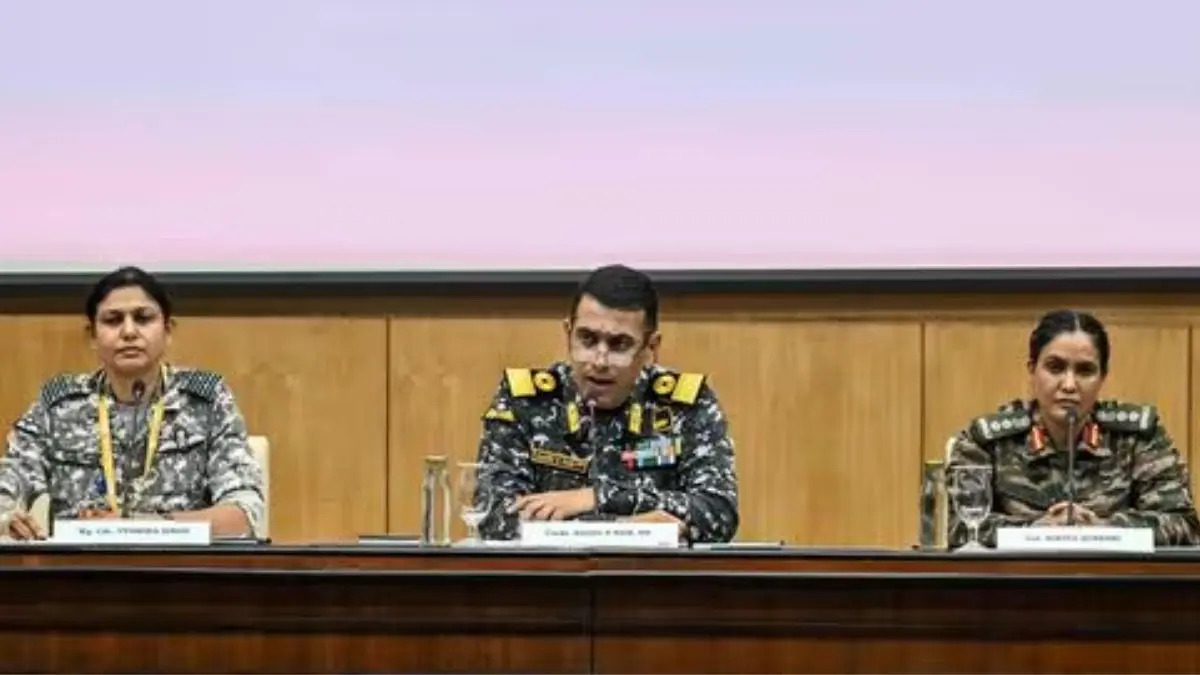
India news: The DGMO officials hold the senior rank in the Indian Army, usually the Lieutenant General, who oversee all the military operations in India and along the country's borders.
India and Pakistan agreed to stop all firing and military action on land, air and sea on Saturday (May 10), said Foreign Secretary Vikram Misri.
"The DGMO (Director General of Military Operations) of Pakistan called the DGMO of India at 15.35 hours earlier this afternoon. It was agreed between them that both sides would stop all firing and military action on land, air and sea with effect from 1700 hours IST," Misri said in a press briefing.
The announcement came after the DGMO of Pakistan contacted the DGMO of India on Saturday afternoon.

However, hours after the decision was announced, Pakistan repeatedly violated the ceasefire ‘arrangement’.
"For the last few hours, there have been repeated violations of the understanding arrived at earlier this evening between the Directors General of Military Operations of India and Pakistan. This is a breach of the understanding arrived at earlier today. The armed forces are giving an adequate and appropriate response to these violations and we take very very serious note of these violations," Misri said.
"We call upon Pakistan to take appropriate steps to address these violations and deal with the situation with seriousness and responsibility. The armed forces are maintaining a strong vigil on the situation. They have been given instructions to deal strongly with any instances of repetition of the violations of the border along the International Border as well as the Line of Control," he added.
Who are the DGMOs?
The DGMO officials hold the senior rank in the Indian Army, usually the Lieutenant General, who oversee all the military operations in India and along the country's borders.
The DGMO functions at the strategic and operational levels within the military hierarchy, reporting directly to the Chief of the Army Staff (COAS).
The current DGMO of the Indian Army is Lieutenant General Rajiv Ghai. He assumed the position on October 25, 2025.
In Pakistan, the rank of DGMO is held by Major General Kashif Abdullah.
The role of DGMO
The DGMO rank holds a crucial position in India's defence strategy, particularly during times of heightened tensions.
This position facilitates direct communication with counterparts in other nations to manage and de-escalate potential conflicts, as seen in the ongoing India-Pakistan tensions following the April 22 Pahalgam terror attack.
The DGMO serves as a key liaison between the armed forces' branches (army, navy, and air force) and other agencies, facilitating joint operations. Additionally, the DGMO coordinates with intelligence agencies to incorporate actionable intelligence into operational planning.
The rank of the DGMO in India manages sensitive border issues, including ceasefire agreements and cross-border tensions.