India loses another cheetah in Kuno National Park, eighth in five months

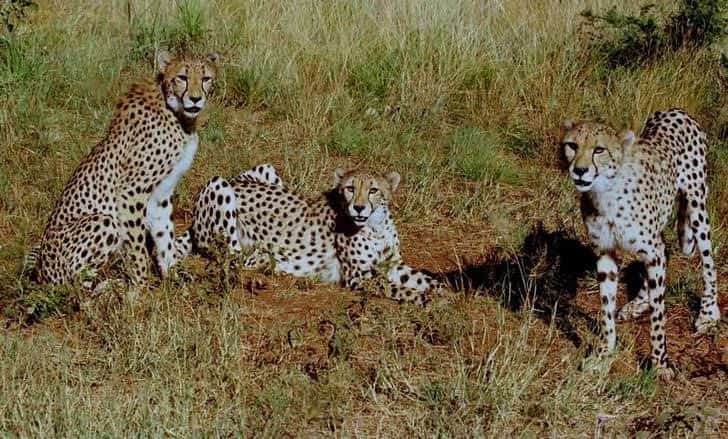
African cheetah
India lost another cheetah that was imported from South Africa to increase its population, making it the eight feline casualty within five months.
The male cheetah named Suraj was found dead by the patrolling team early Friday morning in Kuno National Park in India’s central Madhya Pradesh state.
The authorities are trying to determine how the big cat died.

The casualty comes just two days after the death of another cheetah named Tejas in the same national park. It was later found following the postmortem that the big cat, which was only five-and-a-half years old, had a "traumatic shock" after a violent fight with a female cheetah.
Furthermore, the authorities found that Suraj’s internal organs were in a compromised state, reported the Times of India newspaper.
Eighth death in five months
)
US Supreme Court backs Trump administration's use of SAVE database to check voter citizenship
)
Beijing to Washington! Ivanka Trump makes a style statement in Chinese designer Guo Pei for President Xi Jinping’s White House welcome
)
Heart of the Beast review: Brad Pitt leads a gripping tale of survival and loyalty
)
Outrage erupts after 3-year-old is married to 60-year-old man in Pakistan, link to her sister's murder being probed
)
Pakistan deploys over 20,000 security personnel as PTI vows march for Imran Khan's release
)
‘Not just a local tragedy’: Nepal PM Shah warns UN of growing climate threat, says Nepal floods were 'a warning to the world'
)
Asian Games: Shooting spree continues as India win silver in women’s 50m rifle 3P team event
)
India-New Zealand FTA is ‘an expression of trust’, NZ High Commissioner Patrick John Rata says
)
OpenAI AI Agents hacked 4 websites before Hugging Face, researchers reveal
)
Pentagon quietly adds 37 wounded troops to Iran war tally without explaining when or how
&im=FitAndFill=(700,400))
New Friday OTT releases (September 25, 2026): Don’t Be Shy, Hunkkaar: The Roar, Mango Pachcha- 6 movies and TV shows on Netflix, Prime Video and more
)
Yemen's war escalates: Saudi-backed leader calls for general mobilisation against the Houthis
)
‘Attack on Mecca a red line for Pakistan’: Shehbaz Sharif warns Houthis at UN
)
Tesla is preparing something big for Optimus: new Gen 3 models surface in app
)
Bias or safety concerns? Bengaluru CEO says firm will not hire men from UP, Bihar, Rajasthan, MP. Here's why
)
Nigeria Navy moves to boost oil security, tackle crude theft and infrastructure threats
)
Indian diplomat Petal Gahlot raises deteriorating situation in Pakistan-occupied Kashmir in right of reply at UN
)
Scientists detect first radio signals directly from faraway planet
)
‘It is all possible’: Putin weighs next steps on Ukraine talks, rules out Europe conflict
)
10,000 gather in support of 87-year-old forcefully evicted from home of 71 years
)
Trump rejects Iran's 7-day ceasefire proposal as US weighs renewed bombing after midterms: Report
)
Red Sea crisis: Houthis promise not to target European ships; UNSC condemns Saudi attacks
)
Gaza's war turned environmental damage into second crisis
)
Trump-Xi summit wrap: Big pageantry, Iran talks, few major developments and more meetings planned
)
'Making history': Xi Jinping praises Trump as US-China leaders dine at White House
)
'We do not wish to continue. It's America that must choose': Iran president Pezeshkian calls on US to end war
)
India's UN Envoy slams Pakistan: 'They claim security by day, terrorism by night'
)
Bollywood mourns Mushtaq Khan: Sunny Deol, Rajpal Yadav and others pay tribute
)
Myanmar training camp case: US national, 6 Ukrainians allowed to meet their families abroad
)
'FIRST LOOK from inside Noah’s Ark': Researchers share video from inside mysterious mound in Turkey
)
Cindy Crawford’s son Presley Gerber cremated as death probe continues
)
WATCH | As Shehbaz Sharif claims Pakistan’s ‘victory’ during 2025 conflict, Indian diplomat R Srinivas laughs at UN
)
'A terrorist country is asking me that question?': Jaishankar hits back at Pakistani journalist at UN; flags attacks on commercial shipping
)
Army chief reviews operational preparedness along LoC, visits mega eye camp in Tangdhar
&im=FitAndFill=(700,400))
‘Absolutely savage, sickening’: Zelensky slams Russia as daytime strikes kill 5 in Kyiv
)
US court backs Pentagon's decision to exclude Anthropic over Claude AI restrictions
Before this, a female cheetah named Sasha died of kidney ailment on March 27, and a month later on April 23, Uday died of cardio-pulmonary failure.
On May 9, Daksha, a female cheetah, died after a violent interaction with a male during a mating attempt.
On May 25, two cheetah cubs died of "extreme weather conditions and dehydration".
The repeated deaths have thrown a spanner in the works of the central government’s ambitious plan to re-introduce the cheetah population in the country after its native species — the Asiatic cheetah — was declared extinct in 1952.
India's cheetah project in danger?
Subsequently, India imported 8 cheetahs from Namibia and 12 from South Africa.
However, India’s effort to re-populate the cheetah population was viewed with scepticism as biologists had expressed concern that these big cats won't have enough space to roam without being killed by predators or people.
In May, South African wildlife expert Vincent van der Merwe had predicted more cheetah deaths and said that the reintroduction project is going to see an even higher mortality when the cheetahs would try to establish territories and come face to face with leopards and tigers in the park.
At one point, the Asiatic cheetah ranged widely across North Africa, the Middle East, and throughout India. During the Mughal Empire era, tamed cheetahs served as royal hunting companions, coursing after prey on behalf of their masters.
But hunters later turned their weapons on the cheetah itself. Today, just 12 remain in the arid regions of Iran.
(With inputs from agencies)
WATCH WION LIVE HERE