India faces worst rain deficit in 17 years as monsoon begins withdrawal from Rajasthan

&imwidth=600&imheight=450&format=webp&quality=medium "India faces worst rain deficit in 17 years as monsoon begins withdrawal from Rajasthan")
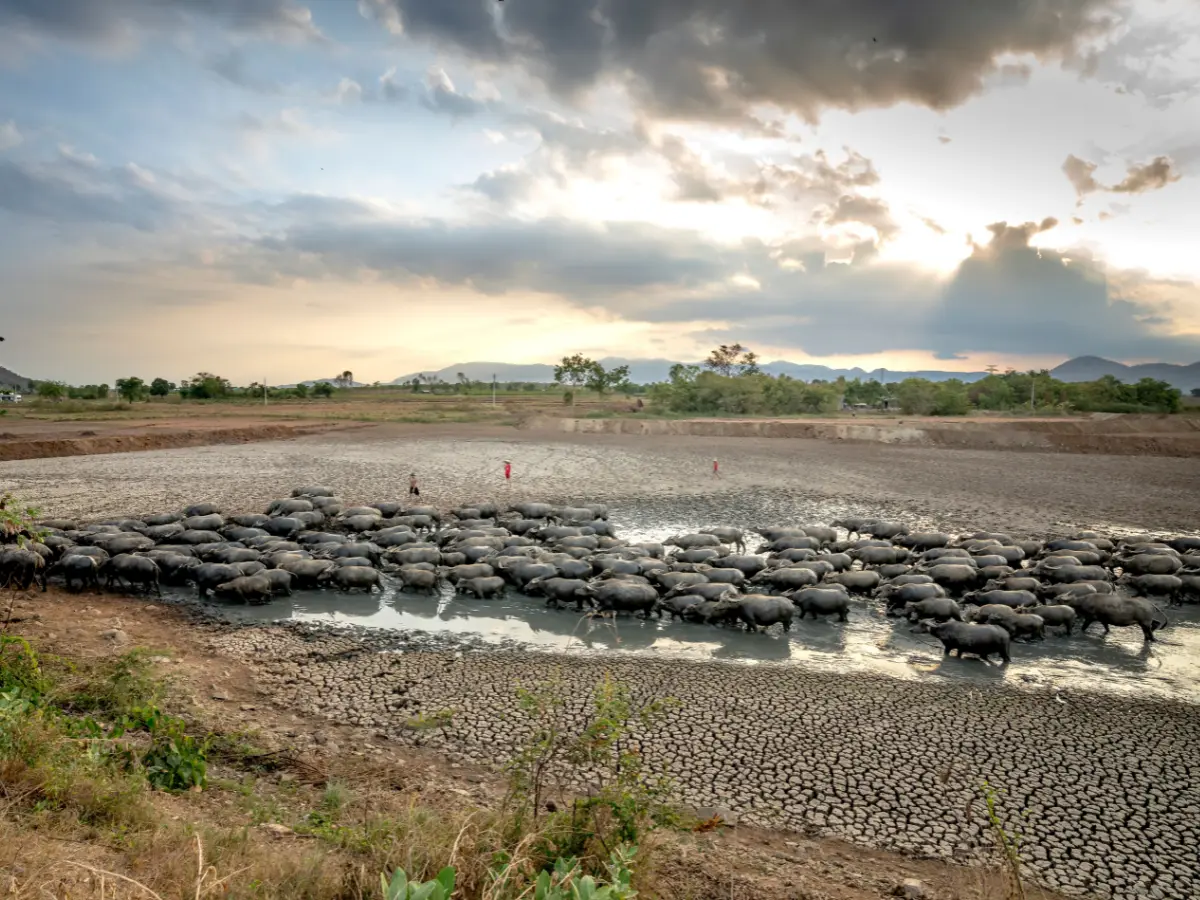
A herd of water buffaloes congregates around a small watering hole in a drought-stricken landscape at sunset. Photograph: (Credit: Pexels/Representative image)
The southwest monsoon has begun withdrawing from West Rajasthan as India faces a ~15% national rainfall deficit, raising concerns over crop stress and the worst drought conditions in 17 years.
The southwest monsoon began withdrawing from parts of extreme west Rajasthan, marking the beginning of the end of monsoon, even as India faces its worst drought in 17 years. The India Meteorological Department (IMD) said the withdrawal began later than the normal date of September 17, and conditions are favourable for it to extend to more areas of Rajasthan and parts of Punjab and Gujarat over the next three to four days.
Driven by a strong El Nino, the countrywide rainfall deficiency for the season stands at 15 per cent, but the southern peninsula is worst hit, with a 28 per cent shortfall. Andhra Pradesh was worst at 43 per cent, followed by Karnataka at 31 per cent, Kerala (28 per cent), Tamil Nadu (22 per cent) and Telangana (21 per cent).
Other states with major deficiencies include Punjab, Bihar, Haryana and Rajasthan. The east and northeast region has a 26 per cent shortage, with Meghalaya, Manipur, Arunachal Pradesh, and Assam worst affected. The monsoon covered the entire country by July 9 after a delayed onset. July was the only month with surplus rain, albeit a small one. June ended with a 35 per cent deficit and August with a 16 per cent shortfall.
India now faces its weakest monsoon and most widespread drought conditions in 17 years, the worst since 2009, when the deficit was 18 per cent. The season traditionally ends on September 30, but withdrawal has been delayed until mid-to-late October in recent years because of changing weather patterns.
Meteorologists said a deep depression will form in the Bay of Bengal next week, bringing rain to coastal states such as Odisha and Andhra Pradesh. Still, it may not make much difference to the national seasonal deficit.
Trending Stories
)
)
)
)
)
)
)
)
)
)
)
)
)
)
)
)
)
)
)
)
)
)
)
)
)
)
)
&im=FitAndFill=(700,400))
)
)
)
)
)
)
)
)
&im=FitAndFill=(700,400))
)
)
The 15 per cent deficit disrupted Kharif sowing, affecting farmers. The season began with extreme delays and a brief recovery in July, followed by a reduction in acreage for crucial food, oil and fibre crops.
What is El Nino?
It is an unusual warming of the Pacific Ocean that disrupts weather patterns across the globe has emerged as the principal reason for the deficit rainfall. This El Nino, according to scientists, is set to be one of the most severe ever recorded.

