Independence Day 2026: How the press became India’s strongest weapon against British rule

&imwidth=600&imheight=450&format=webp&quality=medium "Independence Day 2026: How the press became India’s strongest weapon against British rule")
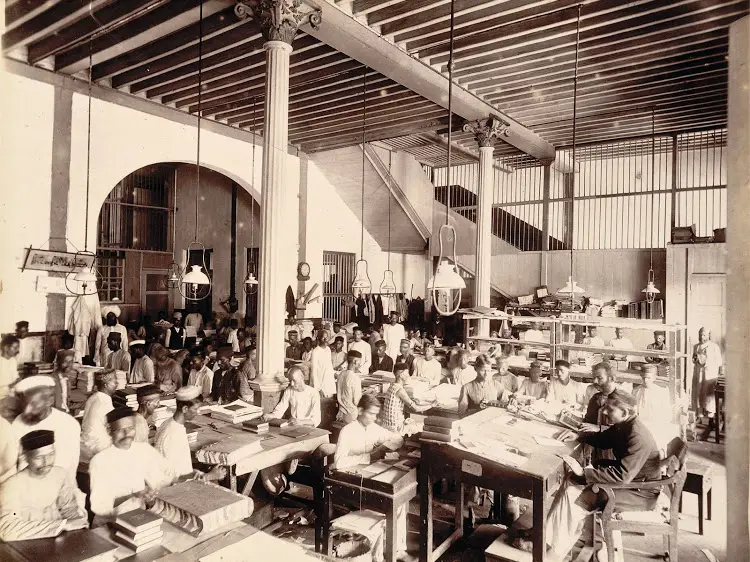
Representative of printing press in 1898 Photograph: (Wikimedia Commons)
On Independence Day 2026, remember how Indian newspapers became a powerful force in the freedom struggle, uniting people, defying British censorship and spreading the idea of independence.
Every Independence Day, the spotlight falls on the leaders who led marches, courted arrest and challenged the British Empire. Less visible, but equally important, were the editors, printers and reporters who turned newspapers into instruments of resistance. As India celebrates Independence Day 2026, the role of the press deserves renewed attention.
Printing the idea of freedom
In an era without television or digital platforms, newspapers carried the message of freedom across provinces, languages and communities. Publications such as Kesari, Young India, Harijan, Amrita Bazar Patrika and The Hindu became platforms where political ideas were debated and colonial policies were questioned.
When Bal Gangadhar Tilak wrote about self-rule or Mahatma Gandhi explained the goals of civil disobedience, their words travelled far beyond public meetings. Newspapers helped ordinary Indians understand that local grievances were part of a larger national struggle.
When journalism became an act of defiance
The British administration treated many Indian newspapers as a threat. Editors were prosecuted, publications were banned, and printing presses were seized. The Vernacular Press Act of 1878 was one of several attempts to curb Indian-language newspapers that criticised colonial rule.
Trending Stories
)
)
)
)
)
)
)
)
)
)
)
)
)
)
)
)
)
)
)
)
)
)
)
)
)
)
)
)
)
)
)
)
)
)
&im=FitAndFill=(700,400))
)
)
)
)
Yet censorship rarely achieved its purpose. Newspapers found new ways to publish, and suppressed voices often returned with greater public support.
A legacy that still matters
The freedom movement needed organisation, communication and public opinion. The press provided all three. It connected Bengal with Maharashtra, Punjab with Madras, and villages with political centres. Reports of arrests, protests and government crackdowns created a shared national consciousness.
As the Tricolour rises on Independence Day 2026, the story of India’s freedom struggle remains incomplete without the story of its newspapers. They did not simply record history. They helped write it, often at great personal cost, and reminded a colonised nation that its voice could never be permanently silenced.

