How scarcity of ventilators could be coronavirus's gateway to India

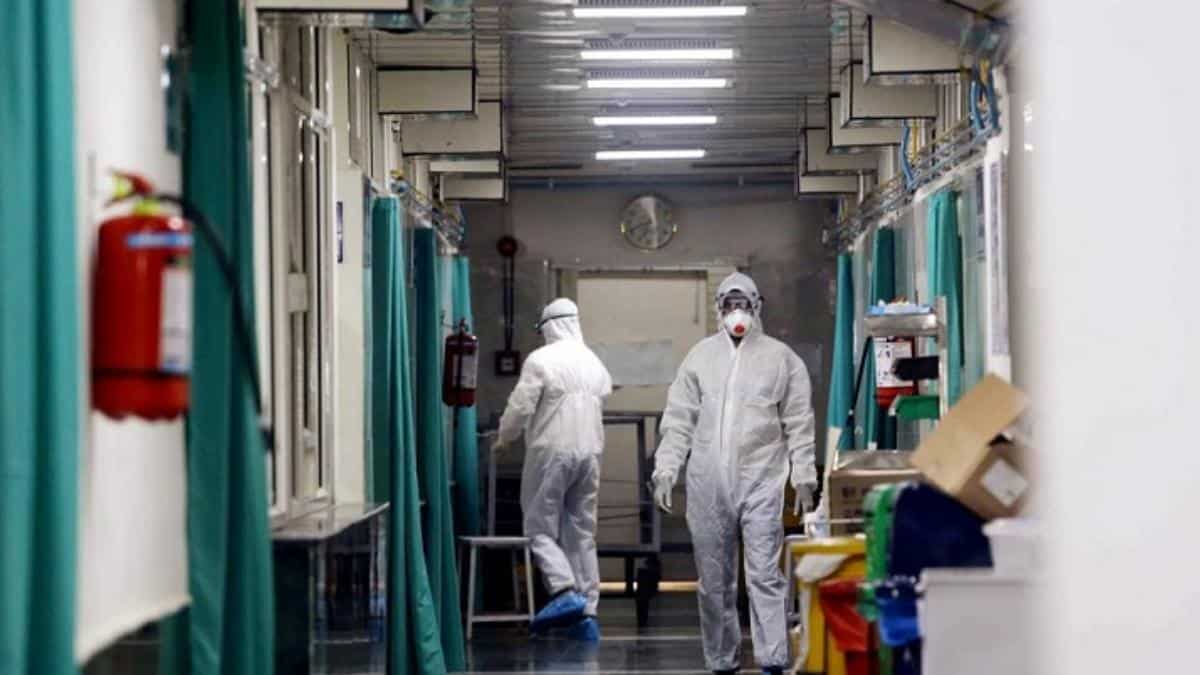
Coronavirus in Delhi
So far, coronavirus-infections in India have not risen to a level where it becomes difficult to control the outbreak. However, India stands at a critical point since the number of cases are spikingby the day and any lapses could have serious consequences.
In a number of cases, coronavirus infects patients' lungs and in such times the availability of ventilators is indispensable. And the situation of ventilators in India doesn't look rosy at all.
Also read |Coronavirus lockdown: Here are some dos and don'ts

Medical experts say that India doesn't have a single indigenous ventilator producer. Ventilators are either imported, partially produced or assembled, reports CNBC TV18. And at a time when countries are battling their own coronavirus crisis, to help other countries is not easy.
Dr Dhruva Chaudhry, the president of the Indian Society of Critical Care, believes that roughly around 40,000 active ventilators are deployed in the country, reports Hindustan Times.
“If there is an unreasonable surge, we will definitely have huge problem. We have 20% the number of ICUs South Korea has as a result of chronic underfunding, "Sujatha Rao, former health secretaryand director-general, National AIDS Control Organisation said.
&imwidth=180&imheight=135&format=webp&quality=medium)
100,000 strikes in 3 years: How October 7 redefined Israel's war
&im=FitAndFill=(700,400)&imwidth=180&imheight=135&format=webp&quality=medium)
Happy Birthday Rekha: Watch these 7 evergreen Bollywood hits on Netflix, Prime Video and more
&imwidth=180&imheight=135&format=webp&quality=medium)
‘Your people don’t even let us near it’: IAF chief’s blunt response on US F-35; India yet to decide on Russia’s Su-57
&imwidth=180&imheight=135&format=webp&quality=medium)
Real or fake? PIB fact-checks protest videos; Delhi Police clarifies on Gurdwara Bangla Sahib clip
&imwidth=180&imheight=135&format=webp&quality=medium)
UK navy hit by espionage scandal: Sailor accused of spying for Russia | Gravitas
&imwidth=180&imheight=135&format=webp&quality=medium)
Delhi on high alert for CJP protest: Delhi police to use body cams to 'prove whether we did anything’; Pink Force, RAF, 35,000 personnel deployed
&imwidth=180&imheight=135&format=webp&quality=medium)
‘Never-ending flow of cheap labour’: JD Vance hits back at Indian-origin Congresswoman over US green card curbs for major tech companies
&imwidth=180&imheight=135&format=webp&quality=medium)
Panama president declares ‘major disaster’ after powerful 7.7-magnitude earthquake; over 80 aftershocks recorded
&imwidth=180&imheight=135&format=webp&quality=medium)
'Jantar Mantar not the story of India': BJP's Sambit Patra claims 'anarchists' tried to hold Delhi captive
&imwidth=180&imheight=135&format=webp&quality=medium)
BJP MP Ravi Shankar Prasad slams CJP protests, calls it 'shadow boxing for AAP'
&imwidth=180&imheight=135&format=webp&quality=medium)
Riyadh airport hit in missile attack, dozens injured; 5 in intensive care
&imwidth=180&imheight=135&format=webp&quality=medium)
'Spent Rs 2,000 cr to elect Trump': Elon Musk bought US President's loyalty by writing the biggest political cheque in human history
&imwidth=180&imheight=135&format=webp&quality=medium)
Powerful 7.7 magnitude earthquake strikes Panama, tsunami warning issued
&imwidth=180&imheight=135&format=webp&quality=medium)
US mid-term elections: What are PACs - Unique American System that lets corporates shape voting
&imwidth=180&imheight=135&format=webp&quality=medium)
Elon musk & India clash over Starlink's market entry terms
&imwidth=180&imheight=135&format=webp&quality=medium)
INDIA bloc plans mega protest on Monday amid Delhi crackdown, Wangchuk's warns to launch 'padyatra'
&imwidth=180&imheight=135&format=webp&quality=medium)
Who is Ajinkya Shinde, announced to lead CJP protest after Dipke, Das and Ranka's detention?
&imwidth=180&imheight=135&format=webp&quality=medium)
'Ouch!!! That must hurt': Kangana Ranaut hails Kamal Haasan's sharp reply to Elon Musk over Starlink row
&imwidth=180&imheight=135&format=webp&quality=medium)
‘Right to protest must be protected, but...’: Delhi Police reveals why it denied CJP permission for October 10 Jantar Mantar protest
&imwidth=180&imheight=135&format=webp&quality=medium)
Hamas used double agents, deceived Israel to carry out October 7 massacre
&imwidth=180&imheight=135&format=webp&quality=medium)
NIA files FIR in Flydubai hijack attempt and attack on Smit Machchhar, probes ‘larger conspiracy’
&imwidth=180&imheight=135&format=webp&quality=medium)
Portugal Federation confirms Cristiano Ronaldo’s return to national team despite suspension
&imwidth=180&imheight=135&format=webp&quality=medium)
All 22 Indian seafarers safe in attack on Panama-flagged tanker off UAE coast
&imwidth=180&imheight=135&format=webp&quality=medium)
‘Time for Ukraine to get a new president’: Trump lashes out at Zelensky over Russia strikes
&im=FitAndFill=(700,400)&imwidth=180&imheight=135&format=webp&quality=medium)
Food shortages, suicide attempts and more: USS Abraham Lincoln returns to US after 321 day deployment — What happened aboard the US carrier?
&imwidth=180&imheight=135&format=webp&quality=medium)
Thai queen becomes first reigning monarch to fly jet solothailand #queen #wion
&imwidth=180&imheight=135&format=webp&quality=medium)
‘Every game against Liverpool is special’: Erling Haaland ahead of Anfield clash
&imwidth=180&imheight=135&format=webp&quality=medium)
Rahul Gandhi calls Modi, Shah ‘cowards’ amid CJP protest crackdown in Delhi
&imwidth=180&imheight=135&format=webp&quality=medium)
Four years, 3 licenses, zero launch: Why is Elon Musk’s Starlink still struggling to crack Indian market? EXPLAINED
&imwidth=180&imheight=135&format=webp&quality=medium)
AUS vs SA 1st Test, Day 2: Renshaw shines with 190 as Australia dominate South Africa
&imwidth=180&imheight=135&format=webp&quality=medium)
Why was CJP founder Abhijeet Dipke detained? What Delhi Police said
&imwidth=180&imheight=135&format=webp&quality=medium)
Putin conveys Iran’s proposal to Trump, offers to take Tehran’s enriched uranium
&imwidth=180&imheight=135&format=webp&quality=medium)
'It’s been 12 hours': CJP writes to Delhi Police, demands release of Dipke, Saurav Das and Ranka
The figures from China say that in 5 per cent of COVID-19 cases, ventilator support in ICU was required.
One of the reasons for the high number of coronavirus deaths in Iran and Italy is the lack of ICUs.
To address the crisis, India has banned exports of ventilators and cancelled elective surgeries so that ICU beds can be used in emergency cases.
However, having enough ventilators is not the only solution to the crisis, according to Dr. Chaudhry.
“It’s a more complex issue than simply buying a machine. You need to train nurses and ensure continuum of care. If you factor in shifts, one unit of ventilators needs at least four nurses and five units need four resident doctors for round-the-clock care. Most government hospitals work at half the strength at any given time,'' Dr Chaudhry said.
Medical experts also fear that COVID-19 reaching rural areas could have major consequences as those regions lack in efficient medical facilities.
However, some developments have raised hopes.
Anand Mahindra, chief of Mahindra Group, said their organisation would "immediately begin work on how manufacturing facilities can make ventilators".
Gujarat's stent maker SMT is eyeing 3D manufacturing of ventilators.