Girija Devi: The queen of thumri has gone silent

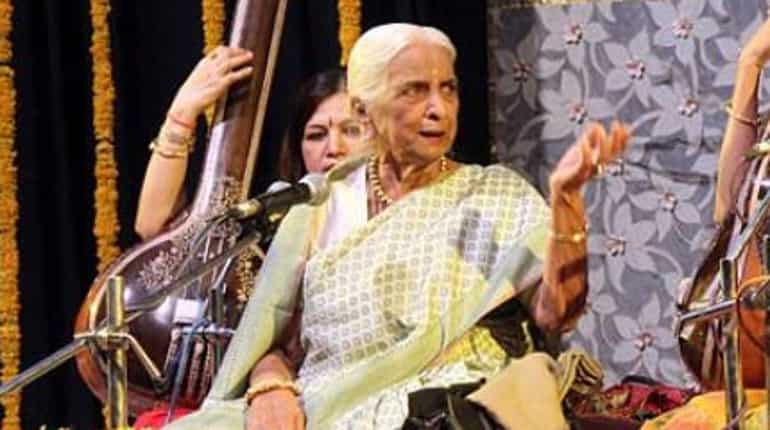
Girija Devi
The confidence and energy that characterised her transition from an older world of patronage and performance to a new milieu of public concerts and institutions made Girija Devi truly magisterial.
The queen of thumri has gone silent. The death of Girija Devi marks yet another poignant moment in the annals of Hindustani music; her life and labors embodied both the extraordinary turns that music itself underwent in course of the twentieth century as well as the spirit of Benarasi musical culture which she identified with very closely.
Born to a zamindar and a devadasi mother, young Girija responded naturally to the talim she received from a number of accomplished teachers. She was trained to specialise in a number of genres, especially the thumri and the dadra.
Like so many of her counterparts who came into the folds of nationalist reform activity and middle-class domesticity, Girija Devi took up music in right earnest and used her own creative imagination to make the thumri her very own medium of expression. In her artistic conception and through her voice, the thumri became more than a genre that was always associated with a particular community and its aural imagination; it was expanded to transform the very soundscape of Hindustani music. Her talim that carried the markers of traditional seni practice and her ability to use the new institutions in independent India, notably the Radio, made her a household name and the most influential exponent of the purab ang thumri.

While her inner artistic life was shaped by the city of Benaras and its rich musical culture her individual personality pushed her to seek new pastures, especially on the public stage. Moving away from private mehfils, she came to dominate the public concert stage in major Indian cities and, thereby, carved a distinct space for the rendering of genres, such as the thumri, dadra, hori, kajari and chaiti all of which had been relegated to the domain of the light classical. This was possible only because Girija Devi comprehended the niceties of language and the layers of meaning in the song texts that she performed.
&imwidth=180&imheight=135&format=webp&quality=medium)
Asian Games 2026: India face Afghanistan in quarterfinal on Sep 28; Pakistan clash with Hong Kong
&imwidth=180&imheight=135&format=webp&quality=medium)
Myanmar training camp case: US national, 6 Ukrainians allowed to meet their families abroad
&imwidth=180&imheight=135&format=webp&quality=medium)
Bigg Boss 20: Salman Khan schools Rhiti Tiwari over Qazi Touqeer clash, compares her to Dolly Bindra
&imwidth=180&imheight=135&format=webp&quality=medium)
Mushtaq Khan dies at 56: When Welcome actor opened up about his salary for iconic role Ballu
&imwidth=180&imheight=135&format=webp&quality=medium)
LPU students go on rampage, vandalise campus amid widespread protest: What's happening
&imwidth=180&imheight=135&format=webp&quality=medium)
'FIRST LOOK from inside Noah’s Ark': Researchers share video from inside mysterious mound in Turkey
&imwidth=180&imheight=135&format=webp&quality=medium)
‘Attack on Mecca a red line for Pakistan’: Shehbaz Sharif warns Houthis at UN
&imwidth=180&imheight=135&format=webp&quality=medium)
Pakistan deploys over 20,000 security personnel as PTI vows march for Imran Khan's release
&imwidth=180&imheight=135&format=webp&quality=medium)
OpenAI AI Agents hacked 4 websites before Hugging Face, researchers reveal
&imwidth=180&imheight=135&format=webp&quality=medium)
'A terrorist country is asking me that question?': Jaishankar hits back at Pakistani journalist at UN; flags attacks on commercial shipping
&imwidth=180&imheight=135&format=webp&quality=medium)
Trump-Xi summit wrap: Big pageantry, Iran talks, few major developments and more meetings planned
&imwidth=180&imheight=135&format=webp&quality=medium)
Did Hitler kill his niece Geli Raubal? Newly found records reopen a 95-year-old mystery
&imwidth=180&imheight=135&format=webp&quality=medium)
Hawaii braces for Hurricane Nolo: NOAA warns of flash flooding and mudslides
&imwidth=180&imheight=135&format=webp&quality=medium)
'What kind of confession is this?': Pakistan PM Shehbaz Sharif’s 'terrorists would be roaming New York' remark goes viral, raises alarm online. Watch
&imwidth=180&imheight=135&format=webp&quality=medium)
US-Iran war: Trump rejects Iran's Hormuz proposal, reports suggest talks expected next week
&imwidth=180&imheight=135&format=webp&quality=medium)
Bollywood x K-pop crossover! LE SSERAFIM’s Kazuha charms fans with Shah Rukh Khan’s ‘Chammak Challo’ steps
&imwidth=180&imheight=135&format=webp&quality=medium)
Gaza's war turned environmental damage into second crisis
&imwidth=180&imheight=135&format=webp&quality=medium)
‘Serial practitioner of terrorism’: Jaishankar calls out Pakistan’s ‘state-sponsored’ terror at UNGA
&imwidth=180&imheight=135&format=webp&quality=medium)
‘It is all possible’: Putin weighs next steps on Ukraine talks, rules out Europe conflict
&imwidth=180&imheight=135&format=webp&quality=medium)
Prince Harry offers rare glimpse into Archie and Lilibet’s life after UK move
&imwidth=180&imheight=135&format=webp&quality=medium)
Nigeria Navy moves to boost oil security, tackle crude theft and infrastructure threats
&imwidth=180&imheight=135&format=webp&quality=medium)
Donald Trump shares image of Xi's arrival in Washington, carries signs of AI
&imwidth=180&imheight=135&format=webp&quality=medium)
Pentagon quietly adds 37 wounded troops to Iran war tally without explaining when or how
&imwidth=180&imheight=135&format=webp&quality=medium)
US court backs Pentagon's decision to exclude Anthropic over Claude AI restrictions
&imwidth=180&imheight=135&format=webp&quality=medium)
US Supreme Court backs Trump administration's use of SAVE database to check voter citizenship
&imwidth=180&imheight=135&format=webp&quality=medium)
‘Could kill billions...’: Bill Gates backs calls to slow AI development amid fears of catastrophe
&imwidth=180&imheight=135&format=webp&quality=medium)
'Countries far from conflict are penalised': Jaishankar calls for Gulf peace, seafarer safety at UN
&imwidth=180&imheight=135&format=webp&quality=medium)
WATCH | As Shehbaz Sharif claims Pakistan’s ‘victory’ during 2025 conflict, Indian diplomat R Srinivas laughs at UN
&imwidth=180&imheight=135&format=webp&quality=medium)
Outrage erupts after 3-year-old is married to 60-year-old man in Pakistan, link to her sister's murder being probed
&im=FitAndFill=(700,400)&imwidth=180&imheight=135&format=webp&quality=medium)
New Friday OTT releases (September 25, 2026): Don’t Be Shy, Hunkkaar: The Roar, Mango Pachcha- 6 movies and TV shows on Netflix, Prime Video and more
&imwidth=180&imheight=135&format=webp&quality=medium)
Global community 'absent' in Gulf crisis: Saudi at UN calls for freedom of navigation, pre war status for Hormuz
&imwidth=180&imheight=135&format=webp&quality=medium)
Farhan, who went viral for AK47 celebration vs India in Asia Cup, hopes to lead Pakistan beyond Asian Games
&imwidth=180&imheight=135&format=webp&quality=medium)
‘I rejected it’: Trump confirms turning down Iran’s proposal to reopen Hormuz, claims Tehran is losing ‘badly’
&imwidth=180&imheight=135&format=webp&quality=medium)
Russia will achieve Ukraine war aims; Europe doing everything to block peace talks: Lavrov at UN
When Girija Devi sang in her full-throated voice ‘ras ke bhare tore nayan’, the listener could not but respond to the rich emotional overtones of the song that blended poetry and music to produce a sensorial feast.
Girija Devi’s tryst with music like so many of her counterparts in the north and the south had a private as well as a public face. She often talked of the enormous support she received from her father and husband but more striking was her experience of an intense practice session in Sarnath. This supposedly gave her an unusual insight into the acoustic elements of music and made her the artist she became.
As a public personality, she was equally at ease – having breached the public domain, as early as 1949 when she performed for the All India Radio in Allahabad, she went on from strength to strength, thrilling listeners and performing in India and overseas. A recipient of several awards, she was a generous teacher and collaborator. She worked closely with the Sangeet Research Academy in Kolkata and the Benaras Hindu University as well as displayed her ability to negotiate very different modes of pedagogy than what she had been used to.
In every sense, Girija Devi was a trendsetter and wore her personality in her voice and imagination. The confidence and energy that characterised her transition from an older world of patronage and performance to a new milieu of public concerts and institutions made Girija Devi truly magisterial. The world of music will miss her –the city of Benaras especially so.