Former president Enkhbayar highlights India's role in Mongolia's economic independence

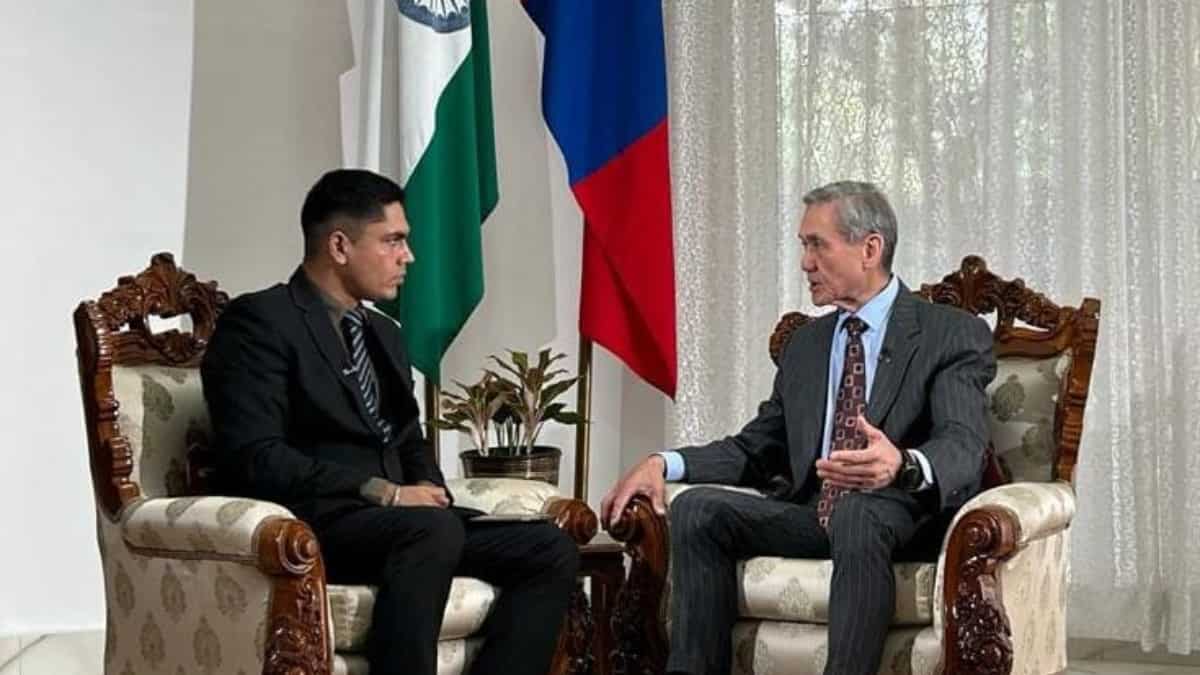
Nambaryn Enkhbayar
Former President of Mongolia, Nambaryn Enkhbayar has praised India's significant contributions to Mongolia's quest for economic self-sufficiency. Speaking to our diplomatic correspondent Sidhant Sibal, Enkhbayar highlighted India's crucial role in bolstering Mongolia's energy sector, citing the provision of a substantial $1.2 billion soft loan for the construction of the country's first oil refinery.
He said, "With the launch of this project, and when they finally start working, we will be much more independent in terms of providing fuel to our industry inside of the country. At the same time, we really appreciate our Indian friends in helping Mongolia innovate. This is, I think, one of the biggest projects any country has carried out in Mongolia."
This initiative aims to reduce Mongolia's reliance on fuel imports from China and Russia, with the refinery set to commence operations in 2025, commemorating the 75th anniversary of diplomatic relations between the two nations.

Enkhbayar, who has held the highest political positions in Mongolia including being the PM and Speaker of the Parliament, emphasised the enduring spiritual connection between the two countries. He characterised India as a "natural third neighbour," drawing attention to their shared history rooted in Buddhism and the potential for comprehensive collaboration in the modern era.
He explained, "We think that India is our spiritual neighbour because of the fact that Buddhism has been adopted in Mongolia as a major religion. So we consider India as a sacred place and special place for every Mongolian to visit". He also spoke on the nation's ties with China and Russia.
WION: What is the key focus during your India visit?
Nambaryn Enkhbayar: Between India and Mongolia we have a centuries-old relationship. We think that India is our spiritual neighbour because of the fact that Buddhism has been adopted in Mongolia as a major religion. So we consider India a sacred place and a special place for every Mongolian to visit. Based on that understanding of India, we think, in the 21st century we should develop comprehensive, all-embracing relationships with India. It goes beyond the spiritual aspect of these relationships. It goes now to economics, education, medicine, and also to security issues. And we try to define these kinds of relationships in terms of having a third neighbour. You know that geographically we have two neighbours, Russia, to the north and China to the south. But we think that in this modern world when everyone depends on each other, the success of any country in the world is not only depending on its own neighbours but also on other countries. We have developed the concept of having a 3rd neighbour. So India is a natural third neighbour, because, we have been in contact with India spiritually for many centuries. And now with the rise of India, India becoming much stronger, both economically, spiritually and also in terms of geopolitics, we think that the 21st century is a good time for us to develop all-embracing relationships. My last official visit was in 2003, when the late Prime Minister Atal Bihari Vajpayee was in office, and invited me, extending hospitality. And we have created the relationships between our two countries to the level of strategic relationships. So it also adds that kind of flavour and colour to our traditional ties. We have signed a lot of important documents. Under the leadership of PM Modi, he was the first ever Prime Minister of India, who visited Mongolia in 2015. And he made a very good gesture. And he made a decision to give a soft loan to Mongolia, 1.2 billion US dollars to build a refinery so that we don't have to depend on Russia or China in having fuel for the industry. With the start of this refinery, which is expected to be in 2025, when we are going to celebrate the 75th anniversary of the establishment of diplomatic relationships between our two countries. So, starting in 2025, Mongolia will be more independent economically and more able to manoeuvre its ability and capacity to somehow not be too dependent on the price of fuel, which is 90% of Russia. So you see, I'm trying to be active in promoting these kinds of relationships. So I'm going to meet here with the foreign minister, who is the Chairman of the Joint government commission, between India and Mongolia. Hope that Mr Jaishankar will visit Mongolia soon which will further develop our very close relationship.
)
‘Kill all in the name of...’: FBI arrests 21-year-old over alleged ISIS-inspired mass-casualty attack plot
)
Space mines, lasers & robotic arms: Lt Gen Pannu decodes US disclosure of weapons in space
)
Bitter Zelensky snubs Trump for playing politics with Ukraine war | Gravitas
)
US fires up to 70 interceptors against Iran attack on Jordan, putting supplies under pressure
)
India’s imports from Russia jump 57% in five months; China remains top import source
)
‘US military task force aiding Saudi Arabia forces with intel, planning support’: Official
)
OpenAI boss Sam Altman repeats AI 'slow down' call, says world 'right to be afraid'
)
Top military commanders from US, Israel, and 7 Arab nations held secret meeting on Iran War
)
Sydney Sweeney defends provocative ad choice, the internet is still not impressed
)
India to host IPL 2027 auction; WPL 2027 auction set for late October in Kochi
)
Shahzad Bhatti Network declared terrorist organisation under UAPA: Govt order
)
'Definitely feel bad for yourself': Kuldeep Yadav opens up on India Test snubs
)
US, China dominate global economy: Where does India rank among the world's biggest economies?
)
Ex-India all-rounder Yuvraj Singh wants India to avoid 'massive changes' before ODI World Cup 2027
)
Ed Sheeran’s US tour loses all support acts after Macklemore’s removal | Controversy explained
)
Ex-England footballer Raheem Sterling pleads guilty in reckless driving and crashing his Lamborghini
)
China's property crisis deepens as investment plunges nearly 20%
)
Messi set to play in farewell match on October 6 in Argentina vs Benin friendly
)
Who was Eliana Moreno? NBC LA aerial reporter killed in Chatsworth crash
)
Putin-linked Russian oligarch, Melania links: Why Trump skipped his son’s Bahamas wedding bash?
)
800 million years old - Scientists discover 'fingerprints' of supercontinent Gondwana in ancient rocks
)
Trump's name cannot return to Kennedy Center, US judge rules
)
Pakistan naval vessel returns to harbour with 'severe damage' after collision with Indian warship in Arabian Sea
)
Water equivalent to two Pacific Oceans could be stashed 2,900 km inside Earth
)
Ex-CIA officer caught with gold bars worth $40 million seeks plea deal | Gravitas
&im=FitAndFill=(700,400))
New OTT releases this week (September 14-20, 2026): Lust Stories 3, Waiting Hai, Irumudi- 5 new titles coming on Netflix, Prime Video and more
)
Trump's Iran war faces fresh House rebuke; 7 Republicans join Democrats in push to end conflict ahead of midterms
)
US Treasury yields cross 5% as Scott Bessent warns of ‘global issues’ impacting bonds
)
Pakistan: Imran Khan's sons Kasim & Sulaiman claim their father is 'tortured' in jail
)
Who is Kalyan Bainsla, accused in the Gurugram hit-and-run case involving woman biker?
)
Saudi Arabia discovers 110 million tonnes of Uranium-rich ore in Madinah region
)
Los Angeles helicopter crash: At least three dead, several injured; NTSB to investigate
)
West Bengal IPS officer Bushra Bano transferred after objections to ‘Assalamualaikum’, ‘Inshallah’
)
India summons top Pakistan diplomat after Pak Navy ship collides with Indian warship at high seas
)
Saudi Arabia accuses Houthis of drone attack on Mecca, first-ever red alert in Islam's holiest site sparks panic
)
'Like a thug you are using agency to go after..': Kash Patel grilled by Senate Democrats over FBI firings, journalist investigations and hiring policy
)
Abhishek Sharma rises to No. 2 in T20Is; ENG’s Robinson 3rd after record Pakistan Tests
)
Canada to become EU’s first ‘associate member’? Von der Leyen proposes move amid US tensions
WION: You are a practising Buddhist; how do you see India's role in spreading Buddhism?
Nambaryn Enkhbayar: India is the country of Buddhism. It strives to remind the world that it is the country of Buddhism. So I think Mr Modi and other leaders of this country are doing quite good and active measures to promote India's status in this regard. I mean organisations in India, of world Buddhist leaders, various meetings that were attended by the Mongolian heads of monasteries. I think it's very important that Buddhism brings us together. Buddhism originated from Hinduism, which is the main religion here. So we feel this special connection to Buddhism and Hinduism between our two countries. I think this brings us to the point when it is so much easier for us to discuss any issue related to our cooperation. So I think Mongolia, being a Buddhist country, where the majority of the people follow Buddhism, is a reliable and good partner for India.
WION: You talked about the oil refinery, this is a major project India is undertaking in your country. How do you see India's infrastructure support in your country? What do you expect from New Delhi when it comes to perhaps more such projects in your country?
Nambaryn Enkhbayar: Well, I think that this is a very important project. I hope that it will be a successful one. As I said earlier, with the launch of this project, and when they finally start working, we will be much more independent in terms of providing fuel to our industry inside of the country. At the same time, we really appreciate our Indian friends in helping Mongolia innovate. This is, I think, one of the biggest projects any country has carried out in Mongolia. So, we want to say that India has shown a good result and other countries may be, we hope that they will be following this good example of a good project, which is aimed at the development of enhancing the development of the country. I would hope that maybe with the possible visit of EAM Dr Jaishankar, we will be starting to talk about 2nd big project. Maybe it could be related to infrastructure or agricultural development or IT cooperation. So there is huge potential for the development of our two countries. Certainly, Mongolia will be the winner and India making its presence in the country valid and visible.
WION: When you started, you mentioned the security cooperation between the two countries, there's defence cooperation as well, exercises nomadic elephant took place just a few weeks ago. How do you see this kind of cooperation in terms of security, in terms of defence taking forward?
Nambaryn Enkhbayar: This has been done for quite a number of years. We have the potential to work in this field and security-wise this cooperation has been successful and important for the 2 countries. The sharing of information, sharing of knowledge and experience. It is very important, and we know Indian friends are also interested in doing this. The concept of 3rd neighbour also includes cooperation in the area of security. It can go and must go to our cooperation within the international organizations, United Nations, and other international organizations, and then we have to support each other because we know that India is a big country. A peace-loving country. India's foreign policy concept is based on dialogue, on discussion, and on resolving any difficult issues. So this is the concept we fully support and we think that this dialogue between our two countries can expand into the dialogue and discussion among other countries. And that will bring good results within the framework of activities.
WION: So talking about another neighbour that is China, how do you see the relationship with China? How do you see their role in perhaps projects in your country? BRI is one project they have been talking about, so how do you see the relationship with Beijing?
Nambaryn Enkhbayar: China is our natural neighbour. So we cannot move out from that place nor China can move out, we will always be neighbours, so that makes us more responsible. We are glad that China is saying that we should take advantage of being our neighbour. And we think that the process of modernization of China, China being on this development process for a certain number of years, quite successfully helps us develop as well. At the same time, any country will be concerned if trade with any other neighbour makes up 90% of our foreign trade. So we want to work towards it, we are selling raw materials, coking coal, copper, whatever we produce, the raw material we produce in China. This is a huge marker. Chinese markets buy our product but at the same time we want to get development and in terms of making the final product, and purchasing those products, India can be a good potential partner. IT technology, new technology, to make this raw material and produce the final product and not only selling to China but to Korea, Japan, to Europe, to the US. Big countries can complement each other. So I think India's relationship with Mongolia is very important and a relationship that will bring our development to the next stage.
WION: So recently, the Dalai Lama identified the reincarnation of a Mongolian spiritual leader. Do you think that will have an implication on the relationship with China? Do you think that China will be angry over this development?
Nambaryn Enkhbayar: Any religious issue, any kind of Spiritual issue if of course, the issue of the internal issue of a given country. In Mongolia, we have this tradition of Buddhism. We had the Three Waves of Buddhism being spread in Mongolia. First through Central Asia, second during the Yuan dynasty when Buddhism was declared as the state religion and later on in the 16th century, we adopted Tibetan Buddhism. So the Tibetan form of Buddhism is one of those forms of Buddhism, which came to Mongolia for all these years, for all these centuries. So I think Buddhism is a religion of peace-loving people, the philosophy based on non-violence, of bringing peace to your own mind and that means that this characteristic of Buddhism also helps to bring peace to the world. I think Mongolia will try to be a good partner for India, China, Japan, and Korea. Buddhism can bring us together and there is no reason for us to fight over religious issues. Religion should bring us together. Buddhism with its peaceful philosophy can bring us together and cooperation in the field of Buddhism will enrich us, our nations.
WION: So my final question to you is about another neighbour. That's Russia. How do you see Russia's ties with Mongolia, the relationship? Also, how do you see the Ukraine conflict impacting your country?
Nambaryn Enkhbayar: Geographically speaking, Ukraine is far away. So it's not easy to say how it impacts us. In our relationships with Russia, of course, sanctions against Russia have been put through international organizations and also through many countries, and we have to follow those sanctions. At the same time, the General public perceives Russia as a good neighbour. Because for the last century, almost 100 years, Russians have been helping us to strengthen our independence, to bring quality education, medical service and doing some good infrastructure projects, like creating roads and building modern cities, and housing projects. So Russia is still perceived by the majority of the people as a good neighbour, as an important neighbour. So in this tragic time, when these wars are going on between Russia and Ukraine, we all pray for peace between those two brotherly countries and brotherly nations. We cannot expect that there will be a winner in this war. There are only losers, unfortunately. So we would like this war to end as quickly as possible, and all the conflicts should be resolved by peaceful means. So this is the position of Mongolia and we want this war to end as soon as possible.
WION: India is the chair of the G20 grouping, which is a mega-economic grouping. We are going to host the summit next month, how do you see India's role when it comes to bringing the voice of the global south to the table?
Nambaryn Enkhbayar: I think it's very important. India is a huge, in fact, the largest democracy. So India's experience on going on the road, on democratic changes, and an independent civilization. So I think India should be leading, global south, other countries onto the world stage. I want to congratulate India on being the host of the G20 and I am quite sure that India will be successful and India's voices heard, India's actions are heard.
WATCH WION LIVE HERE
You can now write for wionews.com and be a part of the community. Share your stories and opinions with us here.