Enforcement Directorate files charges in massive 'pig-butchering' scam in India's Bengaluru

Cyber scam
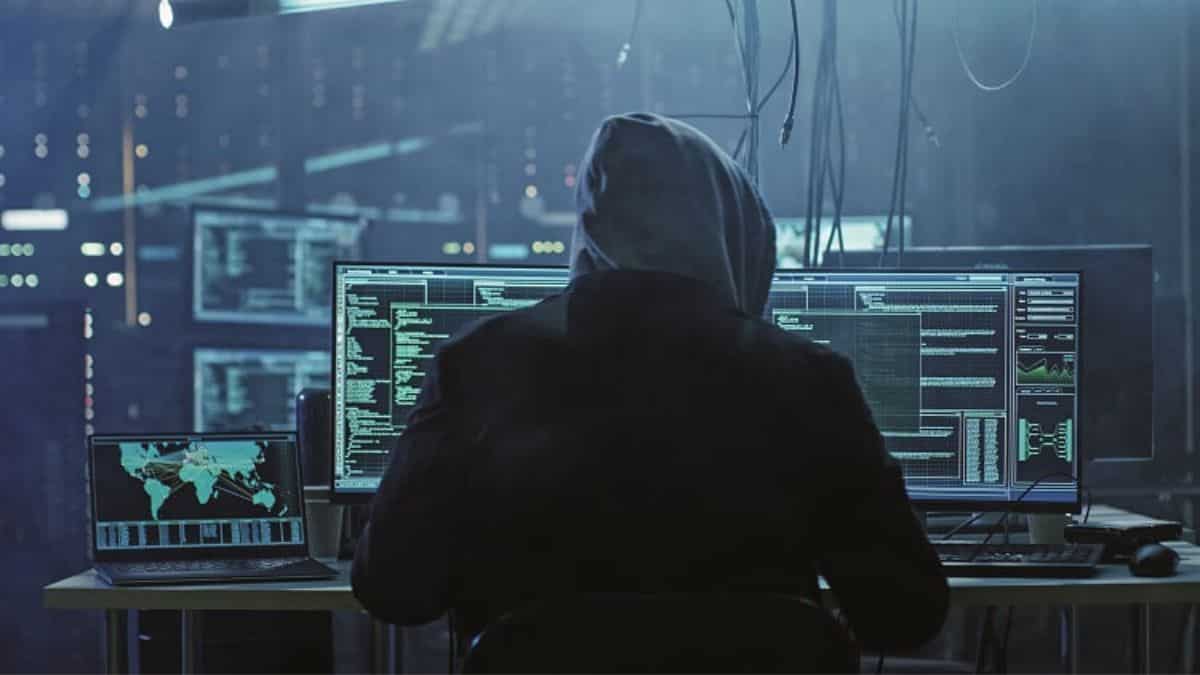
Just days after Indian Prime Minister Narendra Modi warned of 'digital arrests,' the nation's probe agencies have announced that it is ramping up its efforts to combat cyber crimes. The Enforcement Directorate (ED) in a statement on Saturday (Nov 2) announced that it has filed a prosecution complaint against eight individuals in Bengaluru, linked to a widespread scam involving "fake" Initial Public Offerings (IPOs) and deceptive investment applications targetting ordinary citizens.
What ED found
An ED probe has unveiled an extensive network of cyber scams operating within India, predominantly on social media platforms such as Facebook, Instagram, WhatsApp, and Telegram.

"Probe found that a huge network of cyber scams in India, involving fake stock market investments and digital arrest schemes are executed primarily through social media platforms like Facebook, Instagram, WhatsApp, and Telegram," said the ED in a statement.
Alo read |J&K L-G Manoj Sinha calls for strong action against terrorists after grenade blast in Srinagar
"Known as 'pig-butchering' scams, stock market investment scams entice victims with promises of high returns, using fake websites and misleading WhatsApp groups that appear connected to reputable financial firms," it added.
)
Pakistan puts Pak Rs 70 lakh bounty on UN terrorist Masood Azhar; move draws skepticism in Delhi
)
Iran, India agree to deepen humanitarian and political ties, President Pezeshkian says
)
Israeli minister calls to strip Gaza film directors of citizenship
)
Plane carrying prominent figure crashes at Libya’s Misrata airport: Report
&im=FitAndFill=(700,400))
Why European Meteor missiles use ramjet engines compared to standard US solid rockets
)
‘Let’s go’: Newly declassified videos show dramatic rescue of US Air Force officers downed in Iran
)
China thinned Himalayan troop presence in 2025, India defence report says; terms border situation 'stable'
&im=FitAndFill=(700,400))
New OTT releases this week (September 14-20, 2026): Lust Stories 3, Waiting Hai, Irumudi- 5 new titles coming on Netflix, Prime Video and more
)
‘Want to reset ties with India, have engagement based on mutual interests,’ says Bangladesh minister
)
Delhi’s balancing act: BRICS serves as a stage for West Asia diplomacy
)
Russian drone hits Warsaw-bound train near Polish border, Zelensky accuses Moscow of ‘deliberate’ targeting
)
Natural caffeine sources gain popularity; matcha & botanicals offer calm energy
)
Saudi Arabia discovers 110 million tonnes of Uranium-rich ore in Madinah region
)
Trump says Canada eager to reach a deal, it could come ‘fairly soon’ if Ottawa treats US farmers better
)
Liam Neeson sparks romance rumours after holding hands with Stella Stocker at TIFF 2026
)
Indian importers urge Bangladesh to lift export ban on 'Hilsa' fish ahead of Durga Puja
)
800 million years old - Scientists discover 'fingerprints' of supercontinent Gondwana in ancient rocks
)
Humans may lose control of AI: Anthropic CEO calls for slowdown, Altman, Musk back him
)
'Huge destructive power': North Korea calls its latest missile launches 'live-fire drill' even as US dismisses 'immediate threat'
)
Women's Asia Cup 2026: India denied trophy once again despite winning the title
)
Crude oil prices jump more than $107 per barrel following Houthi attacks on Saudi
)
Russia proposes to build 360 kmph Ivolga FG trains in India: What happened on sidelines of BRICS
&im=FitAndFill=(700,400))
Why Chinese PL-15 air-to-air missiles use dual-pulse motors compared to European interceptors
)
Practical Magic 2 breaks Spidey spell over North American box office
)
Turkish Airlines plane flies through a storm three times, triggering severe turbulence
)
China discovers vast gold and silver 'mine' in the Pacific with unheard-of deposits
)
Ganesh Chaturthi 2026: Devotees throng the iconic Lalbaugcha Raja pandal in Mumbai
)
Orlando Bloom addresses Pirates of the Caribbean comeback and reunion with Johnny Depp
)
Veteran Bollywood actress Nafisa Ali shares health update as Stage 4 cancer progresses, starts targeted therapy
)
Did China give Iran intel before US base strike that killed 3 troops? Trump says, 'You’re right...'
)
Video of Pakistani lawmaker struggling to read English tribute to Jinnah goes viral - WATCH
)
Did India risk its US trade deal despite softer stance at BRICS?
)
First naval drone battle? Ukraine says Sargan 3000 sank Russian unmanned boat
The ED said that some of the victims of this scam were "manipulated" by fraudsters using fake arrests. Criminals pose as officials from agencies like the Customs Department or the Central Bureau of Investigation (CBI) to coerce victims into transferring large amounts of money by concocting scenarios that falsely implicate them in illegal activities. This method of psychological manipulation can devastate victims financially and emotionally.
The ED's chargesheet, filed on October 10, identifies the eight accused individuals asCharan Raj C, Kiran S K, Shahi Kumar M, Sachin M, Tamilarasan, Prakash R, Ajith R, and Aravindan, and24 associated shell companies. All accused individuals are currently in judicial custody, with the ED alleging that the total proceeds from these cybercrimes amount to an astonishing ₹159 crore.
According to the ED's findings, the perpetrators obtained numerous SIM cards linked to shell company bank accounts, which were then used to create untraceable WhatsApp accounts. This anonymity provided them with the means to execute their scams with a significantly reduced risk of detection. The criminals established 24 shell companies across Tamil Nadu, Karnataka, and other states to facilitate the laundering of the illicit proceeds.
Also read |EAM Jaishankar says India actively working for peace in Russia-Ukraine, Israel-Hamas conflicts
I4C issues public advisory
In light of the escalating threat, the Indian Cyber Crime Coordination Centre (I4C) issued a public advisory, urging people to "Beware of Digital Arrests". They cautioned that "those making video calls are not police, CBI, Customs officials or judges," but are, in fact, cybercriminals.
The advisory encourages anyone encountering such scams to report them promptly through the national cybercrime helpline at 1930 or by visiting the website www.cybercrime.gov.in.
Last month, during his 'Mann ki Baat' radio address on October 27, Prime Minister Modi emphasised the necessity of public awareness, encouraging citizens to adopt a mantra of "stop, think, and take action" when faced with potential scams.
(With inputs from agencies)

