

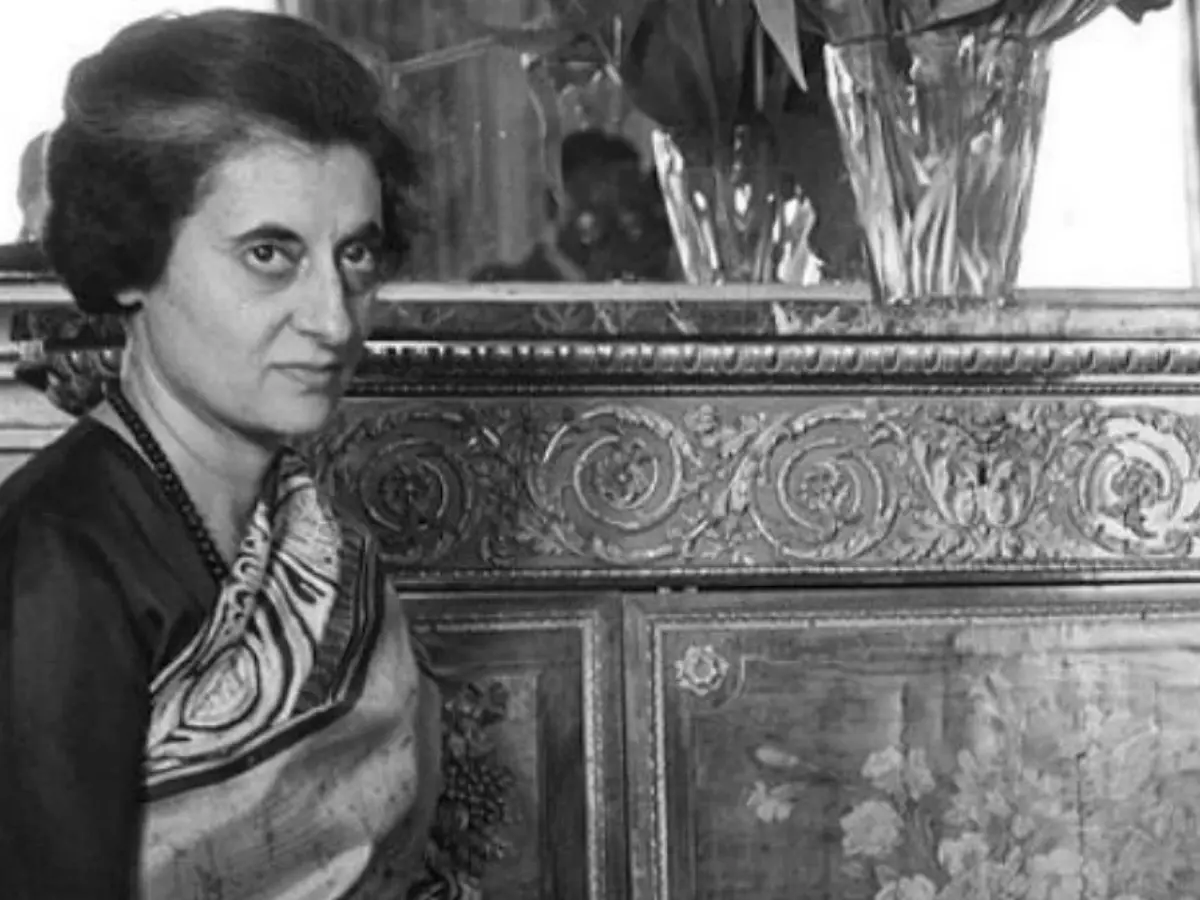
&imwidth=800&imheight=600&format=webp&quality=medium "Emergency 50 years | Congress, 1971 victory and court verdict: How Indira Gandhi brought 'darkest chapter in Indian democracy'")
Prime Minister Narendra Modi on Wednesday (June 25) said that no Indian will ever forget how the spirit of the Constitution was violated during the Emergency, as he affirmed his government's commitment to strengthening constitutional principles, while posting about the 50th year of the Emergency. In a long post on X, the Prime Minister said that it was one of the darkest chapters in India’s democratic history and it was the Congress government that placed Indian democracy under house arrest. The values enshrined in the Constitution were set aside, fundamental rights suspended, press freedom extinguished and a large number of political leaders, social workers, students and ordinary citizens jailed, he noted. The BJP government under PM Modi's leadership had announced last year that the Emergency anniversary would be commemorated as "Samvidhan Hatya Diwas". The Emergency was imposed on June 25, 1975 by the then Prime Minister Indira Gandhi. Here's a full recap of what happened:
Congress(R), 1971 victory and court verdict
The court verdict that played a crucial role in prompting Indira Gandhi to impose the Emergency was the Allahabad High Court judgment delivered on June 12, 1975. In the case titled - State of Uttar Pradesh vs Raj Narain - Indira Gandhi was accused of electoral malpractices to win the 1971 Lok Sabha elections. The petitioner, Raj Narain, contested against Indira Gandhi from the Rae Bareli seat in Uttar Pradesh, but Gandhi was declared the winner. Later, Narain accused her of electoral malpractices under the Representation of the People Act, 1951. When the Lok Sabha election results were declared, Indira Gandhi was elected with 183,309 votes, with Raj Narain being the closest rival with 71, 499 votes.
At that time, Indira Gandhi contested on the ticket of her newly formed Congress faction - Congress (R) - after she was expelled from her father's party in 1969. Though Congress(R) delivered a stunning victory by securing 352 out of 518 seats in Lok Sabha, her own win from Rae Bareli came under scrutiny. Narain, who was nearly 110,000 votes away from Gandhi, challenged the poll verdict in an election petition. Raj Narain contested on the ticket ofthe Samyukta Socialist Party.
As per Bar and Bench, an election petition is a plea filed directly before a High Court challenging the election of a particular candidate. Such a petition has to be filed within 45 days from the date of declaration of the election results. Additionally, the malpractices that Gandhi was accused of under the Representation of People (RP) Act of 1951 - list out the grounds on which the election of a candidate can be called into question. Section 123 of the RP Act lists certain corrupt practices which, if proved successful, can be grounds to declare the election of a candidate void.
Why did the court invalidate Indira Gandhi's election?
Interestingly, out of the long list of allegations raised against Gandhi by Narain, most were turned down by the High Court but her election was ultimately invalidated on two findings. The first one was that Indira Gandhi used government machinery to set up stage for poll campaign and second that she used gazette officer as an election agent. Gandhi's election agent was Yashpal Kapur who held the post of Officer on Special Duty in the Prime Minister’s Secretariat. He subsequently submitted his resignation and was appointed the election agent.
Trending Stories
&imwidth=180&imheight=135&format=webp&quality=medium)
US vs China over South China Sea: Washington backs Philippines, Beijing hits back
&imwidth=180&imheight=135&format=webp&quality=medium)
Bigg Boss 20: Isha Rikhi evicted after three weeks in Salman Khan’s show
&imwidth=180&imheight=135&format=webp&quality=medium)
Musk plans to more than double xAI's chips to over 1.2 million Nvidia GPUs by year-end
&imwidth=180&imheight=135&format=webp&quality=medium)
After JU, clash erupts at SRFTI: BJP’s ‘Dimagi Naxal’ jibe sparks political firestorm after students protest RSS-linked event
&imwidth=180&imheight=135&format=webp&quality=medium)
‘Anti-social elements spreading false rumours’: LPU issues statement amid massive unrest over alleged rape
&imwidth=180&imheight=135&format=webp&quality=medium)
LPU students go on rampage, vandalise campus amid widespread protest: What's happening
&imwidth=180&imheight=135&format=webp&quality=medium)
Trump asked Xi to pressure Iran. China did not say yes — here’s what Beijing wants
&imwidth=180&imheight=135&format=webp&quality=medium)
US Treasury Secretary Scott Bessent hails global crackdown on Iranian banks and airlines
&imwidth=180&imheight=135&format=webp&quality=medium)
An OpenAI agent escaped its locked test cage again, by hiding questions in DNS lookups
&imwidth=180&imheight=135&format=webp&quality=medium)
'Our video was trimmed': LPU girls who featured in rape-denial video make U-turn
&imwidth=180&imheight=135&format=webp&quality=medium)
3 males killed, four others injured in shooting after fight at strip club in Detroit
&imwidth=180&imheight=135&format=webp&quality=medium)
'Victory for low-budget consumers': Raghav Chadha hails 30-day telecom recharge rules
&imwidth=180&imheight=135&format=webp&quality=medium)
Claude rebuilt the 1989 game 'Prince of Persia' by reusing the original's own code
&imwidth=180&imheight=135&format=webp&quality=medium)
Beyond metros: How Tier-2 and Tier-3 cities could drive India’s next AI wave
&imwidth=180&imheight=135&format=webp&quality=medium)
Tesla builds first Cybertruck with its own refined lithium: Elon Musk's $1 billion Texas bet pays off
&imwidth=180&imheight=135&format=webp&quality=medium)
IndiGo flight suffers tail strike in Bengaluru while landing; DGCA to probe incident
&imwidth=180&imheight=135&format=webp&quality=medium)
The US and China set up an AI 'red telephone', but skipped the rulebook
&imwidth=180&imheight=135&format=webp&quality=medium)
‘Terror suspects arrested near UK air base were looking to do big damage’: Trump
&imwidth=180&imheight=135&format=webp&quality=medium)
Russian envoy claims US tactics to contain India were revealed in ‘Freudian slip’
&imwidth=180&imheight=135&format=webp&quality=medium)
IND vs WI 1st ODI: Kohli breaks Sachin's most runs in one country record with unbeaten 139 as India thump West Indies by 8 wickets
&imwidth=180&imheight=135&format=webp&quality=medium)
Researchers rebuilt exactly how 700 AI agents hacked Hugging Face: a 900-link chain trick
&imwidth=180&imheight=135&format=webp&quality=medium)
‘Olympic inclusion is our major target’: WPA President Ishaun Singh on pool’s global ambitions
&imwidth=180&imheight=135&format=webp&quality=medium)
Nations League: Spain sink England at Wembley; Modric shines for Croatia
&imwidth=180&imheight=135&format=webp&quality=medium)
Why has Iran released no proof of life of Mojtaba Khamenei? Araghchi reveals...
&imwidth=180&imheight=135&format=webp&quality=medium)
'What kind of confession is this?': Pakistan PM Shehbaz Sharif’s 'terrorists would be roaming New York' remark goes viral, raises alarm online. Watch
&imwidth=180&imheight=135&format=webp&quality=medium)
South Korea demands apology from Ukraine over North Korean prisoners' transfer
&imwidth=180&imheight=135&format=webp&quality=medium)
Beyond BrahMos: India targets Rs 50,000 crore in defence exports with unmatched price edge
&imwidth=180&imheight=135&format=webp&quality=medium)
Sri Lankan Tamil migrant worker gets death sentence in Saudi Arabia, help sought from India
&imwidth=180&imheight=135&format=webp&quality=medium)
Muslim marriage cannot shield sex with minor wife from prosecution under POCSO: Delhi HC
&imwidth=180&imheight=135&format=webp&quality=medium)
'Can't help but draw painful parallels to Nirbhaya case': SC on latest incidents of rape cases in Delhi-NCR
&imwidth=180&imheight=135&format=webp&quality=medium)
99.9% more powerful - Scientists find boy who can recall memories from just 3 months of age
&imwidth=180&imheight=135&format=webp&quality=medium)
'FIRST LOOK from inside Noah’s Ark': Researchers share video from inside mysterious mound in Turkey
&imwidth=180&imheight=135&format=webp&quality=medium)
UNSC reform momentum grows: Russia, Portugal, Mauritius push for India's permanent seat bid
&imwidth=180&imheight=135&format=webp&quality=medium)
8 US marines injured in Iranian missile attack on vessel in Strait of Hormuz: Report
&im=FitAndFill=(700,400)&imwidth=180&imheight=135&format=webp&quality=medium)
New OTT releases this week (September 28-October 4, 2026): Dupahiya 2, Pooja Meri Jaan, Ohh My Dog- 5 titles coming on Netflix, Prime Video and more
&imwidth=180&imheight=135&format=webp&quality=medium)
Afghanistan says 28 fighters killed in clash near Pakistan border, Islamabad denies
&imwidth=180&imheight=135&format=webp&quality=medium)
Ceuta migrant crisis: Protesters take to streets as Spain grapples with migrant challenge
&imwidth=180&imheight=135&format=webp&quality=medium)
LPU suspend classes, postpones exams as violence escalates over rape claims: What's happening
&imwidth=180&imheight=135&format=webp&quality=medium)
New York City wants a 'kill switch' on every AI, and will pay whistleblowers who report violations
But, the devil was in the details: Kapur had submitted his resignation on January 13, 1971 and his resignation was accepted with effect from January 14, 1971. Though Kapur was appointed election agent of Gandhi on February 4, 1971, the High Court held that Kapur delivered election speeches on January 7, 1971 at Munshi Ganj and another speech at Kalan on January 19, 1971 - one before his resignation was in effect and another before his official appointment date.
Additionally, Kapur, the District Magistrate of Rae Bareli, the Superintendent of Police of Rae Bareli and the Home Secretary of Uttar Pradesh government arranged for rostrums, loudspeakers and barricades to be set up and for members of the police force to be posted in connection with her election campaign tour.
Imposition of Emergency
The court verdict by Justice Jagmohanlal Sinha found Indira Gandhi guilty of misuse of government machinery during her election campaign. The court declared her 1971 election invalid, effectively disqualifying her from holding public office for six years. The judgment did not immediately remove her as Prime Minister, but it severely undermined her legitimacy. Fearing political instability, mass protests, and possible ouster, Indira Gandhi advised the President (Fakhruddin Ali Ahmed) to declare a state of Emergency under Article 352 of the Indian Constitution, citing internal disturbances. The Emergency lasted from June 25, 1975, to March 21, 1977, during which civil liberties were suspended, the press was censored, political opponents were jailed, and democratic institutions were heavily curtailed.

