
&imwidth=800&imheight=600&format=webp&quality=medium "No city for women: Why is Delhi’s sex ratio falling? Experts weigh in")
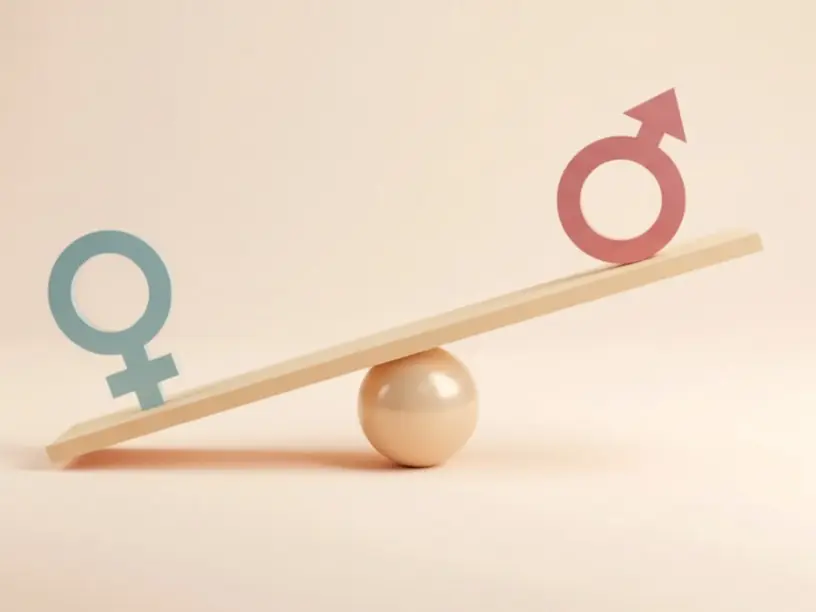
The Indian capital of Delhi is a bustling metropolitan with developed infrastructure and facilities. But in an alarming trend, the city’s sex ratio at birth has fallen for the fourth consecutive year. According to the Annual Report on Registration of Births and Deaths in Delhi,, released by the Directorate of Economics and Statistics and the Office of Chief Registrar (Births & Deaths) of the Delhi government, the sex ratio at birth has fallen to 920 females for a 1000 males from 933 in 2024. This trend has raised alarm bells among experts with people worrying if Delhi will soon become a city of men.
What is sex ratio?
Sex ratio is a social indicator of gender equality. A sex ratio of 1,000 means that there are an equal number of males and females. Higher than 1,000 and there are more females than males. Similarly, lower than 1000 and there are more males than females. Experts usually say that a ‘normal’ sex ratio is around 952 with females naturally being lesser than males in a society.

Delhi’s trajectory
The Indian capital’s sex ratio at birth steadily rose from 2012 to 2020 from 886 to 933. But dropped after the pandemic started, signalling that people are preferring sons over daughters. Exacerbated by the economic pressures of the pandemic, people seem to have given into the assumption that daughters are economic burdens on the parents while sons are not. This prejudice has deep ideological and also real-life effects on a society.
Impact on Social Fabric. According to Srinivas Goli, Associate Professor in Demography at the International Institute for Population Sciences, Mumbai, a declining sex ratio exacerbates what he calls the ‘male marriage squeeze.’
Trending Stories
)
'Lot of things to learn from experienced players': Jayasuriya backs Rohit, Virat for 2027 ODI World Cup
&im=FitAndFill=(700,400))
Kareena Kapoor birthday special: Inside her net worth, best movies, luxurious lifestyle and love story with Saif Ali Khan
)
Trump says he'll build an 'AI Force' and appoint a czar, for 'high IQ' people only
)
Punjab man consumes poison outside DC office; Congress, BJP target AAP government
)
SNL UK takes aim at Ed Sheeran with AI Princess Diana sketch
)
Iran sets 7 conditions to end war with US: What are Tehran’s demands?
)
AI actress Tilly Norwood glitches mid-interview, switches from English to Chinese | Watch
)
Mahabharat actor Saurav Gurjar arrested in Hyderabad, sent to 14-day judicial custody in sexual exploitation case
)
Chancellor Friedrich Merz vows to stay on as exit polls signal major poll setback
)
J&K Assembly Session begins amid chaos: BJP, ruling alliance clash as statehood demand dominates
)
Taylor Swift has a 'proud wife' moment as Travis Kelce scores first touchdown of season: 'That’s my husband!'
)
'Were you here to sell chickpeas?': Wasim Akram criticises Babar Azam's captaincy
&im=FitAndFill=(700,400))
New OTT releases this week (September 21-27, 2026): Shaque: Trust No One, Hunkkaar, Don’t Be Shy- 5 new titles coming to Netflix, Prime Video and more
)
Noel Tata challenges Chandrasekaran’s reappointment as Tata Sons chairman. What happened at the board meeting
)
Italy moves to ban face veils in schools as Meloni pushes new integration measures
)
TIFF 2026: Theja Rio’s Angh wins Platform Prize, puts Nagaland story on global stage
)
Delhi: Flagged voters remain on the draft roll but face hearings
)
Saudi Arabia exits China-led mBridge digital currency platform amid Saudi-Houthi conflict
)
40-foot waves crash into cruise ship in dangerous stretch near Antarctica. Watch
)
Jailer 2: Vidya Balan joins Rajinikanth's upcoming film as Kantha | Watch
)
‘0% chance’: Nvidia CEO Jensen Huang dismisses AI extinction fears by 2030
)
Samsung raises Galaxy S26 prices by Rs 20,000: Here’s what each model now costs
)
Bessent meets China’s He Lifeng to prepare for Trump-Xi summit
)
CDU suffers historic defeat in eastern Germany as AfD surges, Merz vows to stay on
)
China now makes advanced memory chips without the machines it was banned from buying
)
Arvind Kejriwal, family members, Delhi CM Rekha Gupta get SIR notices
)
Trump-Xi summit: US Treasury Secretary holds meeting with Chinese Vice Premier
)
Fleming's aspirations as England Test coach include WTC, top ranking and Ashes
)
Saudi vs Houthis: Houthis claim missiles & drones used in attack on key Saudi sites
)
Delhi Air pollution: Strict crackdown on waste burning
)
Apple reportedly building AI server with M8 Ultra chips, may use Nvidia technology
&im=FitAndFill=(700,400))
What TSMC's 2nm technology means for Apple
)
Glitch in the matrix caught on camera: Woman vanishes after talking to reporter
)
Several petrol pumps, other businesses to refuse UPI payments above Rs 2,000 from Oct 16: Is it legal?
)
AI kill switch explained: Why shutting down a dangerous AI may not be as simple as pressing a button
)
Microsoft executive called AI training the ‘largest theft of labour in human history’
)
Pilot recreates Mona Lisa in sky over Oklahoma and Arkansas in four-hour flight: VIDEO
)
US ships in Indian Ocean ‘will be attacked’ if war resumes, warns Iran
)
Samay Raina-Mukesh Chhabra controversy explained: What happened over girlfriend joke on India's Got Latent?
)
Putin's United Russia party wins 355 seats in Duma election; 4 other parties cross threshold to enter parliament
)
S Jaishankar, former Army chief among high-profile names issued Delhi SIR notices
This occurs when there is a greater number of males than females in marriageable age groups. States like Haryana and Punjab are currently facing a severe shortage of brides. To compensate for this shortage, families often "import" brides from other states like West Bengal, Bihar, and Jharkhand, or even from countries like Nepal and elsewhere. These women often have little autonomy within their new households. In some distressing cases, they are married to multiple brothers or sold to other men in the village. “In the short term, it reflects entrenched gender bias and daughter aversion, indicating that women are often undervalued in society. In the long term, it can create imbalances in the population structure, particularly in marriage markets, where a scarcity of women may affect men’s ability to find partners, says KS James, a former professor with the Jawaharlal Nehru University.
Links between literacy and sex ratio?
Literacy is often assumed to help societies have a better sex ratio. But this is not always the case. “Studies have clearly shown that the sex ratio at birth is better among the poor and illiterate than the middle and upper middle class in India based on the result of the National Family Health Survey Data,” says Professor James. “Increasing literacy particularly female literacy has improved women empowerment.As a result, one child policy may be caused by a falling sex ratio and increased male population,” says Dr CM Lakshmana, Professor and Head of the Institute of Social and Economic Change. This might signal that if people have lesser children, they may have a preference for sons rather than daughters.
Why do states like Mizoram and Kerala fare better?
Mizoram and Kerala have historically done better than other states, including Delhi, in the sex ratio at birth. According to the 2011 census, Mizoram stood at 976 females per 1000 males. While Kerala had 1084 females for every 1000 males, meaning there were more women than men in the state.
“Mizoram and Kerala have historically been known for their matriarchal societies and exhibit lower levels of gender discrimination. In these states, the social value of daughters is significantly higher than in others. When women own property and possess economic power, their status in society improves, which helps remove the patriarchal controls that are the root of the problem,” says Professor Goli.
Need for governmental intervention
A continually declining sex ratio means that Delhi’s populace is preferring boys over girls.. But there are a variety of methods through which the State and Central Governments can help mitigate the imminent demographic disaster. “Anecdotal evidence suggests that with advancing technologies, new means of sex-selective abortions are emerging, and these must be stopped. There is also a need to investigate whether sex selective abortions are being carried out through medical facilities in other countries,” says Professor Goli. “Several Indian states have implemented successful programs to promote the value of girl children. These include financial incentives such as fixed deposits, educational scholarships, and other benefits for families with daughters, ensuring that girls are seen as assets rather than burdens. Some states offer a fixed deposit for every girl born, which matures when she reaches adulthood, providing families with an economic incentive to support female children. Delhi could adapt and expand such programs,” says Professor James.
Masculinisation of society
This trend of a declining sex ratio is not just limited to Delhi in particular. The same has been noted in many states like Bihar, Jharkhand, Uttar Pradesh, Haryana, etc.
A 2021 research paper from Goli and researcher Aradhana Kumari notes that sex ratio at birth has worsened across all social, religious and economic groups, signalling an alarming trend of preferring the masculine over the feminine.
