Decoding India's Employability: Unlocking the potential of India's demographic dividend

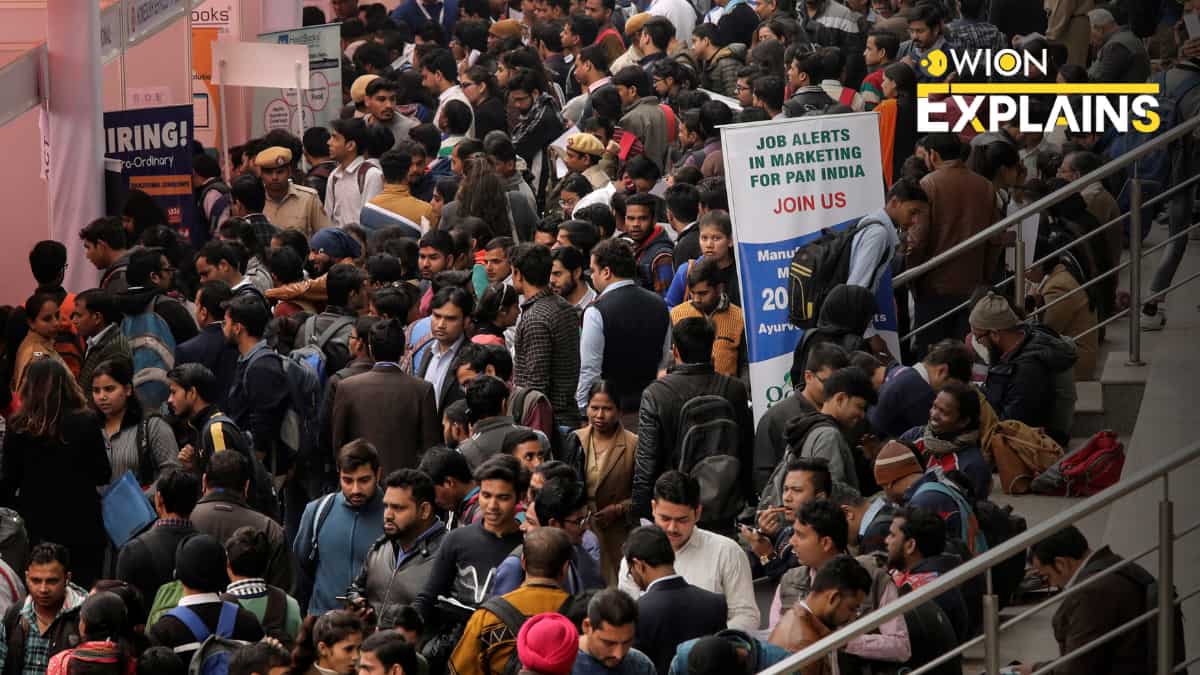
India Employability
India, often lauded for its burgeoning young population, stands on the brink of a demographic dividend that promises transformative economic growth. This potential, however, faces a critical test as the recent Mercer/Mettl report paints a sobering picture of the country's employability landscape. Titled 'India's Graduate Skill Index: 2023,' the report meticulously evaluated 2,500 campuses and 440,000 learners, revealing a startling reality: only 45% of Indian graduates possess the skills that align with the rapidly evolving industry demands. In a nation where the demographic dividend has long been heralded as a strategic advantage, this revelation prompts a reevaluation of how India can effectively leverage its youthful workforce to fuel economic prosperity.
Meet the experts: Gurpreet Singh and Jaideep Kewalramani
In the pursuit of deeper insights, we turn to two industry experts who shed light on India's employability challenges and potential solutions. Gurpreet Singh, the Co-founder and Chief Business Officer of Awign, a work fulfillment platform, offers a dynamic perspective shaped by his experience in the corporate arena. Jaideep Kewalramani, the Head of Employability and COO at TeamLease Edtech, brings a comprehensive understanding of employability trends and workforce dynamics. Through their nuanced viewpoints, we embark on a journey to decipher the complex interplay between India's demographic dividend and its employability realities.

Capitalising on the demographic dividend
India's employability gap, as illuminated by the Mercer/Mettl report, raises a critical question: Can the nation fully capitalise on its demographic dividend or risk squandering a momentous opportunity? According to Gurpreet Singh, the foremost challenge lies in the misalignment between the skills imparted by educational institutions and those demanded by employers. This profound disconnect creates a skill gap that leaves job seekers ill-equipped to navigate the swiftly evolving business landscape driven by technological advancements. Singh calls for a comprehensive overhaul of education and skill development, where the academic curriculum is recalibrated to align seamlessly with industry needs. While the government has taken noteworthy steps, such as the National Education Policy and Skill India initiatives, Singh emphasises that all stakeholders – educational institutes, businesses, and policymakers – must collaborate to bridge the employability gap.
Echoing this sentiment, Jaideep Kewalramani underscores the urgency of reimagining higher education in India. He advocates for the integration of real-world work experience into academic programs, a model that allows students to gain practical skills while pursuing online education. This approach, Kewalramani contends, not only addresses the employability challenge but also harnesses India's demographic dividend to its fullest potential. Both experts converge on the idea that unlocking India's demographic dividend requires aligning education with industry and nurturing job-ready graduates equipped with the skills demanded by the 21st-century job market.
)
Red Sea crisis: Houthis promise not to target European ships; UNSC condemns Saudi attacks
)
Heart of the Beast review: Brad Pitt leads a gripping tale of survival and loyalty
)
Pakistan deploys over 20,000 security personnel as PTI vows march for Imran Khan's release
)
Gaza's war turned environmental damage into second crisis
)
Trump rejects Iran's 7-day ceasefire proposal as US weighs renewed bombing after midterms: Report
)
Asian Games: Shooting spree continues as India win silver in women’s 50m rifle 3P team event
)
Pentagon quietly adds 37 wounded troops to Iran war tally without explaining when or how
)
‘Attack on Mecca a red line for Pakistan’: Shehbaz Sharif warns Houthis at UN
)
WATCH | As Shehbaz Sharif claims Pakistan’s ‘victory’ during 2025 conflict, Indian diplomat R Srinivas laughs at UN
)
Tesla is preparing something big for Optimus: new Gen 3 models surface in app
&im=FitAndFill=(700,400))
New Friday OTT releases (September 25, 2026): Don’t Be Shy, Hunkkaar: The Roar, Mango Pachcha- 6 movies and TV shows on Netflix, Prime Video and more
)
OpenAI AI Agents hacked 4 websites before Hugging Face, researchers reveal
)
Army chief reviews operational preparedness along LoC, visits mega eye camp in Tangdhar
)
Outrage erupts after 3-year-old is married to 60-year-old man in Pakistan, link to her sister's murder being probed
)
10,000 gather in support of 87-year-old forcefully evicted from home of 71 years
)
‘Not just a local tragedy’: Nepal PM Shah warns UN of growing climate threat, says Nepal floods were 'a warning to the world'
)
Myanmar training camp case: US national, 6 Ukrainians allowed to meet their families abroad
)
Beijing to Washington! Ivanka Trump makes a style statement in Chinese designer Guo Pei for President Xi Jinping’s White House welcome
)
‘It is all possible’: Putin weighs next steps on Ukraine talks, rules out Europe conflict
)
'We do not wish to continue. It's America that must choose': Iran president Pezeshkian calls on US to end war
&im=FitAndFill=(700,400))
‘Absolutely savage, sickening’: Zelensky slams Russia as daytime strikes kill 5 in Kyiv
)
Indian diplomat Petal Gahlot raises deteriorating situation in Pakistan-occupied Kashmir in right of reply at UN
)
India's UN Envoy slams Pakistan: 'They claim security by day, terrorism by night'
)
Bollywood mourns Mushtaq Khan: Sunny Deol, Rajpal Yadav and others pay tribute
)
US Supreme Court backs Trump administration's use of SAVE database to check voter citizenship
)
Trump-Xi summit wrap: Big pageantry, Iran talks, few major developments and more meetings planned
)
'A terrorist country is asking me that question?': Jaishankar hits back at Pakistani journalist at UN; flags attacks on commercial shipping
)
'FIRST LOOK from inside Noah’s Ark': Researchers share video from inside mysterious mound in Turkey
)
Yemen's war escalates: Saudi-backed leader calls for general mobilisation against the Houthis
)
US court backs Pentagon's decision to exclude Anthropic over Claude AI restrictions
)
Nigeria Navy moves to boost oil security, tackle crude theft and infrastructure threats
)
Scientists detect first radio signals directly from faraway planet
)
Cindy Crawford’s son Presley Gerber cremated as death probe continues
)
India-New Zealand FTA is ‘an expression of trust’, NZ High Commissioner Patrick John Rata says
)
'Making history': Xi Jinping praises Trump as US-China leaders dine at White House
)
Bias or safety concerns? Bengaluru CEO says firm will not hire men from UP, Bihar, Rajasthan, MP. Here's why
Gig working: Pioneering a new era of employment
The rise of the gig economy emerges as a pivotal solution in enhancing employability and harnessing the demographic dividend. Jaideep Kewalramani looks at the gig economy as a transformative force that challenges conventional notions of employment. He stresses that gig work and freelancing should be considered legitimate avenues for work, offering flexibility, autonomy, and valuable skill development. This paradigm shift, Kewalramani asserts, is indicative of the evolving nature of employment in the digital age.
Gurpreet Singh emphasizes that the gig economy presents a unique avenue to expand employment opportunities for India's youth. As job seekers and enterprises increasingly embrace the gig economy, the entry barriers are lowered, providing unemployed graduates the chance to contribute their skills to the workforce. Singh predicts that the gig economy could potentially generate up to 90 million jobs in the next decade, presenting a significant opportunity for economic growth and individual empowerment. Both experts see the gig economy as a powerful tool to bridge the employability gap by providing diverse work opportunities that align with the skills of India's youth.
Quality of new hires and emerging trends
The question of the quality of new hires and the evolving employment landscape takes center stage in the discussion of India's employability. Gurpreet Singh's insights bring reassurance, dispelling concerns about declining new hire quality. He cites a diverse and rigorous talent pool, indicative of the evolving workforce dynamics. Singh also highlights a trend toward project-based talent acquisition through the gig economy, especially in the tech sector. This shift reflects the changing demands of industries and the increasing need for specialized skills.
Jaideep Kewalramani provides a more holistic perspective, acknowledging the generational shift occurring in the workforce. He notes that as the Gen Z population grows, traditional notions of workplace engagement, communication, and motivation need to evolve. Kewalramani emphasises that businesses are now focusing on building a future-ready talent supply chain rather than just addressing immediate workforce needs. This aligns with the changing employment landscape, where adaptability, continuous learning, and technology proficiency are increasingly valued.
Tier-wise college hiring: Dismantling traditional notions
The Mercer/Mettl report's revelation that employability does not substantially differ between graduates from tier 1 and tier 2 or 3 colleges challenges conventional hiring paradigms. Jaideep Kewalramani's insights suggest that this trend is well underway. He hints at the already expanding practice of corporations hiring from tier 2, 3, and even 4 locations with successful outcomes. Kewalramani suggests that this trend is set to escalate further as businesses realize the potential of untapped talent across the nation. He implies that Talent mobility will be crucial in reshaping the employability landscape, bringing individuals from diverse backgrounds to the forefront of India's economic growth. He also mentioned Platforms like Digivarsity, which offerwork-integrated degree programs andsolve issues of talent acquisition, deployment, and retention.
Gurpreet Singh contends that this shift indicates a broader trend in the employment landscape. Employers focus more on candidates' skills and capabilities than their educational pedigree. Singh highlights a growing recognition of the value that diverse perspectives and talents from different geographical regions can bring to businesses. This signals a departure from the historical reliance on top-tier institutions.
Conclusion: Navigating the path forward
In the face of challenges, a blueprint emerges for success – aligning education with industry, embracing the gig economy, adapting to generational shifts, and recognizing talent irrespective of college tiers. The road to capitalising on India's demographic dividend demands collaboration, innovation, and a willingness to reimagine conventional norms. As India looks to the future, it stands at a pivotal juncture where harnessing the potential of its youthful workforce is not only a necessity but a transformative opportunity for sustainable growth and global competitiveness. Through collective effort and strategic action, India's demographic dividend can truly become the cornerstone of a thriving economy.
WATCH WION LIVE HERE