

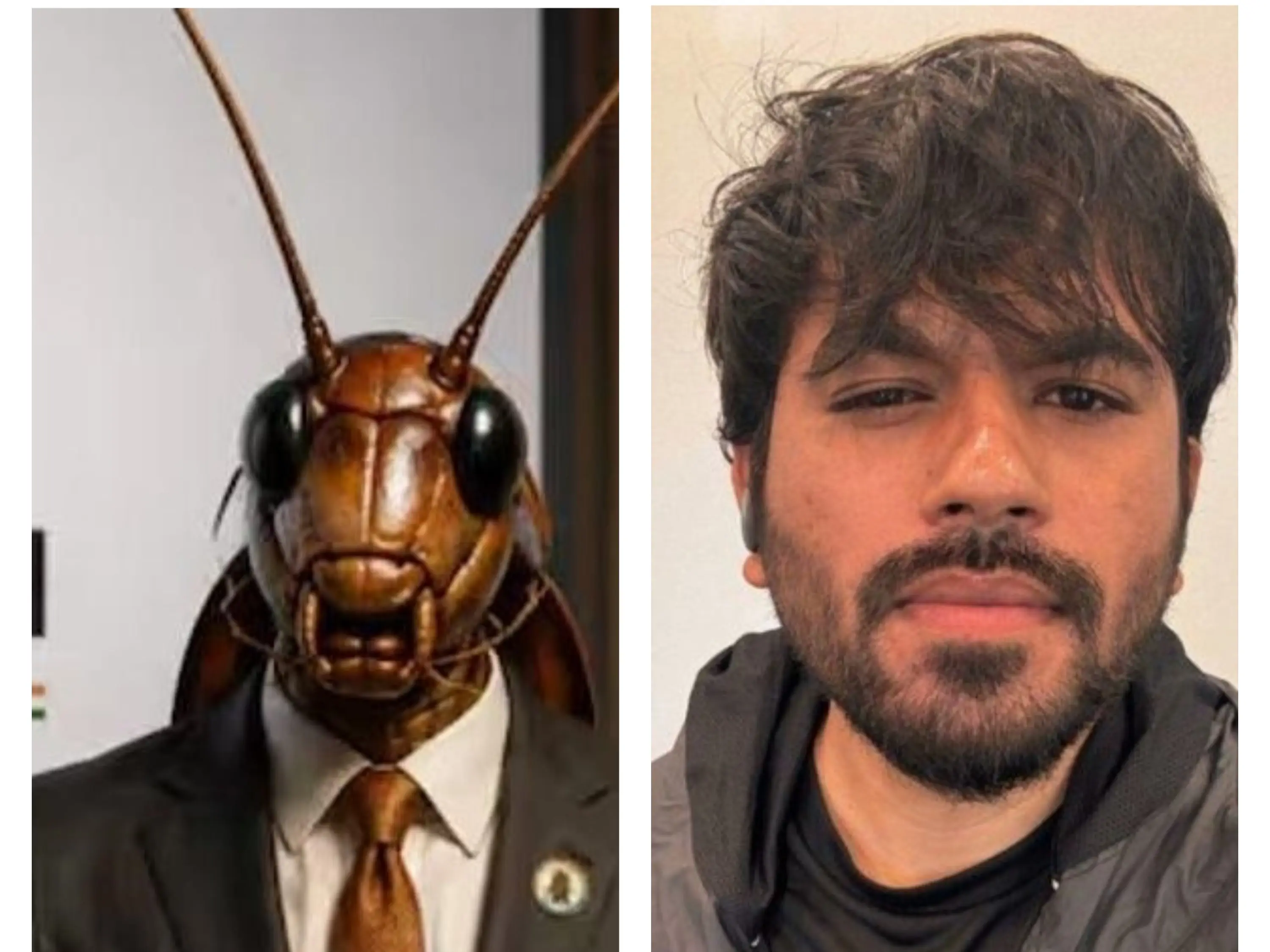
&imwidth=800&imheight=600&format=webp&quality=medium "Cockroach Janata Party is a fever. Time to prevent the epidemic")
India has seen political protests, student movements and anti-establishment waves before. But few have looked like the Cockroach Janata Party. The CJP exploded online in May 2026 with memes, AI-generated protest songs, parody manifestos and a flood of “cockroach” imagery. Within days, its Instagram following reportedly crossed 21 million before the account was allegedly hacked — a number larger than the ruling BJP’s online base. More than a million people reportedly signed up to join the party through online forms. For some, it was hilarious internet theatre. For others, it exposed something deeper: growing frustration among India’s youth. The real question is whether CJP is an actual political movement — or simply the internet venting in memes. It is a fever. Fever is a symptom of an underlying disease. It is time to address the fever.
Cockroach Janata Party: The remark that triggered everything
The movement began after remarks attributed to India’s Chief Justice, Surya Kant, during a court hearing. He reportedly compared certain unqualified or jobless entrants in professions like law and journalism to “cockroaches” and “parasites”. The backlash was immediate.
The Chief Justice later clarified that his comments were aimed at people with fake degrees, not genuinely unemployed youth. But by then, social media had already transformed the controversy into a viral rebellion. The meme machine had started. The damage was done.
Enter Abhijeet Dipke
Trending Stories
&imwidth=180&imheight=135&format=webp&quality=medium)
Brendan Taylor overtakes Andy Flower to become Zimbabwe’s leading ODI run-scorer
&imwidth=180&imheight=135&format=webp&quality=medium)
Researchers name newly discovered Andean plant after Argentina legend Lionel Messi
&imwidth=180&imheight=135&format=webp&quality=medium)
Lawrence Bishnoi gang claims responsibility for firing at Tiger Shroff over ties to Salman Khan
&imwidth=180&imheight=135&format=webp&quality=medium)
Flying car race: Alef Aeronautics welcomes Tesla Roadster '11 years' later, but are the two models the same?
&imwidth=180&imheight=135&format=webp&quality=medium)
Shastri backs Shami comeback; lauds Bhuvi and warns Bumrah on format workload ahead of World Cup
&imwidth=180&imheight=135&format=webp&quality=medium)
Netanyahu rival Benny Gantz quits Israel election race, vows to push for unity government
&imwidth=180&imheight=135&format=webp&quality=medium)
Saudi Arabia asks skyscraper employees to work from home amid Houthi threats
&imwidth=180&imheight=135&format=webp&quality=medium)
NFl 2026/27 - Saints vs Steelers to go ahead in Paris next week despite protest
&imwidth=180&imheight=135&format=webp&quality=medium)
4 killed, 19 critically injured in grass fire at Canada's largest military base
&im=FitAndFill=(700,400)&imwidth=180&imheight=135&format=webp&quality=medium)
Ghaziabad is world's fastest-growing city; Surat, Patna, Rajkot also feature on list
&imwidth=180&imheight=135&format=webp&quality=medium)
Nobel laureate Machado, who dedicated prize to Trump, confirmed as Venezuela opposition leader
&imwidth=180&imheight=135&format=webp&quality=medium)
After Kennedy Center and reflecting pool disputes, Trump turns to Washington golf course plan amid legal battle
&imwidth=180&imheight=135&format=webp&quality=medium)
Why France looks the most fragile in the G7 amid protests and budget deadlock
&imwidth=180&imheight=135&format=webp&quality=medium)
Asian Para Games: Nishad Kumar clinches T47 long jump gold; Ravi Budigina bags swimming silver
&imwidth=180&imheight=135&format=webp&quality=medium)
China responds to Trump's Press Secretary Katie Zacharia after toilet remark: 'Visit China more often'
&imwidth=180&imheight=135&format=webp&quality=medium)
PCB omits Atherton, Hussain from tri-series commentary panel over Imran Khan interview row
&imwidth=180&imheight=135&format=webp&quality=medium)
Anthropic’s public benefit plan: What its 5% share commitment means for AI’s future
&imwidth=180&imheight=135&format=webp&quality=medium)
Girl 'dead' for 8 hours wakes up at her own funeral, dad insists she wasn't breathing
&imwidth=180&imheight=135&format=webp&quality=medium)
MI5 is opening an AI threat centre, and OpenAI just told MPs the worst isn't over
&imwidth=180&imheight=135&format=webp&quality=medium)
Elon Musk features on Lucknow's 'anti-India' Ravan poster alongside Rahul Gandhi, Akhilesh
&im=FitAndFill=(700,400)&imwidth=180&imheight=135&format=webp&quality=medium)
New OTT releases this week (October 19-25, 2026): Gajab Raat to Chaar Yaar-8 titles to watch during Dussehra week on Netflix, Prime Video and more
&imwidth=180&imheight=135&format=webp&quality=medium)
Kylie Jenner makes Victoria’s Secret debut in $50 million diamond-encrusted design as Timothée Chalamet cheers
&imwidth=180&imheight=135&format=webp&quality=medium)
Putin wants joint meeting with Trump-Xi summit on Ukraine war, proposes talks alongside APEC: Report
&imwidth=180&imheight=135&format=webp&quality=medium)
No Ravindra Jadeja, Yashasvi Jaiswal in India’s 2027 ODI World Cup plans: Report
&imwidth=180&imheight=135&format=webp&quality=medium)
India moves to buy 10,000 more AI chips for a national compute pool open to startups
&imwidth=180&imheight=135&format=webp&quality=medium)
Anirudh Ravichander-Kavya Maran wedding: Telangana CM reveals Chennai reception date
&im=FitAndFill=(700,400)&imwidth=180&imheight=135&format=webp&quality=medium)
Tesla Roadster engineering: The hidden hardware behind its flying demonstration
&imwidth=180&imheight=135&format=webp&quality=medium)
Karan Johar reimagines Student Of The Year with thriller series After Dark, Shanaya Kapoor to debut on OTT
&imwidth=180&imheight=135&format=webp&quality=medium)
US to review Russia sanctions waiver within 60 days as Rubio cites India’s ‘substantial’ Russian energy imports
&imwidth=180&imheight=135&format=webp&quality=medium)
'Grassroots leagues help bridge the gap': India's ODI WC winner Suresh Raina lauds ISCL ahead of Season 2
&imwidth=180&imheight=135&format=webp&quality=medium)
'We feel like Mr India': Gujarat’s undercover SHE team guard garba nights at Navratri
&imwidth=180&imheight=135&format=webp&quality=medium)
Cattle-feed bran in biscuits, detergent in milk: FSSAI acts against 3 companies
&imwidth=180&imheight=135&format=webp&quality=medium)
'It's a joy to see the makers bring it on such a grand scale': SS Rajamouli on Ramayana
&imwidth=180&imheight=135&format=webp&quality=medium)
Priest dies after crucifix falls on his head during livestreamed Mass in Ecuador | VIDEO
At the centre of the movement is Abhijeet Dipke, a Boston University student and former political communications strategist who had been earlier associated with the Aam Aadmi Party (AAP). After the controversy erupted over the justice's remarks, Dipke posted a simple question on X: “What if all cockroaches come together?”
Dipke launched social media handles, a website and online sign-up forms. The branding was intentionally absurd: membership requirements included being unemployed, chronically online, lazy and capable of “professional-level ranting”. Even the name — Cockroach Janata Party — was a parody of India’s ruling Bharatiya Janata Party or BJP.
What followed was a perfect storm for internet virality: satire, anger, identity politics and algorithm-friendly content.
The real question: Why did CJP go viral?
CJP tapped into something festering underneath. Millions of young Indians are frustrated with unemployment, rising living costs, exam scandals and shrinking opportunities. Incidents like the NEET-UG 2026 question paper leak intensified distrust in institutions that are supposed to reward merit.
India’s youth unemployment rate varies depending on the dataset, but the broader anxiety is undeniable. Millions compete for limited government jobs and entrance exams for higher education and specialist fields. Even small disruptions like leaked papers, delayed results and recruitment scams hit hard, leading to enormous emotional reactions.
CJP is exploiting that frustration. That is what every opportunistic political movement does.
It converted anger into an internet cultural movement. Instead of ideology or speeches, its supporters used AI videos, parody songs, slogans and humour — instantly shareable content that was emotionally accessible to a generation raised online and spending large amounts of time scrolling.
Dipke himself described the movement as a spontaneous satirical reaction, not a structured political organisation.
Hold that thought. Because that distinction is contentious.
The crackdown and shifting narratives
As CJP grew, controversy followed. Its X account was allegedly blocked. Dipke moved the Delhi High Court. He claimed the movement’s Instagram account was hacked. Reports also emerged of police deployment outside his family home in India after alleged death threats against him and his relatives.
The movement quickly became part of a discussion on censorship, suppression and state pressure.
Whether one agrees with CJP or not, the perception of a crackdown often fuels online movements even further.
Bots, ‘foreign links’ and political opportunism
The bigger CJP became, the more questions emerged about who was really behind it. Claims circulated that some followers originated from Pakistani IP addresses or bot networks. Dipke denied those allegations vehemently. Meanwhile, opposition politicians from parties like Congress, AAP and Trinamool Congress began openly supporting the CJP trend. Karnataka Youth Congress workers even distributed “I am a cockroach” T-shirts.
That created another problem for CJP.
The movement initially positioned itself as anti-establishment and critical of the entire political class. But once mainstream parties started embracing it, CJP risked becoming another political tool for them.
As has happened in the past, another youth movement could be hijacked and co-opted by mainstream political parties.
Questions around Dipke’s own political past added to the scepticism. Was CJP truly organic? Or was it simply smart political branding disguised as rebellion? Is it possible for a single person to suddenly populate the internet with well-designed websites, logos, videos and multiple social media handles? Is Dipke really acting alone?
Can memes become a movement?
This is where the hype meets reality. CJP has dominated social media timelines, but not the streets.
Yes, there are online petitions and viral campaigns. But there are no major rallies nationwide or visible offline structures. No organisation. No leadership network. No policy framework. No electoral roadmap. No ideology. Just some obviously unachievable manifesto items.
That is the weakness of many internet movements. Going viral is easy. Building institutions is not.
Memes can amplify anger. But they cannot automatically solve unemployment, reform education systems, generate economic growth or reduce the cost of living.
Satire can expose frustration. It cannot replace governance.
CJP itself embraces irony by calling itself the “Voice of the Lazy & Unemployed”. That branding works online because self-deprecating humour resonates with digital culture. But politics in the real world demands organisation, negotiation and long-term strategy. Definitely not a place for the lazy.
The internet rewards outrage and performance. Real politics rewards endurance.
CJP is a symptom, not a solution
CJP is best understood as a symptom of underlying maladies. It reflects the frustrations of a generation dealing with economic uncertainty, hyper-competition in a tech-mediated world, and distrust in institutions. It also reflects the changing nature of protest itself. Young people increasingly express political anger through reels and Reddit rather than traditional street movements.
But frustration alone does not create political change.
Many anti-establishment youth movements around the world generated massive online excitement before fading once the hashtag trend cycle ended. Without structure, leadership and offline infrastructure, momentum disappears quickly.
That does not make CJP meaningless.
In fact, its success is a warning sign for mainstream politics, across all parties. Millions of young Indians clearly feel unheard. They are willing to rally around satire because conventional political language no longer connects with them.
CJP may not become a real political party. It may never contest elections or build a ground network.
But it has already succeeded at one thing: forcing India’s political ecosystem to notice a generation that increasingly communicates from the easy confines of mobile screens.
Entertainment or early warning system?
For now, Cockroach Janata Party remains more internet spectacle than political revolution.
It is loud, viral, chaotic and culturally effective. But whether it can survive outside social media feeds is another question.
Can the self-identified “cockroaches” organise beyond their device screens?
That answer will decide whether CJP becomes a historical footnote — or the first sign of a new kind of political and social unrest.
Disclaimer: The views of the writer do not represent the views of WION or ZMCL. Nor does WION or ZMCL endorse the views of the writer.

