Coast guard races to save listing tanker off Paradip, averting maritime disaster

&imwidth=600&imheight=450&format=webp&quality=medium "Coast guard races to save listing tanker off Paradip, averting maritime disaster")
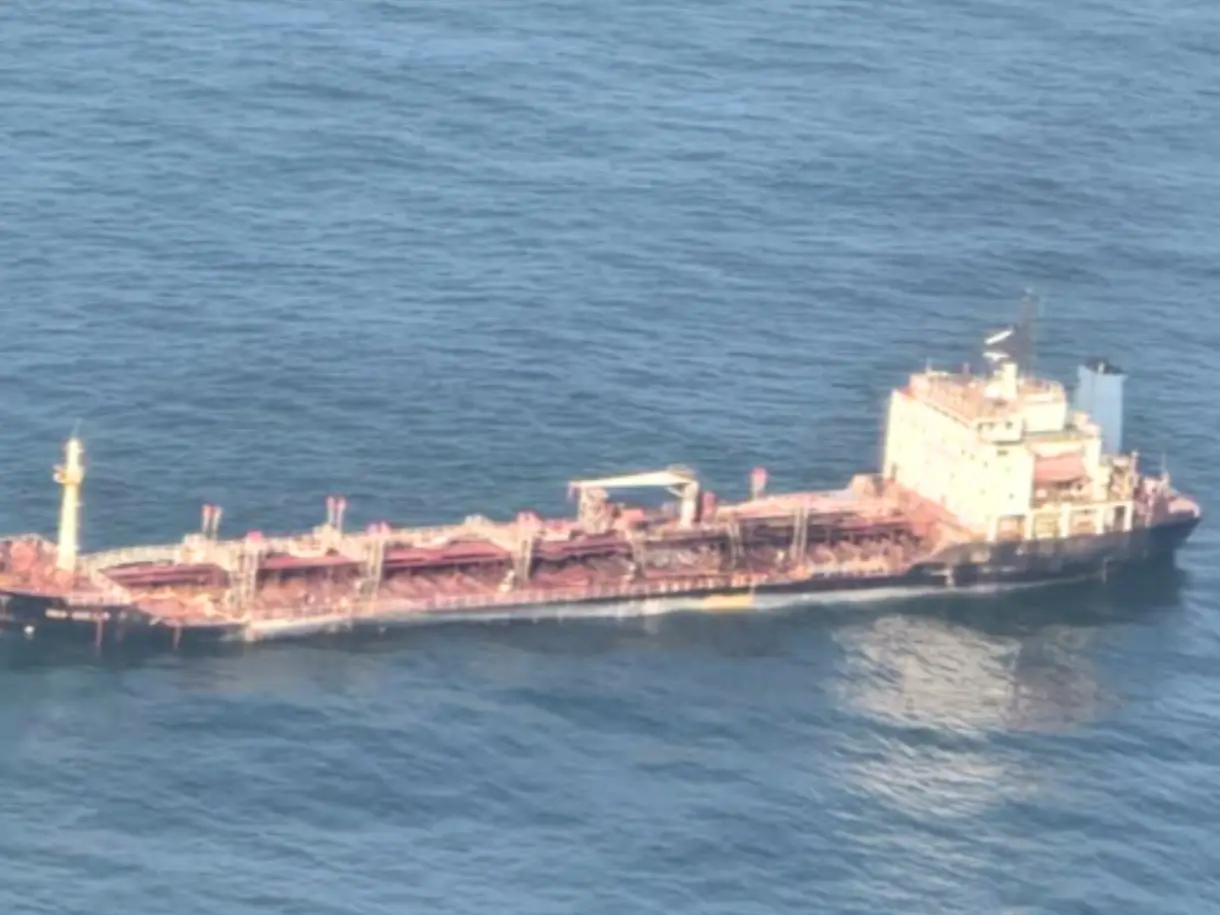
Indian Coast Guard (ICG) averted a major maritime incident. Photograph: (WION)
The Indian Coast Guard rescued the tilting tanker MT Seagull 9, carrying 9,000 tonnes of palm oil and 23 crew, off Odisha after engine failure and flooding. Damage control stabilised it, a minor oil sheen dissipated, and it was towed to Paradip.
A tilting chemical tanker loaded with 9,000 tonnes of palm oil, with 23 crew aboard, was pulled back from the brink off the Odisha coast after a swift Indian Coast Guard (ICG) operation that officials say averted a major maritime incident.
The Belize-flagged MT Seagull 9 sent an urgent distress call at about 0730 hrs on 27 September. Its main engine had failed, and its ballast tanks were flooding fast, pushing the ship into a dangerous tilt roughly 37 nautical miles east-south-east of Paradip.
ICG Ship (ICGS) Vishwast was dispatched immediately. A specialist damage control team then boarded the unstable vessel in difficult conditions. Using submersible de-flooding pumps and other damage-control equipment, the team arrested the leakage, blanked two damaged seawater pipelines and contained a third fractured line.
Coast Guard and ship's crew then worked together on cargo transfer and de-flooding at the same time. This stabilised the tanker and removed the threat of capsizing. The danger went beyond the ship. A capsized or breached vessel carrying such a cargo could have threatened the surrounding marine ecosystem. A minor palm-oil sheen was spotted near the vessel on 27 September, but follow-up aerial sorties on 28 September confirmed it had fully dissipated.
An ICG Dornier aircraft flying from Bhubaneswar provided real-time aerial surveillance. The Coast Guard has also diverted a Pollution Control Vessel and an additional Offshore Patrol Vessel to the area for stronger pollution response and round-the-clock monitoring. Strict pollution-response protocols remain active.
Trending Stories
)
)
)
)
)
)
)
)
)
)
)
)
)
)
)
)
)
)
)
)
)
)
)
)
)
)
)
)
)
)
)
)
)
)
&im=FitAndFill=(700,400))
)
)
)
)
The rescue became a multi-agency effort as the Paradip Port Authority's tug Dolphin took the stabilised tanker under tow to the anchorage off Paradip. Repairs to the main engine are under way, with help from ICGS Vishwast's technical team.
ICGS Vishwast and the other deployed assets remain on scene, maintaining what the Coast Guard describes as an active sentinel watch and providing continuous operational support. The incident shows the value of rapid response on India's busy eastern sea lanes, where a single mechanical failure can escalate within hours into a threat to lives, cargo and coastline.
