

In an unusual back-to-back setback for India's space agency, ISRO, both space missions undertaken in 2025 have encountered serious trouble. On Sunday, 18th May, barely eight minutes after liftoff, ISRO halted the live stream of the PSLV-C61/EOS-09 mission. As per initial information, the four-staged rocket encountered trouble mid-flight. "Up to the second stage, performance was normal. The third stage ignited, but we observed its functioning. The mission could not be accomplished. We are studying the data," said ISRO Chief Dr. V. Narayanan towards the end of the official live stream.
Over a dozen Indian Parliamentarians, who are part of the Parliamentary Standing Committee of Science and Technology, were at the spaceport in Sriharikota to witness ISRO's 101st rocket launch mission. Notably, the PSLV is ISRO's most-flown rocket and has a great track record of launching over two hundred satellites belonging to India and foreign customers. In its 63 launch missions to date, this is the third failure of the PSLV. Addressing journalists at the spaceport, the ISRO Chief elaborated on the observations. "The third stage of the PSLV uses a solid-fuel motor system. There was a fall in the chamber pressure in the motor case. We are studying the entire performance," Dr. Narayanan said.
EOS-09 is a radar imaging satellite(earlier known as RISAT) that is capable of day and night imaging. It can see through clouds, deliver images under all weather conditions. This 1,700kg satellite was meant to have an operational life of at least five years. Ideally, the EOS-09 satellite should have been placed in its designated orbit, almost 18 minutes after liftoff.
Radar imaging satellites are unique because they do not take pictures like a conventional camera-carrying satellite. Instead of giving an optics-based picture(like a photograph), the RISAT beams radar waves onto the Earth. The features on the Earth's surface (buildings, trees, mountains, water bodies, roads) reflect these radar waves back to the satellite. It is by collecting and processing the reflected radar waves that RISAT can provide the end product, which is round-the-clock, all-weather imagery. While conventional Optical satellite images are in colour, radar satellite images are inherently black and white.
The launch of this strategic satellite comes a week after Nuclear-armed neighbours India and Pakistan announced a ceasefire, following three days of a rapidly escalating war-like situation. However, it must be emphasised that the space launch mission taking place at this time is a mere coincidence. The PSLV rocket takes a little over a month to assemble, and it takes well over a year to build a satellite like EOS-09. At the Indian Spaceport, the preparations for this launch are said to have commenced in mid-March, more than a month before the situation between India and Pakistan deteriorated.
Following the April 22nd Pahalgam terror attack in Jammu and Kashmir, ISRO Chief Dr. V. Narayanan had cited the need for launching 100-150 satellites to keep a constant vigil over India's 7,500 km long coastline and 15,000 km long land borders.
Trending Stories
&imwidth=180&imheight=135&format=webp&quality=medium)
Rahul Gandhi's plea against Election Commission delayed as Supreme Court registry flags 14 ‘defects’
&im=FitAndFill=(700,400)&imwidth=180&imheight=135&format=webp&quality=medium)
Navratri 2026: 9 days, 9 forms of Goddess Durga and 9 colours- Check the complete list
&imwidth=180&imheight=135&format=webp&quality=medium)
Korean peninsula tensions escalate as North Korea launches multiple ballistic missiles, PACOM says 'no threat to US personnel'
&imwidth=180&imheight=135&format=webp&quality=medium)
Trump weighs firing Kimberly Guilfoyle as US ambassador to Greece amid misconduct allegations: Report
&imwidth=180&imheight=135&format=webp&quality=medium)
Anti-SIR protest in Mumbai: Protestors wear black masks & ribbons in Mumbai
&imwidth=180&imheight=135&format=webp&quality=medium)
UK PM Andy Birnham renews claims of Russian meddling in Brexit vote
&imwidth=180&imheight=135&format=webp&quality=medium)
BCCI rejects venue shift reports, India vs Sri Lanka 1st ODI to remain in Delhi
&imwidth=180&imheight=135&format=webp&quality=medium)
'Absolutely disgusting': Australia slams US plan to livestream Nidal Hasan's execution; Mike Johnson raises concerns, warns of terrorist propaganda
&imwidth=180&imheight=135&format=webp&quality=medium)
1,500 drones illuminate Mumbai sky as Cordelia Cruises unveils second ship, Cordelia Sky
&imwidth=180&imheight=135&format=webp&quality=medium)
‘Fortress breached, reclaimed’: CJP leaders enter Jantar Mantar a day after loss of protest venue status | WATCH
&imwidth=180&imheight=135&format=webp&quality=medium)
Houthis warns US of 'painful response' if Washington joins Saudi war in Yemen as airlines suspend flights to Saudi Arabia
&imwidth=180&imheight=135&format=webp&quality=medium)
Congress demands action against chief election commissioner
&imwidth=180&imheight=135&format=webp&quality=medium)
'Turn approver, resign, we'll forgive you': Rahul Gandhi claims receiving messages from CEC Gyanesh Kumar
&imwidth=180&imheight=135&format=webp&quality=medium)
'I will not be silenced': Ilhan Omar alleges political intimidation after federal officers search her Washington home
&imwidth=180&imheight=135&format=webp&quality=medium)
Robotic surgery, advanced treatment: What is coming to this small Gujarat town?
&imwidth=180&imheight=135&format=webp&quality=medium)
Pakistan's government blames PTI for rise of terrorism in Khyber Pakhtunkhwa
&imwidth=180&imheight=135&format=webp&quality=medium)
‘This is just the start’: Maaya Rajeshwaran on historic ITF title, confidence boost and future goals
&imwidth=180&imheight=135&format=webp&quality=medium)
I.N.D.I.A. Bloc lists 10 requests to Supreme Court
&im=FitAndFill=(700,400)&imwidth=180&imheight=135&format=webp&quality=medium)
IMF World Economic Outlook: 10 economies to watch for growth in FY27 and FY28 - Where does India stand?
&im=FitAndFill=(700,400)&imwidth=180&imheight=135&format=webp&quality=medium)
How does a robot decide what to do next?
&imwidth=180&imheight=135&format=webp&quality=medium)
Is the AI chip boom already over? Global semiconductor stocks slide as investors question unbridled spending
&imwidth=180&imheight=135&format=webp&quality=medium)
Trump says he 'may' meet North Korean leader Kim Jong Un during upcoming Asia trip
&imwidth=180&imheight=135&format=webp&quality=medium)
'Ouch!!! That must hurt': Kangana Ranaut hails Kamal Haasan's sharp reply to Elon Musk over Starlink row
&imwidth=180&imheight=135&format=webp&quality=medium)
Sidhu Moose Wala’s younger brother wins hearts by recreating late singer’s signature move at Toronto Hologram Show
&imwidth=180&imheight=135&format=webp&quality=medium)
Girl 'dead' for 8 hours wakes up at her own funeral, dad insists she wasn't breathing
&imwidth=180&imheight=135&format=webp&quality=medium)
UK school ditches technology, shifts from screen to pen and paper for learning
&imwidth=180&imheight=135&format=webp&quality=medium)
Opposition’s 10 demands in Supreme Court petition range from stay on SIR to audit of voter rolls
&imwidth=180&imheight=135&format=webp&quality=medium)
'I am thoroughly unamused': Judge slams Trump administration after 400 trees cut at Washington golf course
&im=FitAndFill=(700,400)&imwidth=180&imheight=135&format=webp&quality=medium)
New OTT releases this week (October 12-18, 2026): Sacrifice, Koffee with Karan S9, Roadies Rebirth- 6 titles coming on Netflix, JioHotstar and more
&imwidth=180&imheight=135&format=webp&quality=medium)
Delhi protest: CJI Surya Kant declines to meet India Bloc leaders
&imwidth=180&imheight=135&format=webp&quality=medium)
China’s gold rush puts billion in focus
&imwidth=180&imheight=135&format=webp&quality=medium)
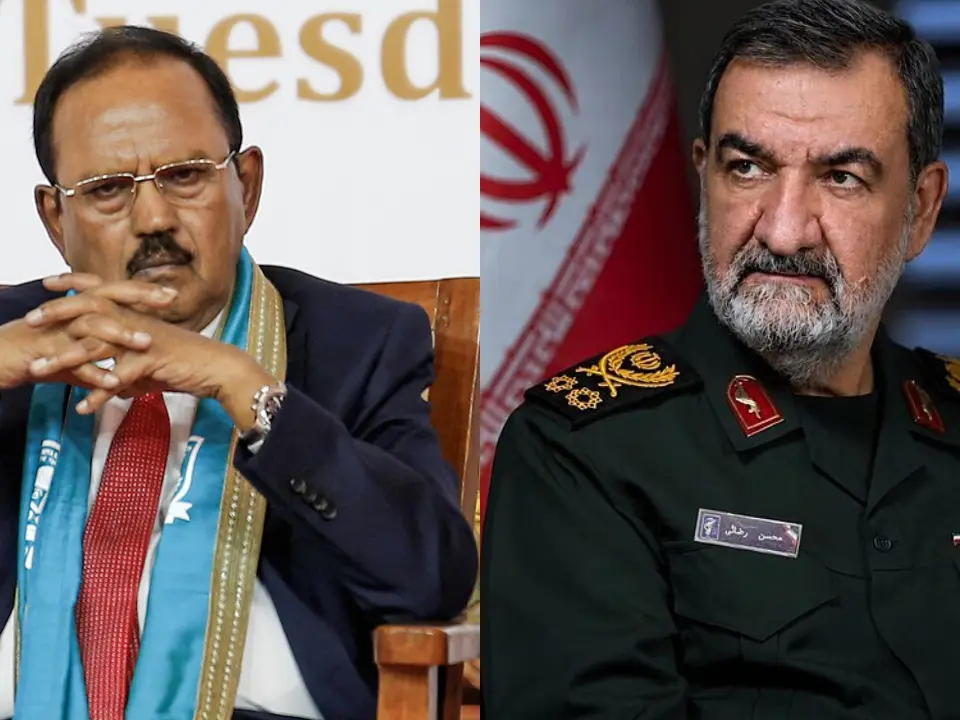
India's Ajit Doval, Iran's Mohsen Rezaei hold talks amid escalating West Asia tensions, discuss 'issues of mutual interest'
&imwidth=180&imheight=135&format=webp&quality=medium)
New Cold War: Why is China buying more gold? Explained
&imwidth=180&imheight=135&format=webp&quality=medium)
'Almost certainly': UK Prime Minister Andy Burnham says Iran's IRGC behind RAF Fairford threat
&imwidth=180&imheight=135&format=webp&quality=medium)
Elon Musk pumps $276 million into Republican campaigns ahead of US midterm elections
At present, India operates multiple satellites for strategic purposes, this includes the Cartosat series of satellites, the RISAT(Radar imaging satellites) series, EMISAT etc. In addition to this, there are large communication satellites such as GSAT-7 that caters to the Indian Navy and the GSAT-7A that caters to the Indian Air Force and Strategic Forces Command.
Strategic satellite NVS-02 faced a setback in February 2025
In February 2025, ISRO announced that its NVS-02 satellite, which is meant to serve strategic purposes, remains stuck in an initial orbit, and it has not been possible to move it to its intended orbit. Satellites have to be placed in their precise orbital slots to perform their designated role. After the announcement of the setback in February, ISRO had not provided any further updates.
Satellites are moved from one orbit to another by firing their liquid-fuelled engines that burn a fuel and oxidiser combination. In this case, it had not been possible to fire the engine and raise the satellite's orbit, due to a suspected electrical issue with the valve that releases the oxidiser. The 2,250kg NVS-02 satellite was launched by a GSLV-Mk2 rocket on January 29th, in what was ISRO's 100th rocket launch mission from the country's premier Sriharikota spaceport.
