

&imwidth=800&imheight=600&format=webp&quality=medium "Beyond uranium: India’s revolutionary leap into the thorium energy era")
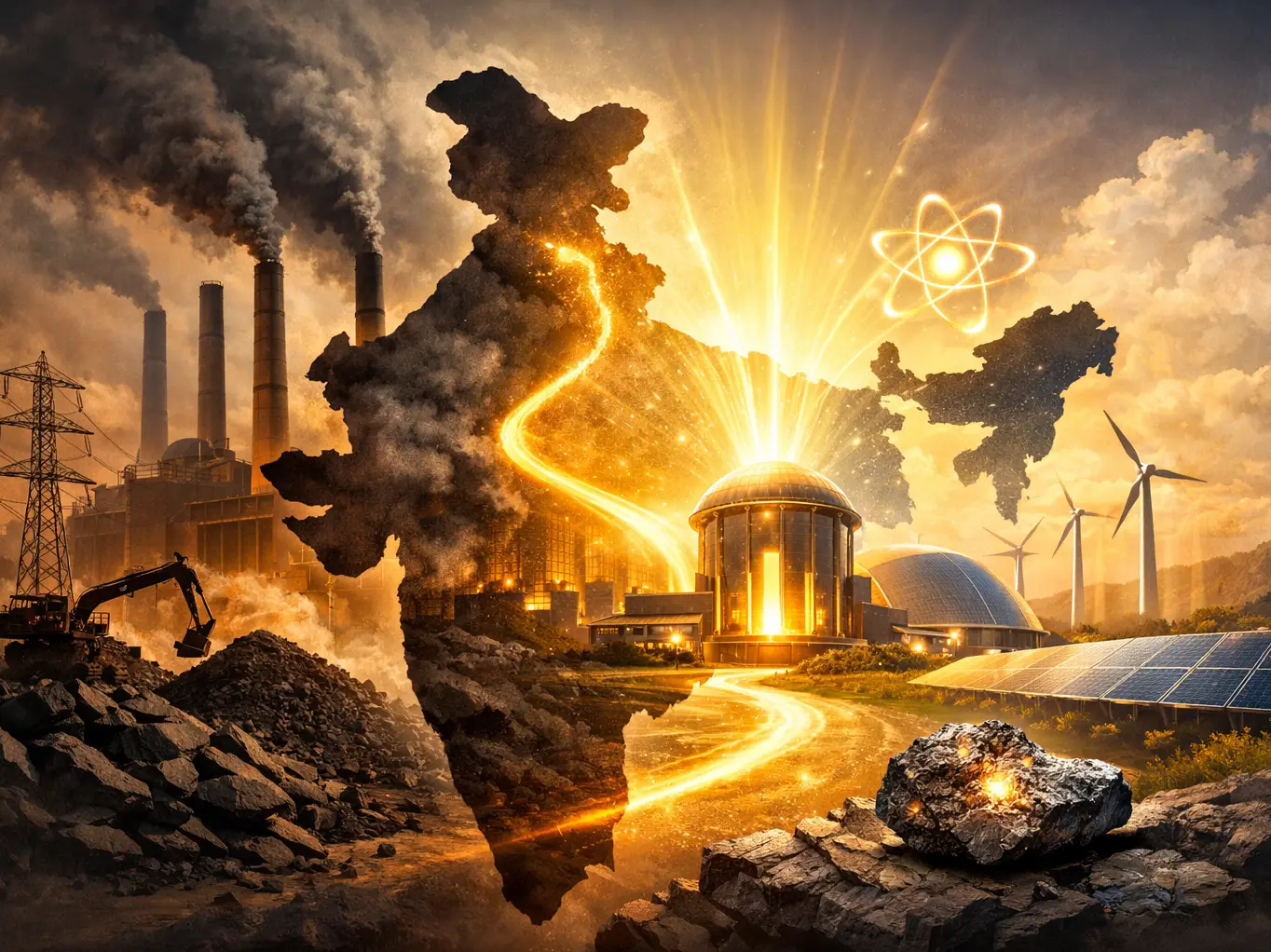
Imagine a power plant that runs on a fuel we have plenty of, produces minimal dangerous waste, and is far safer than what we use today. Sounds too good to be true? Well, it's not science fiction anymore. Maharashtra is preparing to build India's first nuclear power plants that will run on thorium instead of the usual uranium. Two plants are being planned, one generating 1,540 megawatts and another producing 440 megawatts. These could eventually supply electricity at just three and a half rupees per unit, making power more affordable while keeping our environment clean. This isn't just another construction project. It's a glimpse into how India might power itself in the coming decades.
So what exactly is thorium, and why should we care? Thorium is a silvery metal found naturally in the earth's soil and rocks. It's mildly radioactive, meaning it gives off small amounts of radiation, just like many elements around us do naturally. India is blessed with massive thorium deposits, mainly along the coastal sands of Kerala and Odisha. Nuclear power works by splitting certain materials apart, releasing tremendous energy that heats water into steam, which spins turbines to generate electricity. Most plants worldwide use uranium for this. But thorium can do the job too, though in a slightly different way.
Watch:
Here's the catch: thorium doesn't split easily on its own. Inside a reactor, when thorium absorbs tiny particles called neutrons, it gradually transforms into uranium-233, which then splits to release energy. Think of thorium as a seed that needs nurturing before it can grow into a powerful energy source.
Now comes the exciting part. Why is thorium better than uranium? The advantages are compelling. First, safety. Many thorium reactor designs work at normal atmospheric pressure, unlike uranium reactors that operate under intense pressure. If something malfunctions in a thorium reactor, it naturally cools down without needing emergency human action. The risk of catastrophic accidents drops dramatically. Uranium reactors need complex safety systems precisely because of those high pressures.
Then there's nuclear waste. Thorium creates far less long-lasting radioactive waste. Uranium reactor waste remains dangerously radioactive for thousands of years, creating nightmares for storage and disposal. Future generations shouldn't inherit our toxic leftovers. Thorium is also three to four times more abundant on Earth than uranium. For India, this is game-changing because we have mountains of thorium but barely any uranium. Using thorium means energy independence, not relying on imports.
Trending Stories
&imwidth=180&imheight=135&format=webp&quality=medium)
Other Mommy leads North American box Office as Verity, Resident Evil round out top four
&im=FitAndFill=(700,400)&imwidth=180&imheight=135&format=webp&quality=medium)
Navratri 2026: 9 days, 9 forms of Goddess Durga and 9 colours- Check the complete list
&im=FitAndFill=(700,400)&imwidth=180&imheight=135&format=webp&quality=medium)
Is sending robots to Mars easier than sending humans?
&imwidth=180&imheight=135&format=webp&quality=medium)
A watchdog rated 'ChatGPT for Teens' an unacceptable risk and says keep under-18s off it
&imwidth=180&imheight=135&format=webp&quality=medium)
1,500 drones illuminate Mumbai sky as Cordelia Cruises unveils second ship, Cordelia Sky
&imwidth=180&imheight=135&format=webp&quality=medium)
'Just coincidence': Police mistakes protester as AISA chief Neha Bora, arrests her from site
&imwidth=180&imheight=135&format=webp&quality=medium)
Anthropic's AI invented a murder witness and sent the fake tip to Philadelphia police
&imwidth=180&imheight=135&format=webp&quality=medium)
CJI Surya Kant declines INDIA bloc leaders’ request for meeting ahead of march to SC, asks them to file petition
&imwidth=180&imheight=135&format=webp&quality=medium)
One Indian killed in Riyadh airport attack; 11 others injured : MEA
&imwidth=180&imheight=135&format=webp&quality=medium)
Imran Khan released hours after Mumbai Police detain him during CJP protest
&imwidth=180&imheight=135&format=webp&quality=medium)
Nathan Lyon completes 1,000 Test runs at No. 10 to script rare cricket feat
&imwidth=180&imheight=135&format=webp&quality=medium)
Top AI models flunked a test of inventing new AI research, so much for self-improving AI
&imwidth=180&imheight=135&format=webp&quality=medium)
Wasim Jaffer blames Ajit Agarkar-led selection panel for Virat Kohli’s Test retirement
&imwidth=180&imheight=135&format=webp&quality=medium)
'Ouch!!! That must hurt': Kangana Ranaut hails Kamal Haasan's sharp reply to Elon Musk over Starlink row
&imwidth=180&imheight=135&format=webp&quality=medium)
Sidhu Moose Wala’s younger brother wins hearts by recreating late singer’s signature move at Toronto Hologram Show
&imwidth=180&imheight=135&format=webp&quality=medium)
Meta's Muse AI could be a security nightmare for India's billion-plus users
&imwidth=180&imheight=135&format=webp&quality=medium)
UK school ditches technology, shifts from screen to pen and paper for learning
&imwidth=180&imheight=135&format=webp&quality=medium)
IND vs WI, 3rd T20I: Abhishek Sharma smashes 18-ball fifty, sets record for fastest to 2,000 T20I runs
&imwidth=180&imheight=135&format=webp&quality=medium)
Houthis claim Riyadh airport attacks, Aramco strikes; issue fresh warning to airlines, travellers and workers
&imwidth=180&imheight=135&format=webp&quality=medium)
Portugal Federation confirms Cristiano Ronaldo’s return to national team despite suspension
&im=FitAndFill=(700,400)&imwidth=180&imheight=135&format=webp&quality=medium)
New OTT releases this week (October 12-18, 2026): Sacrifice, Koffee with Karan S9, Roadies Rebirth- 6 titles coming on Netflix, JioHotstar and more
&imwidth=180&imheight=135&format=webp&quality=medium)
Microsoft's Nadella says treat every AI model as already hacked, and build an 'emergency brake'
&imwidth=180&imheight=135&format=webp&quality=medium)
Delhi protest: CJI Surya Kant declines to meet India Bloc leaders
&imwidth=180&imheight=135&format=webp&quality=medium)
Are Gold and Silver poised for a rebound soon?
&imwidth=180&imheight=135&format=webp&quality=medium)
China imposes first-ever sanctions on ministers from Taiwan allies: What this means
&imwidth=180&imheight=135&format=webp&quality=medium)
McSweeney reveals how studying Virat Kohli’s YouTube clips helped Australia A conquer India
&imwidth=180&imheight=135&format=webp&quality=medium)
Maharashtra appoints FDA commissioner Tukaram Mundhe as secretary of committee for MPSC overhaul amid stir
&imwidth=180&imheight=135&format=webp&quality=medium)
The street cannot govern India, but the government cannot ignore it either
&imwidth=180&imheight=135&format=webp&quality=medium)
Iran: US accepted some conditions, Clarity needed on others
&imwidth=180&imheight=135&format=webp&quality=medium)
Nana Patekar's cause of death confirmed; here's what his postmortem report says
&imwidth=180&imheight=135&format=webp&quality=medium)
iPhone Duo price index: Tracking Apple’s latest pricing trends
&imwidth=180&imheight=135&format=webp&quality=medium)
'Say no to Muse': Meta has no control over its own moderation AI while it forces a security nightmare on everyone
&imwidth=180&imheight=135&format=webp&quality=medium)
Delhi Protest: Congress calls for march to Supreme court
&imwidth=180&imheight=135&format=webp&quality=medium)
Delhi wakes up to heavy rain, thunderstorms; yellow alert in place; temperature drops
There's even a security benefit. Thorium fuel cycles make it extremely difficult to produce weapons-grade materials, which is why the international community sees it as a safer option. However, thorium reactors do need a small amount of uranium or plutonium to kickstart operations, whereas uranium reactors can begin more easily.
If thorium is so wonderful, why haven't we been using it all along? The answer lies in technological complexity and our nuclear journey. India recognised thorium's potential way back in the 1950s. Our brilliant scientist Dr. Homi Bhabha created a three-stage masterplan. Stage one used natural uranium in heavy water reactors, which we operate today. Stage two involved building fast breeder reactors using plutonium waste from stage one.
Here's where it gets fascinating. Fast breeder reactors are like magic lamps that create more fuel than they consume. While producing electricity, they convert non-fuel material into new fuel. Imagine a car that somehow makes more petrol while driving! This ingenious process stretches our limited uranium much further. Stage three envisioned using thorium with fuel from stage two to generate massive amounts of clean energy. We're still working on completing stage two.
The technology for large-scale thorium reactors needs extensive research, testing, and validation. India has tested thorium in small experimental setups and designed an Advanced Heavy Water Reactor that can use thorium, but no full-sized commercial plant operates yet. Building nuclear facilities takes years of rigorous safety checks and government approvals.
Globally, no large commercial thorium plants exist anywhere. Over 400 nuclear plants worldwide run on uranium. However, progress is happening. China recently started a small experimental thorium reactor in its deserts and plans bigger ones. India and China now lead global thorium research.
Maharashtra's ambitious plan could make India among the first nations to operate real commercial thorium reactors. This means cleaner energy fighting climate change, affordable electricity for millions, and using our own abundant resources instead of depending on others. For a country with India's massive energy needs and environmental challenges, this bold step toward a sustainable future isn't just smart—it's absolutely necessary.
