Beyond BrahMos: India targets Rs 50,000 crore in defence exports with unmatched price edge

&imwidth=600&imheight=450&format=webp&quality=medium "Beyond BrahMos: India targets Rs 50,000 crore in defence exports with unmatched price edge")
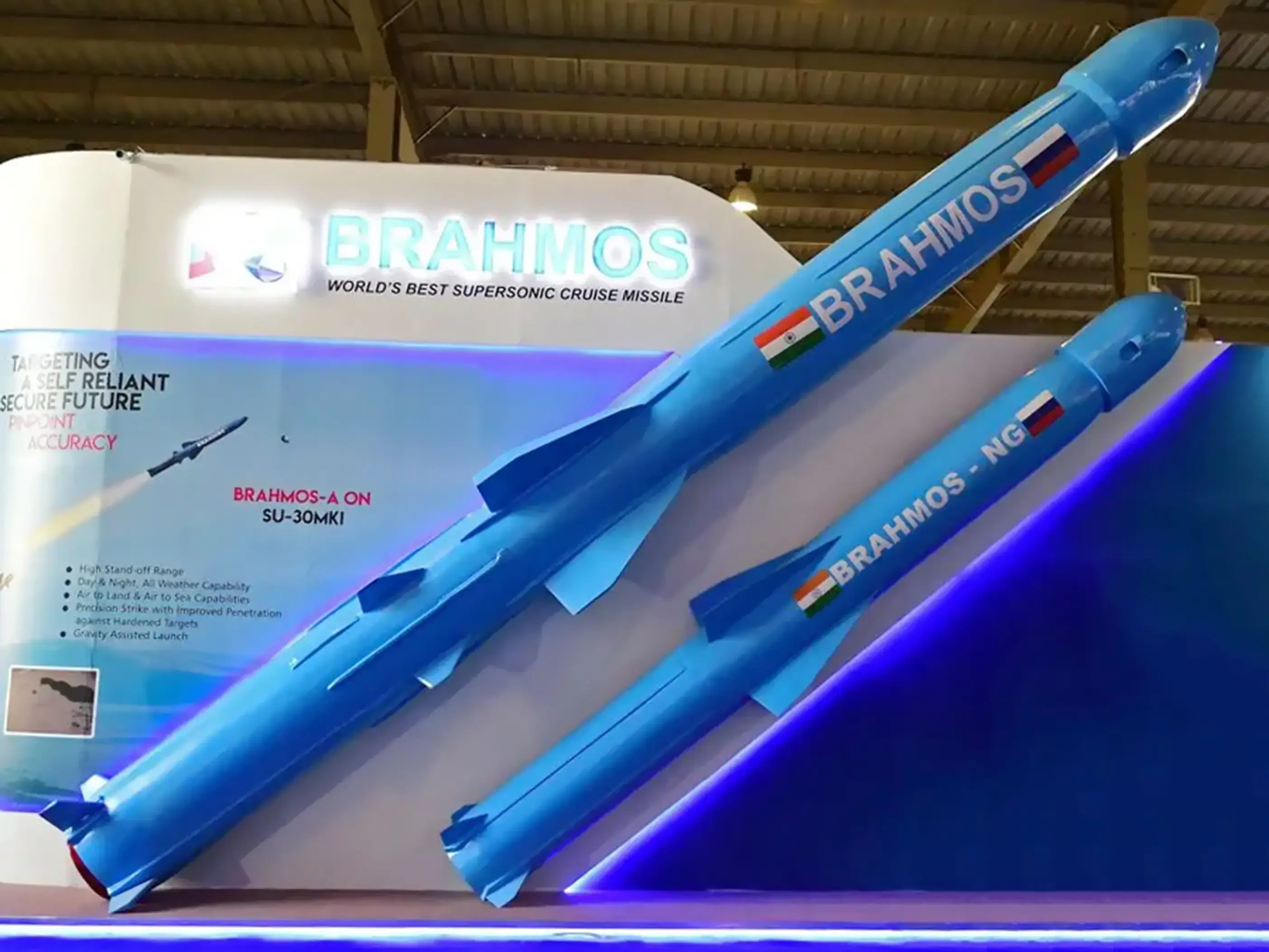
Quarter-cost advantage: How cheap missiles are fueling India’s arms export boom Photograph: (Credit: BrahMos Aerospace)
India targets ₹50,000 crore in defence exports, leveraging a massive 75% cost advantage over global rivals for BrahMos, Akash, and artillery systems.
India's defence export ambitions rest on a single competitive edge that Defence Secretary Rajesh Singh openly acknowledged on Friday (Sep 25). Speaking at the 13th PAFI Annual Forum 2026, Singh said New Delhi can offer missile systems at roughly a quarter of what foreign original equipment manufacturers charge, a gap he described as the country's core unique selling proposition in a crowded global arms market.
That pricing advantage, Singh told the panel discussion on India's competitive edge, is already translating into orders. The country secured Rs 38,000 crore worth of defence export orders in the past year, and the ministry now expects that figure to climb to Rs 50,000 crore within the next two years a target Singh said was achievable even without formal data projections to back the forecast.
The BrahMos supersonic cruise missile remains India's flagship export product, with sales underway or in progress to several Southeast Asian nations. But Singh pointed to a broadening export basket beyond the marquee missile: artillery systems, mounted gun platforms, and DRDO-developed technology now manufactured by private firms have found buyers abroad, with the Akash surface-to-air missile system also drawing rising interest from potential foreign customers.
“The most well-known (product) is the BrahMos, which is fairly coveted and which we are selling to or in the process of selling to, several Southeast Asian countries. There are (exports) also increasingly in areas like artillery and mounted gun systems. We have DRDO technology-based private sector products which have been exported to certain countries, and there is more demand coming. Possibly also Akash surface-to-air missiles where there is a lot of interest,” Singh told news agency ANI.
Trending Stories
)
)
)
)
)
)
)
&im=FitAndFill=(700,400))
)
)
)
)
&im=FitAndFill=(700,400))
)
)
)
)
)
)
)
)
)
)
)
)
)
)
)
)
)
Singh framed exports as more than a revenue stream, describing them as strategic instruments in themselves. Selling arms to partner nations, he said, demonstrates both technological credibility and cost competitiveness, while simultaneously strengthening allied militaries and embedding long-term dependency through years of spares, maintenance and support contracts. He added that exports also generate foreign exchange earnings and domestic employment.
On the Advanced Medium Combat Aircraft programme, Singh noted that three shortlisted Indian companies have already submitted proposals, and reiterated that India's lower missile production costs give it a structural edge in that domain as well.
Government data lends weight to Singh's projections. According to the Defence Ministry, India logged ₹38,424 crore in defence exports during 2025–26, with an exporter base of 145 companies. Officials say this is evidence of deepening industrial participation beyond state-run giants
Supporting this expansion is the revamped Defence Exim portal, which now offers end-to-end application processing, automated company verification, simplified registration, real-time order tracking and secure payment integration. The ministry says the platform is designed to improve transparency and regulatory compliance while reinforcing the government's broader Aatmanirbhar Bharat and Make in India goals, positioning India not merely as a defence buyer, but increasingly as a manufacturer and exporter in its own right.

