
&imwidth=800&imheight=600&format=webp&quality=medium "From FPV strikes to 1,000 km missions, India’s drone revolution goes long range")
India’s combat drone ecosystem is moving from tactical battlefield systems towards weapons capable of striking targets hundreds of kilometres away. The transition has gathered momentum after Operation Sindoor, where indigenous drones were deployed in contested battlefield conditions. Now, Indian developers are working on longer-range one-way attack platforms designed to extend the reach of unmanned warfare.
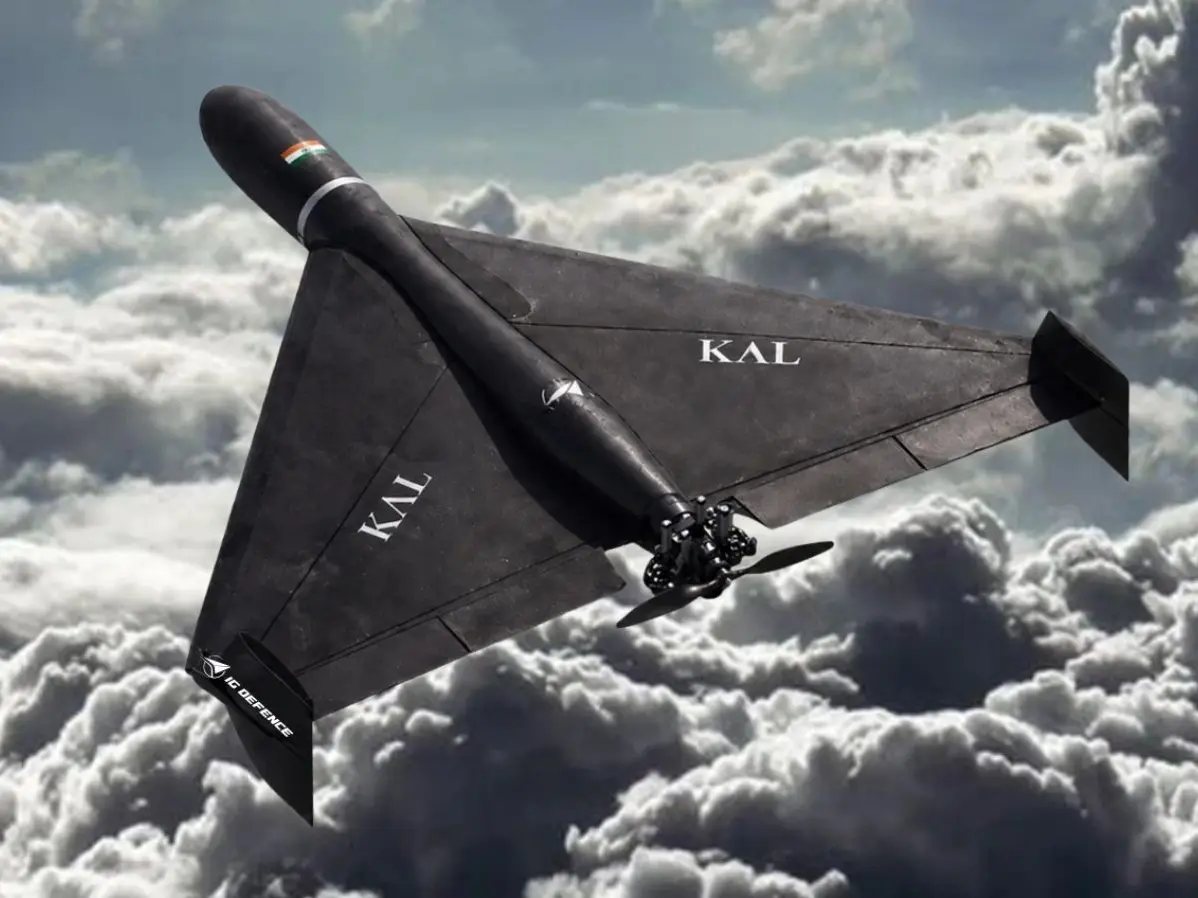
One such platform is KAL, a long-range attack drone developed by IG Defence and recently tested at the Pokhran field firing range. The company says the platform is designed for a range of up to 1,000 kilometres, an endurance of around eight hours and a warhead of approximately 50 kilograms. For Major General R C Padhi, Senior Vice President at IG Defence, the transition builds on lessons learnt during Op Sindoor.
"Our drones were engaged in the battlefield and we got all those drones battle tested," Padhi told WION’s Defence Pulse. He said the company deployed VTOL (Vertical Take-Off and Landing) platforms, FPV kamikaze drones, surveillance systems and logistics drones during the operation.
The crucial difference, Padhi said, was exposure to an actual contested environment rather than controlled trials. "When you are testing your drones in the range, there is no enemy presence," he said. "But in a battlefield, it is a contested environment. The enemy is also trying to dominate over you."
Padhi claimed the drones were used against gun positions, command and communication centres, ammunition dumps and bunkers during Op Sindoor.
Attention is now shifting towards longer-range systems. Describing KAL as a strategic rather than tactical drone, Padhi said its greater range and warhead could allow it to engage targets much deeper inside adversary territory. The recent Pokhran trial also tested its ability to launch from a vehicle-mounted mobile platform.
According to General Padhi, the significance lies in extending indigenous unmanned strike capability beyond the immediate battlefield. "Most of the strategic assets of the adversaries are much behind our border areas," he said.
For India, the evolution represents a significant shift. The indigenous drone story is moving from surveillance and tactical FPV strikes towards autonomous systems designed for long-range strategic missions.


