
&imwidth=800&imheight=600&format=webp&quality=medium "How 'Azadi' evolved from anti colonial rallying cry to political flashpoint")
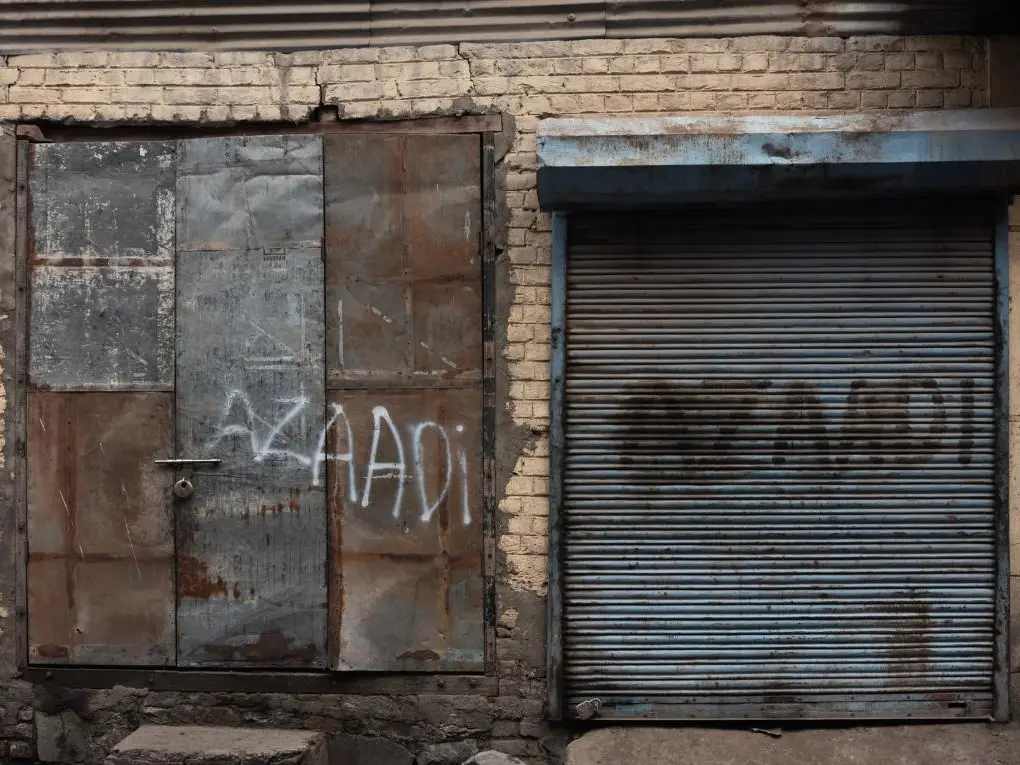
The contagious word "Azadi", which was the cry of Indian youth in the Jantar Mantar in the past month or at universities across India over the past decades, is often wrongly attributed to the Kashmiri secessionist movement. The ideological moorings of the Persian word “Azadi” were anchored in resistance itself, one that is etched in the political consciousness of India, though the slogan itself had failed to awaken or mobilise the anti-establishment sentiment it intended, partly due to the political stigma associated with it. That stigma makes it deeply polarised, creating an immediate ideological wall instead of broad consensus.
From anti-colonial roots to social justice
For decades leading up to 1947, demanding "Azadi" was considered the highest form of patriotism. Not just "Azadi"; many other Urdu and Persian vocabulary terms, such as "Inquilab Zindabad" and "Sarfaroshi ki Tamanna", formed the bedrock of the revolutionary expression. It is kind of an irony that the post-colonial nation-state bureaucratised the word “Azadi” and absorbed it within school and college textbooks. The word did not die, but it was pacified, losing its revolutionary potential.

It found a rebirth in the feminist movement in the 1980s in Pakistan. The framing of Azadi reverberated under General Zia-ul-Haq's dictatorship in the streets where women became the vanguard of resistance; they framed "Azadi" against Patriarchy. Zia's regime introduced repressive Islamic laws like the Hudood Ordinances, stripping women of basic rights.
Feminist activist Kamla Bhasin encountered the chant and brought it back to India. “I witnessed one such meeting, and that’s where they chanted it. The chant went: 'Aurat ka naara – azadi/Bachchon ka naara – azadi/Hum leke rahenge – azadi/Hai pyara naara – azadi,'" said Bhasin in an interview with Quint in 2019. She first raised it publicly in 1991 at a Women's Studies conference at Jadavpur University.
Simultaneously, it found another rebirth in the streets of Srinagar during the Kashmiri insurgency in the late 1980s-90s. It started to turn rhythmic and an anthem for the separatist movement in the region.
Trending Stories
)
US Supreme Court backs Trump administration's use of SAVE database to check voter citizenship
)
Exclusive | 'We always want to improve': Suruchi, Kamaljeet after winning Asian Games gold
)
WATCH | As Shehbaz Sharif claims Pakistan’s ‘victory’ during 2025 conflict, Indian diplomat R Srinivas laughs at UN
)
10,000 gather in support of 87-year-old forcefully evicted from home of 71 years
)
Nigeria Navy moves to boost oil security, tackle crude theft and infrastructure threats
)
Saudi Arabia, Turkey and Pakistan to hold urgent military talks amid intensifying Houthi attacks
)
Bollywood mourns Mushtaq Khan: Sunny Deol, Rajpal Yadav and others pay tribute
)
Army chief reviews operational preparedness along LoC, visits mega eye camp in Tangdhar
)
Pentagon quietly adds 37 wounded troops to Iran war tally without explaining when or how
&im=FitAndFill=(700,400))
New Friday OTT releases (September 25, 2026): Don’t Be Shy, Hunkkaar: The Roar, Mango Pachcha- 6 movies and TV shows on Netflix, Prime Video and more
)
Ex-Liverpool forward Mohamed Salah banned from driving in United Kingdom for six months
)
India-New Zealand FTA is ‘an expression of trust’, NZ High Commissioner Patrick John Rata says
)
Watch: PM Modi joins Bhajan Clubbing event in Delhi on Deendayal Upadhyaya's birth anniversary
)
Scientists detect first radio signals directly from faraway planet
)
'We do not wish to continue. It's America that must choose': Iran president Pezeshkian calls on US to end war
)
99.9% more powerful - Scientists find boy who can recall memories from just 3 months of age
)
'A terrorist country is asking me that question?': Jaishankar hits back at Pakistani journalist at UN; flags attacks on commercial shipping
)
Red Sea crisis: Houthis promise not to target European ships; UNSC condemns Saudi attacks
)
'Blockbuster' nor'easter develops an eye similar to hurricanes as warnings are issued
)
Meet Adrian Abraham: 9-year-old Indian-origin guitar prodigy aiming for a Guinness World Record
)
Myanmar training camp case: US national, 6 Ukrainians allowed to meet their families abroad
)
'Making history': Xi Jinping praises Trump as US-China leaders dine at White House
)
Bias or safety concerns? Bengaluru CEO says firm will not hire men from UP, Bihar, Rajasthan, MP. Here's why
)
‘Not just a local tragedy’: Nepal PM Shah warns UN of growing climate threat, says Nepal floods were 'a warning to the world'
)
Beijing to Washington! Ivanka Trump makes a style statement in Chinese designer Guo Pei for President Xi Jinping’s White House welcome
)
Trump-Xi summit wrap: Big pageantry, Iran talks, few major developments and more meetings planned
)
‘It is all possible’: Putin weighs next steps on Ukraine talks, rules out Europe conflict
)
US court backs Pentagon's decision to exclude Anthropic over Claude AI restrictions
)
'FIRST LOOK from inside Noah’s Ark': Researchers share video from inside mysterious mound in Turkey
&im=FitAndFill=(700,400))
‘Absolutely savage, sickening’: Zelensky slams Russia as daytime strikes kill 5 in Kyiv
)
'What kind of confession is this?': Pakistan PM Shehbaz Sharif’s 'terrorists would be roaming New York' remark goes viral, raises alarm online. Watch
)
Tesla is preparing something big for Optimus: new Gen 3 models surface in app
)
Outrage erupts after 3-year-old is married to 60-year-old man in Pakistan, link to her sister's murder being probed
)
OpenAI AI Agents hacked 4 websites before Hugging Face, researchers reveal
)
‘Attack on Mecca a red line for Pakistan’: Shehbaz Sharif warns Houthis at UN
“Hum kya chahte? Azadi! Zara zor se bolo – Azadi! Hai hak hamara – Azadi! Hum cheen ke lenge – Azadi! Khushboo wali – Azadi! Hai jaan se pyari – Azadi! Aye moula dede – Azadi! Shodah ke sadkey – Azadi! Mein marr bhi Jaaun toh, mera kafan pe likhna – Azadi! Aayee, aayee – Azadi!”
With demands ranging from an independent Kashmir to unification with Pakistan. The period also saw the mass exodus of Kashmiri Pandits from the Valley.
On February 14, 2013, following the Nirbhaya gang rape, Kamla Bhasin was leading the protest march “One Billion Rising from South Asia”. During that march, she went on to the stage in a wheelchair and delivered the highly animated version-
“Hum leke rahenge – Azadi! Tum kuch bhi karlo – Azadi! Pitra-satta se – Azadi! Loot-paat se – Azadi!”
Though she did mention that its cry for equality and social justice, it was not freedom from India but freedom within India. From there, the format spread to Indian labour unions and tribal rights groups; it seeped into universities in 2016 in JNU with people like Kanhiya Kumar, demanding Azadi from discrimination, Brahminism, Manuvad and poverty. Then it ventured into pop culture with a modern rendition in the film “Gully Boy”.
‘Azadi’ irked the Indian government. It acknowledged the revolutionary potential, became increasingly wary and viewed it as a threat. In January 2020, Uttar Pradesh chief minister Yogi Adityanath said those found chanting the 'azadi slogan' during anti-CAA protests would be booked for sedition. It became a symbol of dissent in the Anti-CAA protest in 2020, then in the Farmer protest, now as recent as the CJP protests in Jantar Mantar. The state, which inherited the colonial-era sedition law, reacted almost the same as the British Colonial government did. It stigmatised the chant; the mainstream semiotic flipped the call for freedom to treason. It is criticised severely when raised at public squares or political rallies, sometimes resulting in police crackdowns, legal charges, or organisers banning the chant.
Throughout its journey, rather than having a single political meaning, “Azadi” has evolved and acquired different meanings across movements, from anti-colonial resistance and feminist campaigns to Kashmiri separatism and expression of dissent in contemporary protests over social justice.

