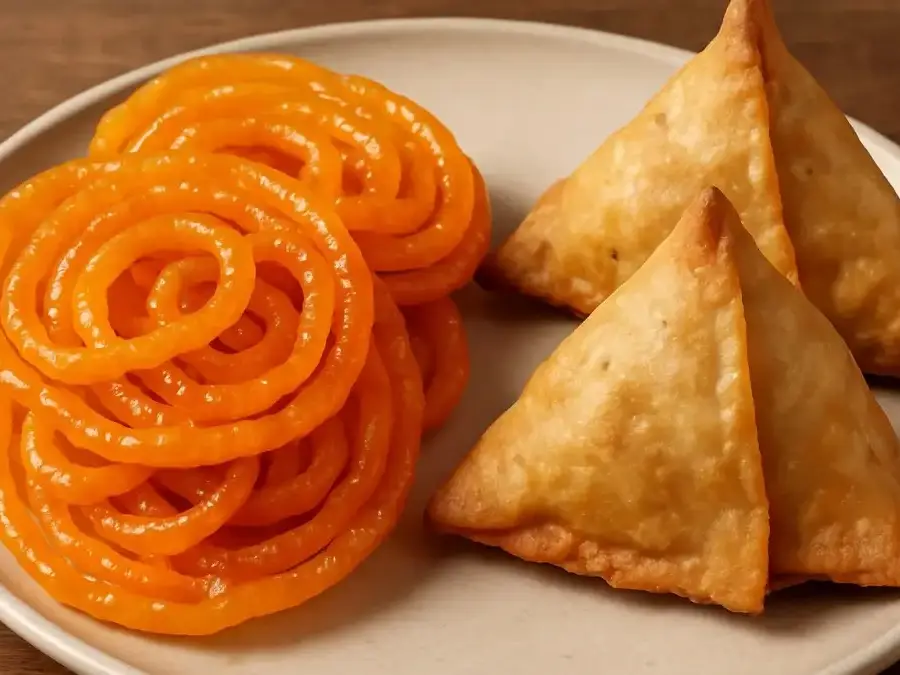
After cigarettes, samosa and jalebi to carry warning. Government's plan to fight obesity

&imwidth=600&imheight=450&format=webp&quality=medium "After cigarettes, samosa and jalebi to carry warning. Government's plan to fight obesity")
After cigarettes, samosa and jalebi to carry warning. Government's plan to fight obesity Photograph: (Credit: AI)
As colourful as Indian culture is, equally diverse is the country’s snack menu. And now, the government has decided to highlight a precautionary health warning on snacks like jalebi and samosas.
As colourful as Indian culture is, equally diverse is the country’s snack menu. And now, the government has decided to highlight a precautionary health warning on snacks like jalebi and samosas. Sweets and savouries in India will now have a cautionary message similar to those on cigarette packs. A jalebi with a disclaimer may be unusual, but a progressive step towards health and fitness. The health ministry has alerted all central institutions to carry ‘oil and sugar boards’, AIIMS Nagpur has already been instructed, according to a report by the news outlet Times Of India (TOI).
“This is the beginning of food labelling becoming as serious as cigarette warnings,” said Dr Amar Amale, president of the Cardiological Society of India’s Nagpur chapter, told TOI.
“This is not about banning food. But if people knew that one gulab jamun might contain five teaspoons of sugar, they might think twice before going for seconds,” said Dr Sunil Gupta, a senior diabetologist.
"If the government wants to put regulations on jalebi and samosa, then burgers, pizzas, and doughnuts should be regulated too. If we regulate small street vendors selling samosas, then eateries like McDonald's should also be regulated," Shiv Sena MP Milind Deora told news agency ANI
He added, "Obesity is a big issue in India, and it is about to become a social and economic issue as well. I want to thank PM Modi for starting an 'anti-obesity' campaign on a national level... Foreign junk food should be regulated equally to Indian junk food. There should be a level playing field. America's biggest challenge is obesity. The multi-national quick service restaurants are bringing a Western culture to our country, which is not wrong. But it has a negative byproduct, which is obesity, and this is our committee's suggestion.”
Trending Stories
&imwidth=280&imheight=210&format=webp&quality=medium)
&imwidth=280&imheight=210&format=webp&quality=medium)
&imwidth=280&imheight=210&format=webp&quality=medium)
&imwidth=280&imheight=210&format=webp&quality=medium)
&imwidth=280&imheight=210&format=webp&quality=medium)
&imwidth=280&imheight=210&format=webp&quality=medium)
&imwidth=280&imheight=210&format=webp&quality=medium)
&imwidth=280&imheight=210&format=webp&quality=medium)
&imwidth=280&imheight=210&format=webp&quality=medium)
&imwidth=280&imheight=210&format=webp&quality=medium)
&imwidth=280&imheight=210&format=webp&quality=medium)
&imwidth=280&imheight=210&format=webp&quality=medium)
&imwidth=280&imheight=210&format=webp&quality=medium)
&imwidth=280&imheight=210&format=webp&quality=medium)
&imwidth=280&imheight=210&format=webp&quality=medium)
&imwidth=280&imheight=210&format=webp&quality=medium)
&imwidth=280&imheight=210&format=webp&quality=medium)
&imwidth=280&imheight=210&format=webp&quality=medium)
&imwidth=280&imheight=210&format=webp&quality=medium)
&imwidth=280&imheight=210&format=webp&quality=medium)
&imwidth=280&imheight=210&format=webp&quality=medium)
&imwidth=280&imheight=210&format=webp&quality=medium)
&imwidth=280&imheight=210&format=webp&quality=medium)
&imwidth=280&imheight=210&format=webp&quality=medium)
&imwidth=280&imheight=210&format=webp&quality=medium)
&imwidth=280&imheight=210&format=webp&quality=medium)
&imwidth=280&imheight=210&format=webp&quality=medium)
&imwidth=280&imheight=210&format=webp&quality=medium)
&imwidth=280&imheight=210&format=webp&quality=medium)
&imwidth=280&imheight=210&format=webp&quality=medium)
&imwidth=280&imheight=210&format=webp&quality=medium)
&imwidth=280&imheight=210&format=webp&quality=medium)
&imwidth=280&imheight=210&format=webp&quality=medium)
&imwidth=280&imheight=210&format=webp&quality=medium)
&im=FitAndFill=(700,400)&imwidth=280&imheight=210&format=webp&quality=medium)
&imwidth=280&imheight=210&format=webp&quality=medium)
&imwidth=280&imheight=210&format=webp&quality=medium)
&imwidth=280&imheight=210&format=webp&quality=medium)
&imwidth=280&imheight=210&format=webp&quality=medium)
This move is aimed at lowering the rate of non-communicable diseases like diabetes, against which India has been putting up a tough fight.
Doctors and public health experts see this as part of a larger fight against non-communicable diseases such as diabetes, heart disease, and hypertension — many of which are diet-related. The initiative also ties into Prime Minister Narendra Modi’s “Fit India” campaign and his push for a 10% reduction in national oil consumption.

