Aditya-L1: India’s first solar mission successfully enters final orbit for uninterrupted sun observation

ISRO Aditya L1
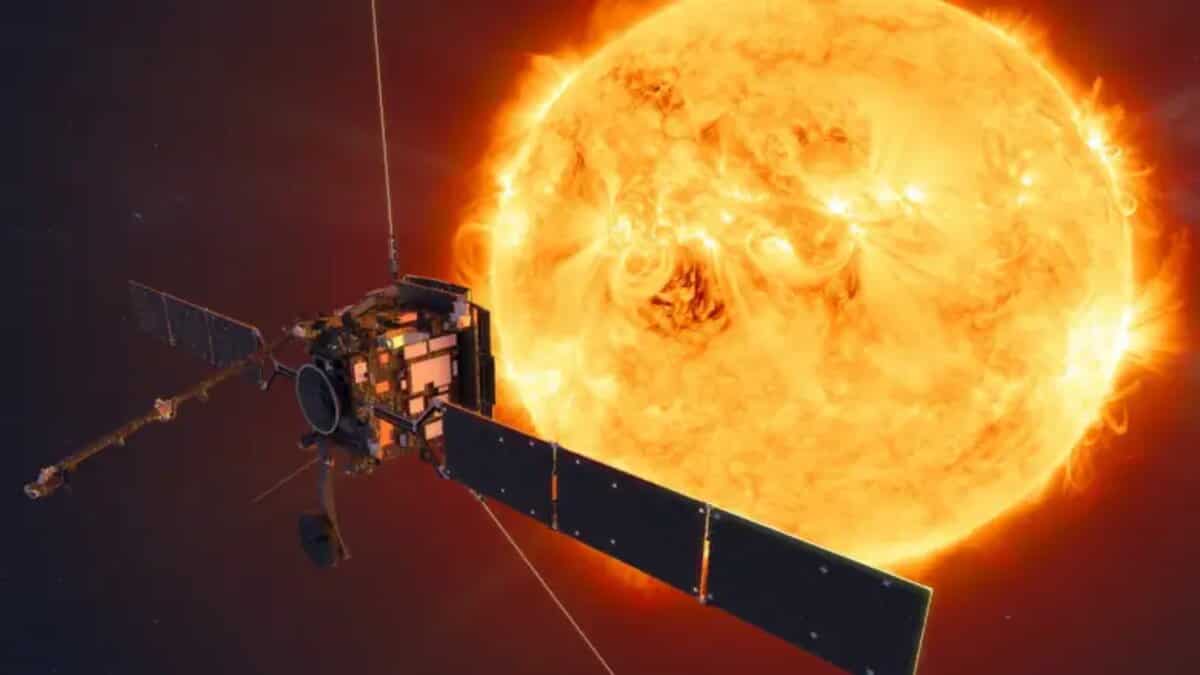
Aditya-L1, the inaugural mission by the Indian Space Research Organisation (ISRO) aimed at solar study, successfully reachedits designated orbit on Saturday (Jan 6), concluding its ambitious journey that commenced over four months ago from ISRO's Sriharikota launchpad.
This nearly 1,500 kg satellite, developed at a cost of $50 million, will serve as India's primary space-based observatory dedicated to studying the sun from a distance of approximately 1.5 million kilometresaway from Earth.

The mission aims to observe the Sun's corona and understand its extreme heat from its orbit.
Positioned in a halo orbit encircling Lagrange point 1 (L1) at approximately 4 pm, the chosen final insertion point offers a strategic advantage. This orbit remains unaffected by eclipses, allowing uninterrupted observation of the Sun.
)
Asian Games: Shooting spree continues as India win silver in women’s 50m rifle 3P team event
)
Bollywood mourns Mushtaq Khan: Sunny Deol, Rajpal Yadav and others pay tribute
)
'A terrorist country is asking me that question?': Jaishankar hits back at Pakistani journalist at UN; flags attacks on commercial shipping
&im=FitAndFill=(700,400))
New Friday OTT releases (September 25, 2026): Don’t Be Shy, Hunkkaar: The Roar, Mango Pachcha- 6 movies and TV shows on Netflix, Prime Video and more
)
India's UN Envoy slams Pakistan: 'They claim security by day, terrorism by night'
)
10,000 gather in support of 87-year-old forcefully evicted from home of 71 years
)
Indian diplomat Petal Gahlot raises deteriorating situation in Pakistan-occupied Kashmir in right of reply at UN
)
US court backs Pentagon's decision to exclude Anthropic over Claude AI restrictions
)
OpenAI AI Agents hacked 4 websites before Hugging Face, researchers reveal
)
Yemen's war escalates: Saudi-backed leader calls for general mobilisation against the Houthis
)
'FIRST LOOK from inside Noah’s Ark': Researchers share video from inside mysterious mound in Turkey
)
Army chief reviews operational preparedness along LoC, visits mega eye camp in Tangdhar
)
Pentagon quietly adds 37 wounded troops to Iran war tally without explaining when or how
)
Heart of the Beast review: Brad Pitt leads a gripping tale of survival and loyalty
)
Myanmar training camp case: US national, 6 Ukrainians allowed to meet their families abroad
)
Scientists detect first radio signals directly from faraway planet
)
Did Hitler kill his niece Geli Raubal? Newly found records reopen a 95-year-old mystery
)
Bias or safety concerns? Bengaluru CEO says firm will not hire men from UP, Bihar, Rajasthan, MP. Here's why
)
Gaza's war turned environmental damage into second crisis
)
Trump rejects Iran's 7-day ceasefire proposal as US weighs renewed bombing after midterms: Report
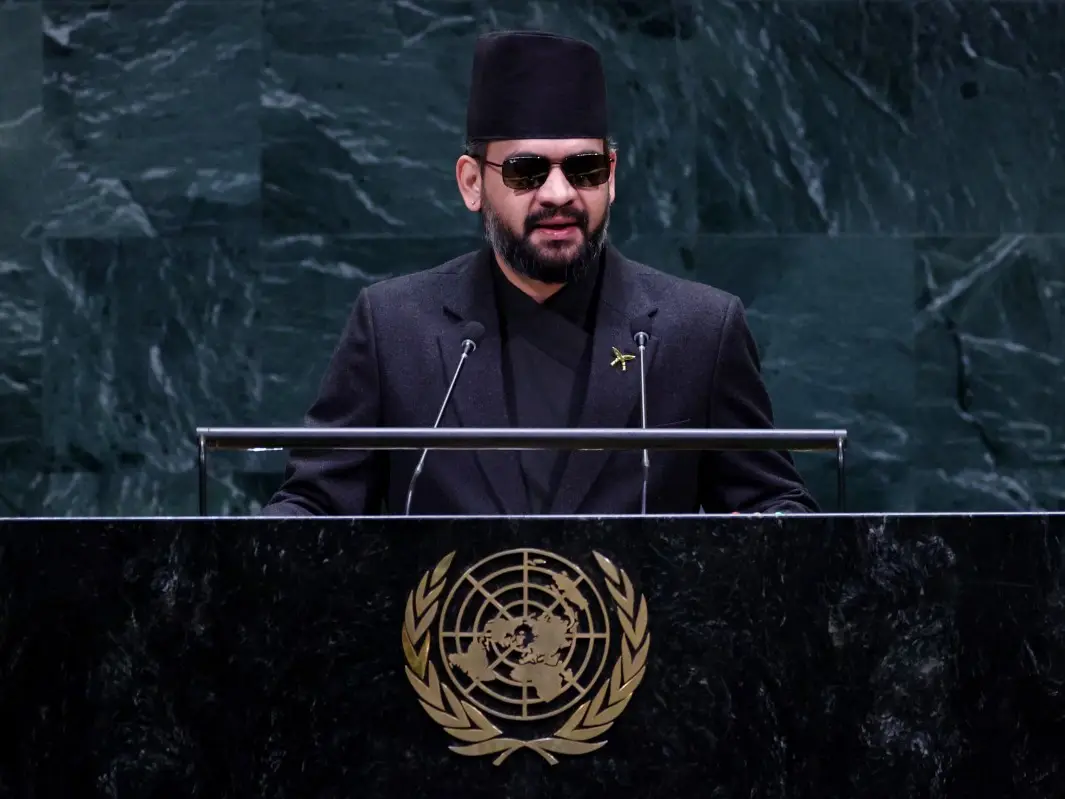)
‘Not just a local tragedy’: Nepal PM Shah warns UN of growing climate threat, says Nepal floods were 'a warning to the world'
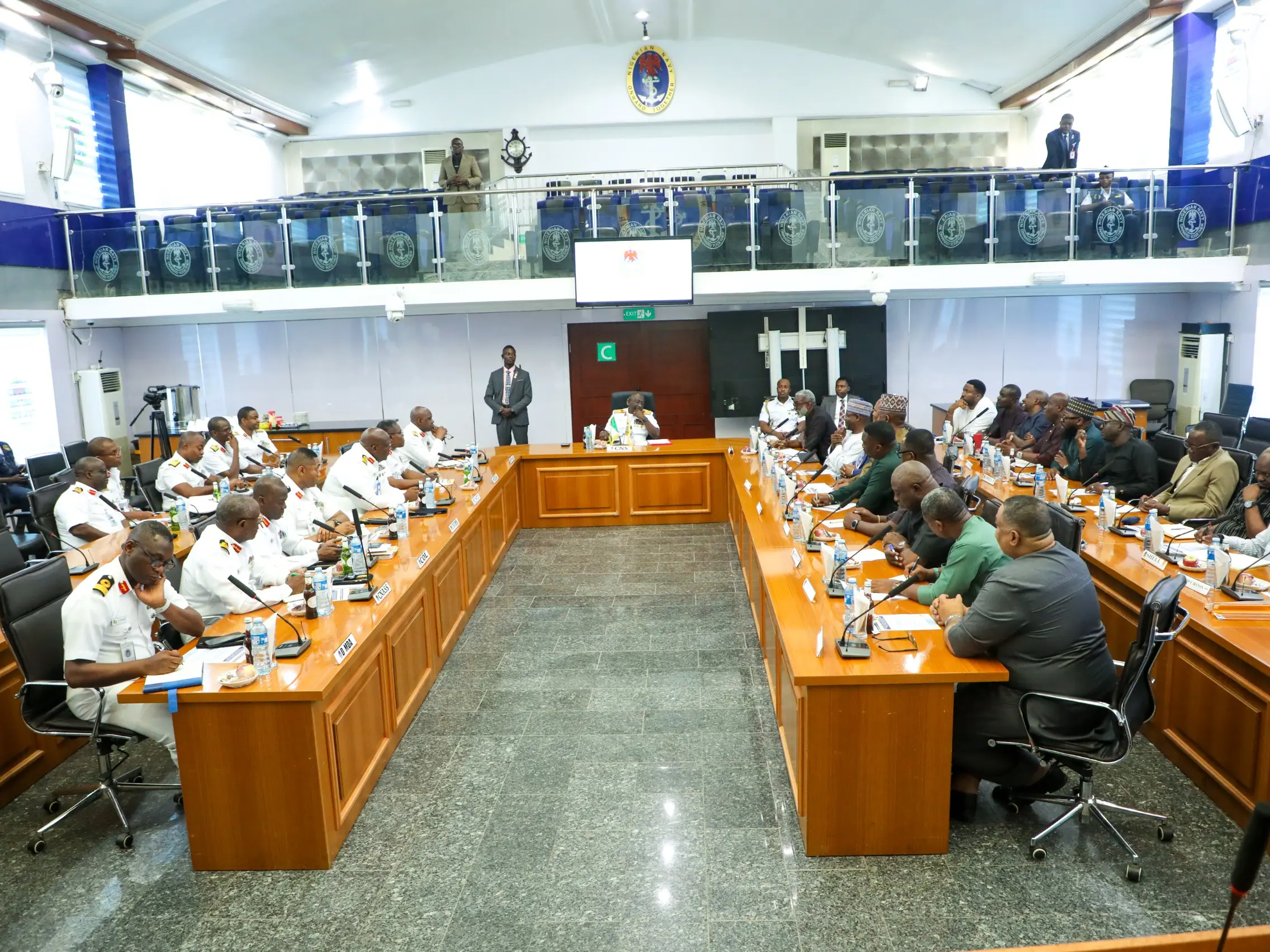)
Nigeria Navy moves to boost oil security, tackle crude theft and infrastructure threats
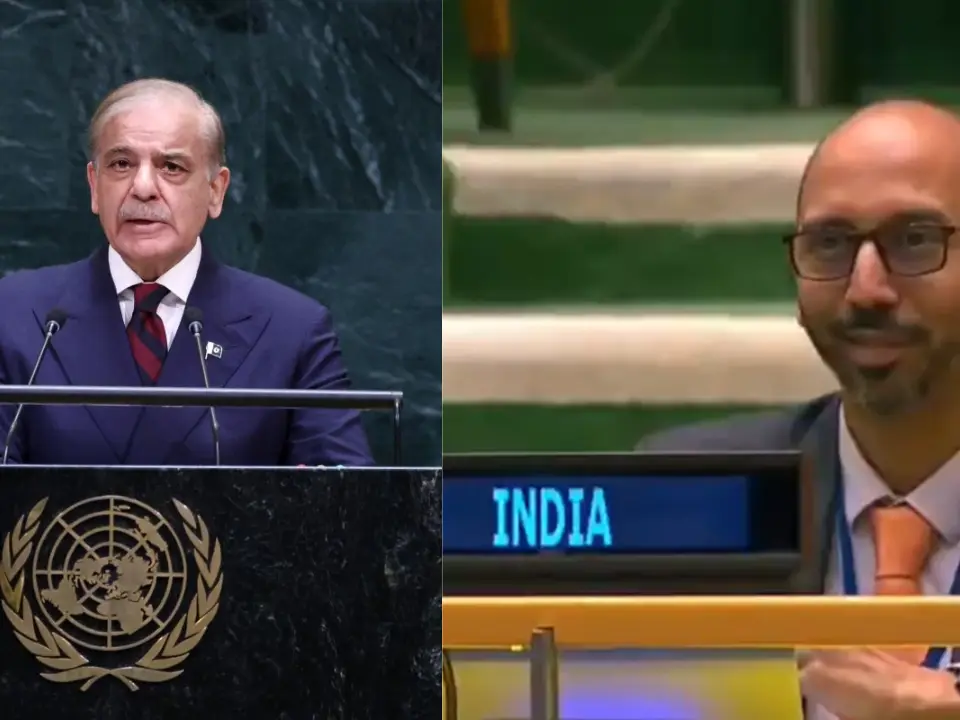)
WATCH | As Shehbaz Sharif claims Pakistan’s ‘victory’ during 2025 conflict, Indian diplomat R Srinivas laughs at UN
)
Jay-Z rape case: Accuser says allegations were false, never met rapper
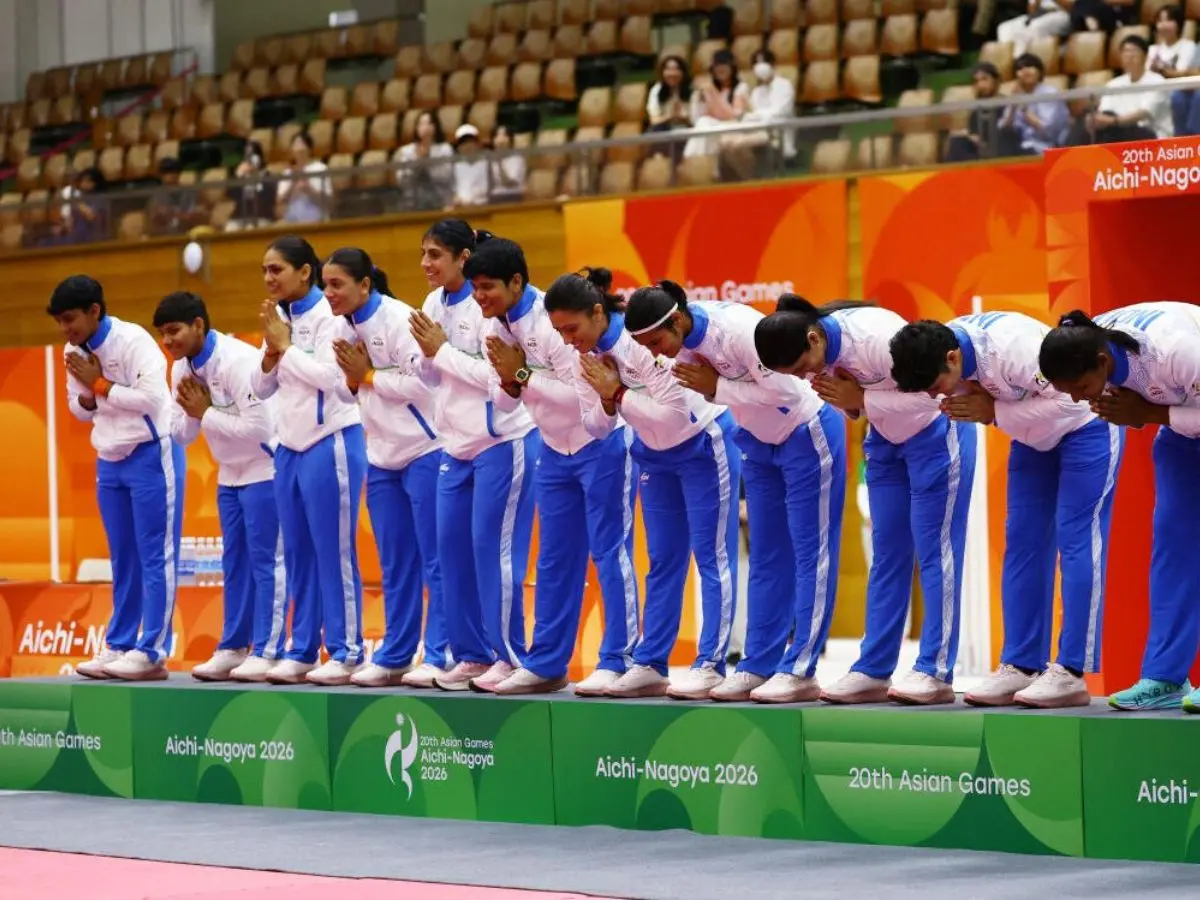)
Asian Games 2026: India women’s kabaddi team edge Iran 37-34 to clinch 3rd gold medal
)
Cindy Crawford’s son Presley Gerber cremated as death probe continues
)
Pakistan deploys over 20,000 security personnel as PTI vows march for Imran Khan's release
)
Saudi oil exports surge despite Iran war
)
'Making history': Xi Jinping praises Trump as US-China leaders dine at White House
)
Tesla is preparing something big for Optimus: new Gen 3 models surface in app
)
US Supreme Court backs Trump administration's use of SAVE database to check voter citizenship
)
‘It is all possible’: Putin weighs next steps on Ukraine talks, rules out Europe conflict
)
Outrage erupts after 3-year-old is married to 60-year-old man in Pakistan, link to her sister's murder being probed
)
Trump-Xi summit wrap: Big pageantry, Iran talks, few major developments and more meetings planned
)
Red Sea crisis: Houthis promise not to target European ships; UNSC condemns Saudi attacks
)
‘Attack on Mecca a red line for Pakistan’: Shehbaz Sharif warns Houthis at UN
The Lagrange Point is a unique spot where there is an equilibrium between the gravitational forces of the Earth and the Sun. While absolute neutralisation is not achievable due to the forces of other celestial bodies like Moon, Mars, and Venus, the L1 point nonetheless provides a stable position for observational purposes.
Hailing the feat, Union Minister of State Science & Technology Dr Jitendra Singh said in a tweet, "What a glorious turn of year for Bharat. Under the visionary leadership of PM Modi, yet another success story scripted by Team ISRO. Aditya L1 reaches its final orbit to discover the mysteries of the Sun-Earth connection."
Also watch this report
ISRO has outlined the primary scientific goals of the Aditya-L1 mission as follows
- Investigate the dynamics of the solar upper atmosphere, specifically the chromosphere and corona.
- Explore the heating processes in the chromosphere and corona, examine the physics of partially ionised plasma, understand the initiation of coronal mass ejections, and study solar flares.
- Observe the in-situ particle and plasma environment, providing valuable data for analysing particle dynamics originating from the sun.
- Examine the physics of solar corona and its heating mechanisms.
- Perform diagnostics on the plasma of coronal loops, including temperature, velocity, and density measurements.
- Investigate the development, dynamics, and origin of Coronal Mass Ejections (CME).
- Identify the sequence of processes occurring at various layers (chromosphere, base, and extended corona) leading to solar eruptive events.
- Study the magnetic field topology and obtain measurements of the magnetic field in the solar corona.
- Explore the origin, composition, and dynamics of solar wind, aiming to understand the drivers for space weather.
Aditya-L1 spacecraft was launched from Satish Dhawan Space Centre, Sriharikota, on September 2 last year. After a flight of 63 minutes and 20 seconds, it was successfully injected into an elliptical orbit of 235x19500 km around the Earth. It then underwent a series of manoeuvres and headed towards the Lagrange Point 1(L1)after having escaped the Earth’s sphere of influence.
(With inputs from agencies)