
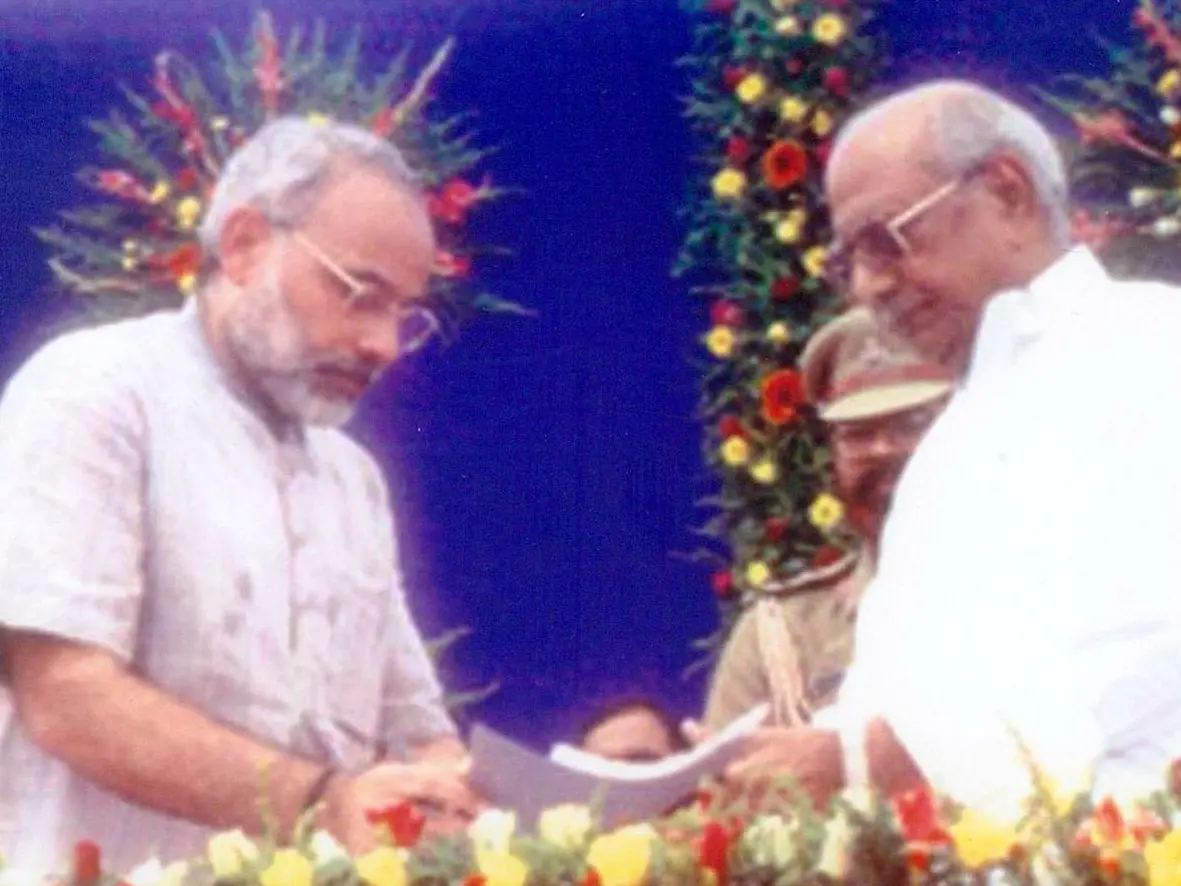
&imwidth=800&imheight=600&format=webp&quality=medium "'To serve our beloved nation is the highest honour': PM Narendra Modi marks 25 years as head of governments; recalls time as Gujarat CM")
On October 7, 2001, Narendra Modi took the oath as the chief minister of Gujarat for the first time, marking the beginning of a journey that would not only transform a state but also shape the future of an entire country. 25 years later, PM Modi reflected on this milestone. A journey of personal resolve and collective effort, Modi’s tenure as a leader has been defined by an unyielding commitment to serving the people and driving the progress of India.
2001: A state in crisis, a leader emerges
When Modi took the role of chief minister, Gujarat was reeling from a series of crises. The state had just suffered the devastating 2001 Bhuj earthquake, which claimed thousands of lives and left entire communities in ruins. This came on the heels of a super cyclone, repeated droughts, and political instability. Many believed that Gujarat’s recovery was impossible. Yet, this was precisely when Modi’s leadership proved critical.

His party had entrusted him with a monumental responsibility under the most difficult of circumstances. The challenge was not just about governance, but about restoring hope in a beleaguered state. Modi's response was to focus on the people—especially the poorest and most vulnerable—and create an atmosphere of trust and development. Reflecting on the early days of his leadership, Modi recalled a piece of advice from his mother. "I do not have much understanding of your work," she said, "but I only seek two things: first, you will always work for the poor, and second, you will never take a bribe." These words became the foundation upon which Modi built his political career—honesty, integrity, and an unwavering commitment to serving the people.
Rebuilding Gujarat
The first few years of Modi’s tenure were marked by immense challenges. But under his leadership, Gujarat began to rise. Agriculture, once in decline, began to thrive again. The state, known for its arid land, became one of the top performers in the country for agricultural production. Industrial and manufacturing sectors boomed, turning Gujarat into a vibrant economic hub. The once frequent curfews were a thing of the past, and the state's infrastructure underwent a major transformation.
Trending Stories
&im=FitAndFill=(700,400))
National Handloom Day 2026: From Alia Bhatt to Samantha Ruth Prabhu; Actresses who celebrated India's textile heritage as brides
)
The Royals enter the Doctor Who universe: King Charles and Queen Camilla beam into Commonwealth Games in TARDIS
)
Unitree Robotics targets $9 billion valuation in landmark IPO backed by DeepSeek and Tencent
)
India names 27 sites in Arunachal Pradesh
)
Bharat Bhhagya Viddhaata OTT: When will Kangana Ranaut's film stream online?
&im=FitAndFill=(700,400))
How many soldiers operate one S-400 battery?
)
Shakib Al Hasan ready to return to Bangladesh—under one condition
)
‘Fake news’: MEA rejects report claiming India sought defence pact with Israel after Pakistan, Saudi Arabia, Turkey deal
)
Rockstar to unveil GTA 6 extended look ahead of November launch
)
Russia forms Ukrainian Volunteer Spetsnaz Brigade to fight Ukraine
)
Drug-resistant fungus that hides in hair and enters bloodstream reported in 23 US states
)
Technology transfer deal boosts India's defence manufacturing ambitions
)
Border row erupts in Europe after Ceuta crossings, Spain imposes border controls on Italy
)
Morale plummets on USS Abraham Lincoln: Are US sailors reaching a breaking point? | GRAVITAS
)
'Security can't be bought with Pakistan, Turkey deal': Iran tells Saudi Arabia
)
Baba Vanga's 2026 prophecy: 2 predictions 'already came true', 3 terrifying ones remain. Details inside
)
Colombia’s new president Abelardo de la Espriella vows to ‘defeat narco-terrorists’, signals hardline shift
&im=FitAndFill=(700,400))
New Friday OTT releases (August 7, 2026): Operation Safed Sagar, Vadhandhi, Main Vaapis Aaunga- 6 movies and TV shows on Netflix, Prime Video and more
)
Squadron Leader Bhawana Kanth scripts history as Indian Air Force gets its first woman ‘Top Gun’ pilot
)
RSS says Gen Z protests reflect genuine distress
)
Trump says Iranian school bombing photos could be AI-generated - 'I don’t think...'
)
IAF officer held for sharing sensitive information in 'honey trap' case, booked under Official Secrets Act
)
Stray Kids under scrutiny? Fans react to Grammy submission silence after BTS boycott
&im=FitAndFill=(700,400))
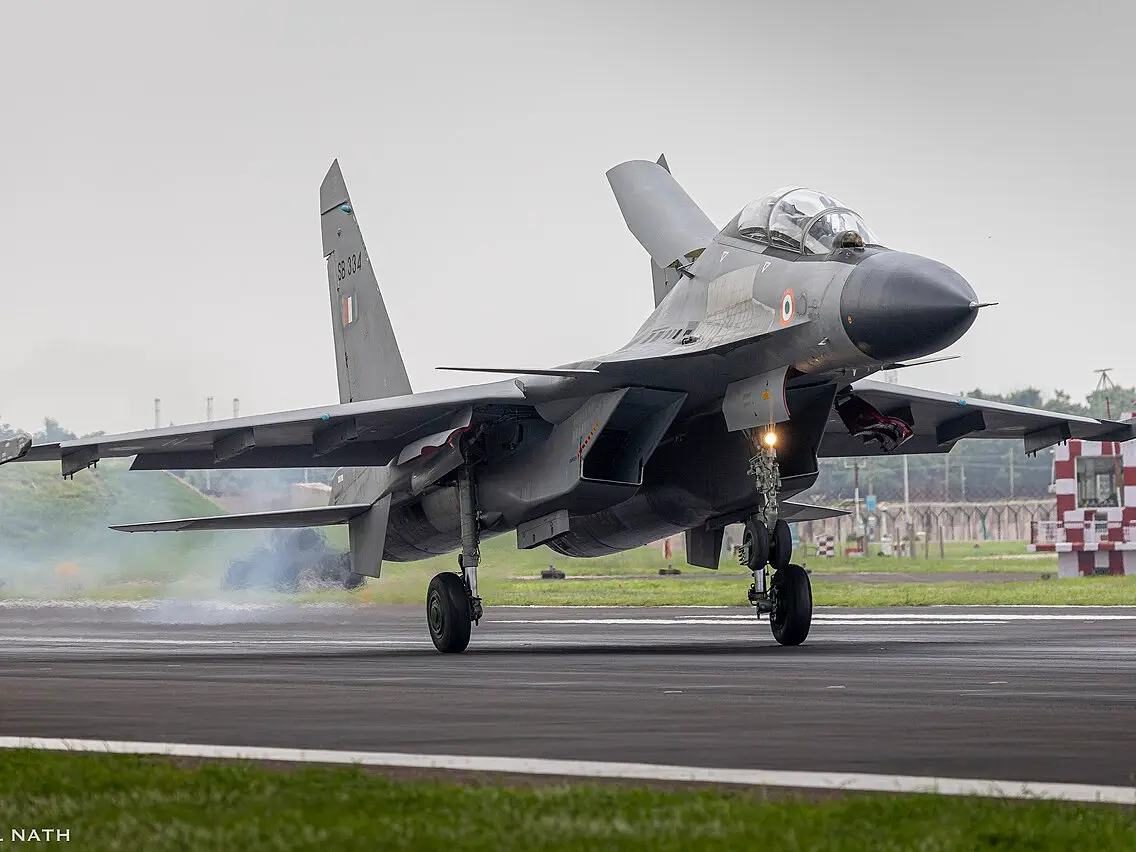
Why the Su-30MKI doesn't need external fuel tanks to fly vast distances
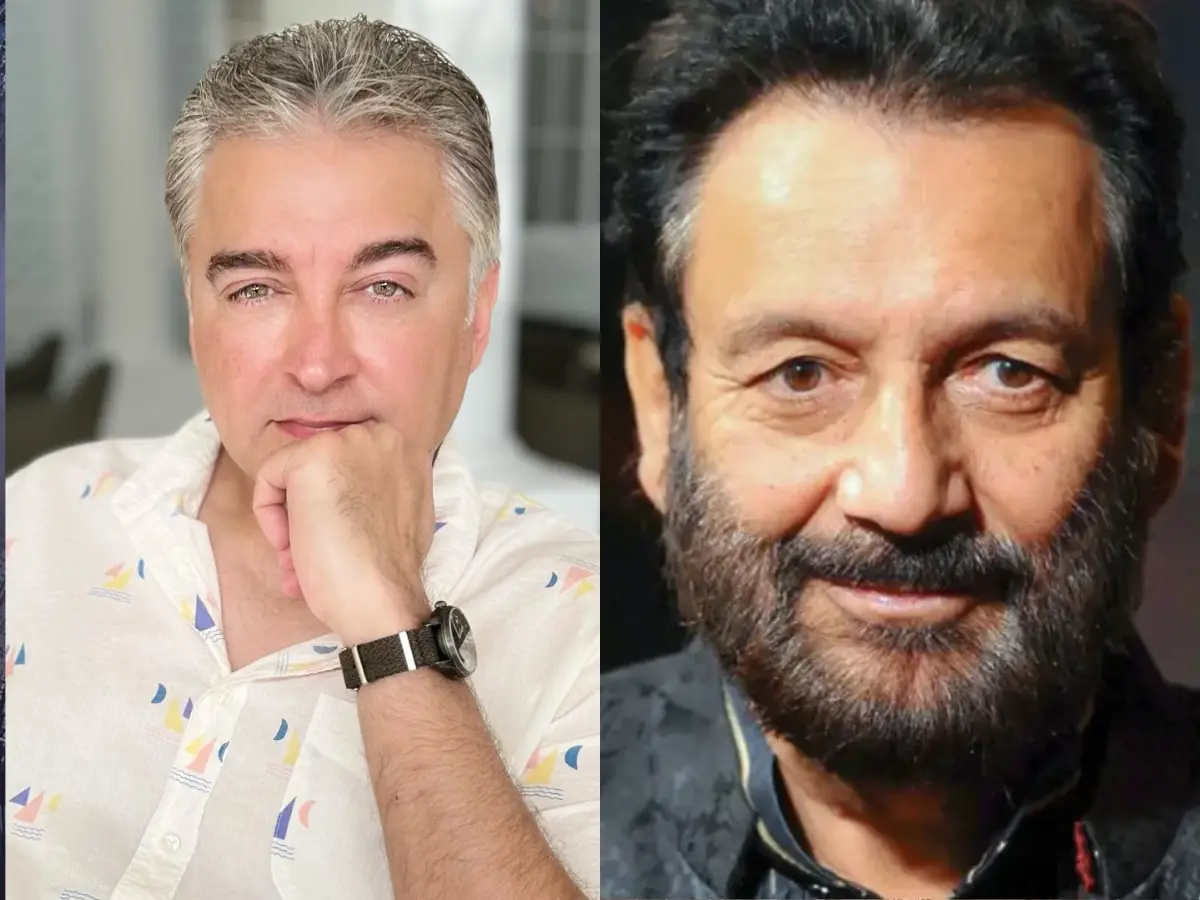)
Jugal Hansraj reunites with Shekhar Kapur after 40 years for Masoom: The Next Generation
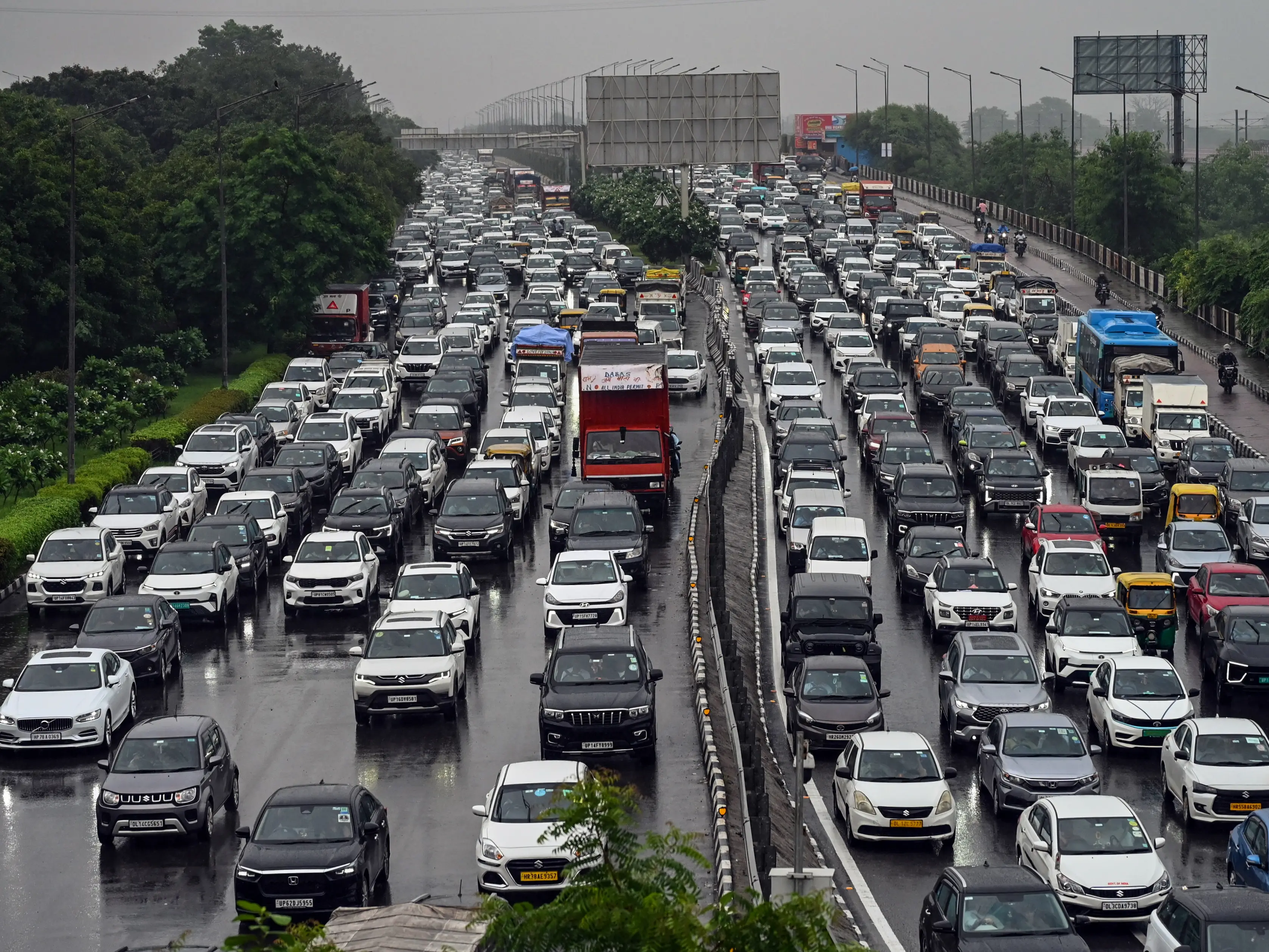)
New speed limits, automatic challans: Big traffic change coming to Delhi-Meerut Expressway. All you need to know
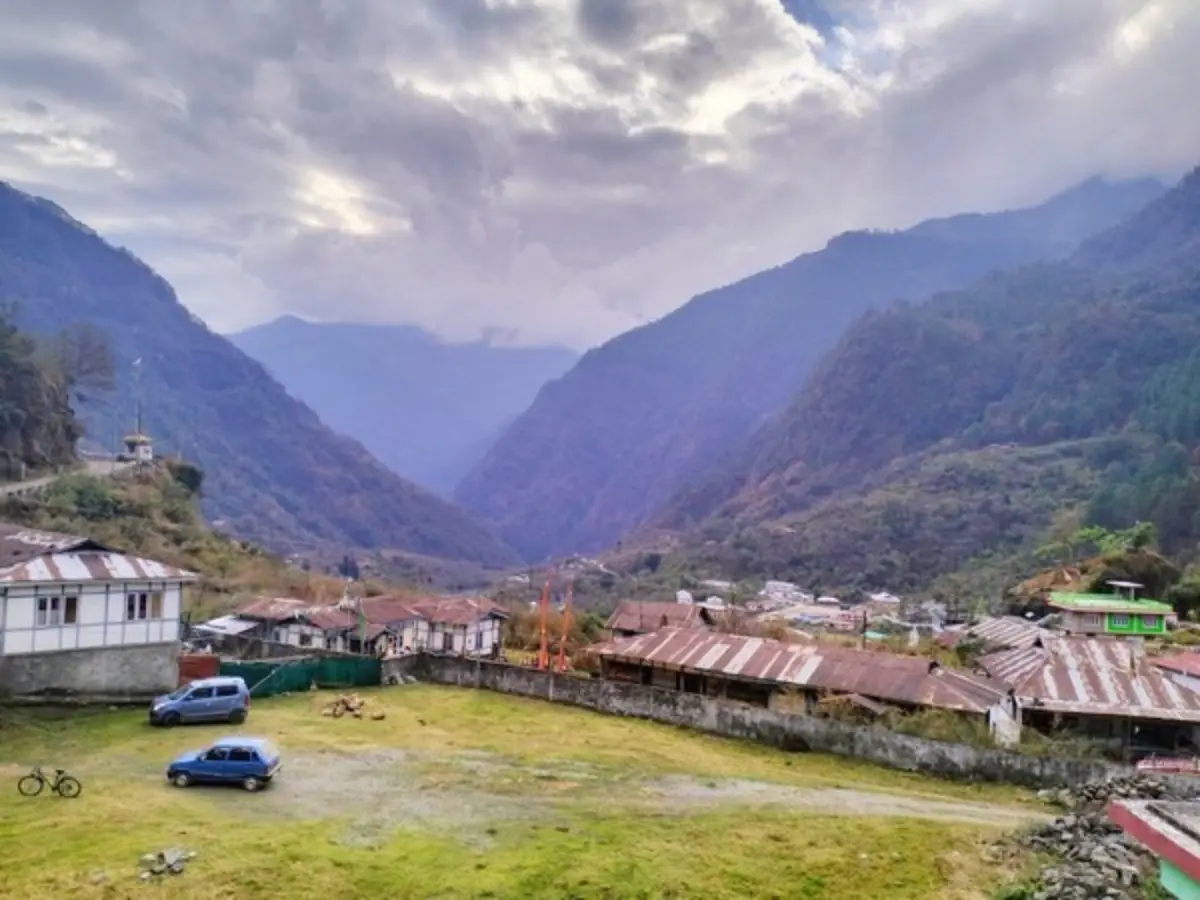)
India officially names 27 places in Arunachal to counter China's renaming claims
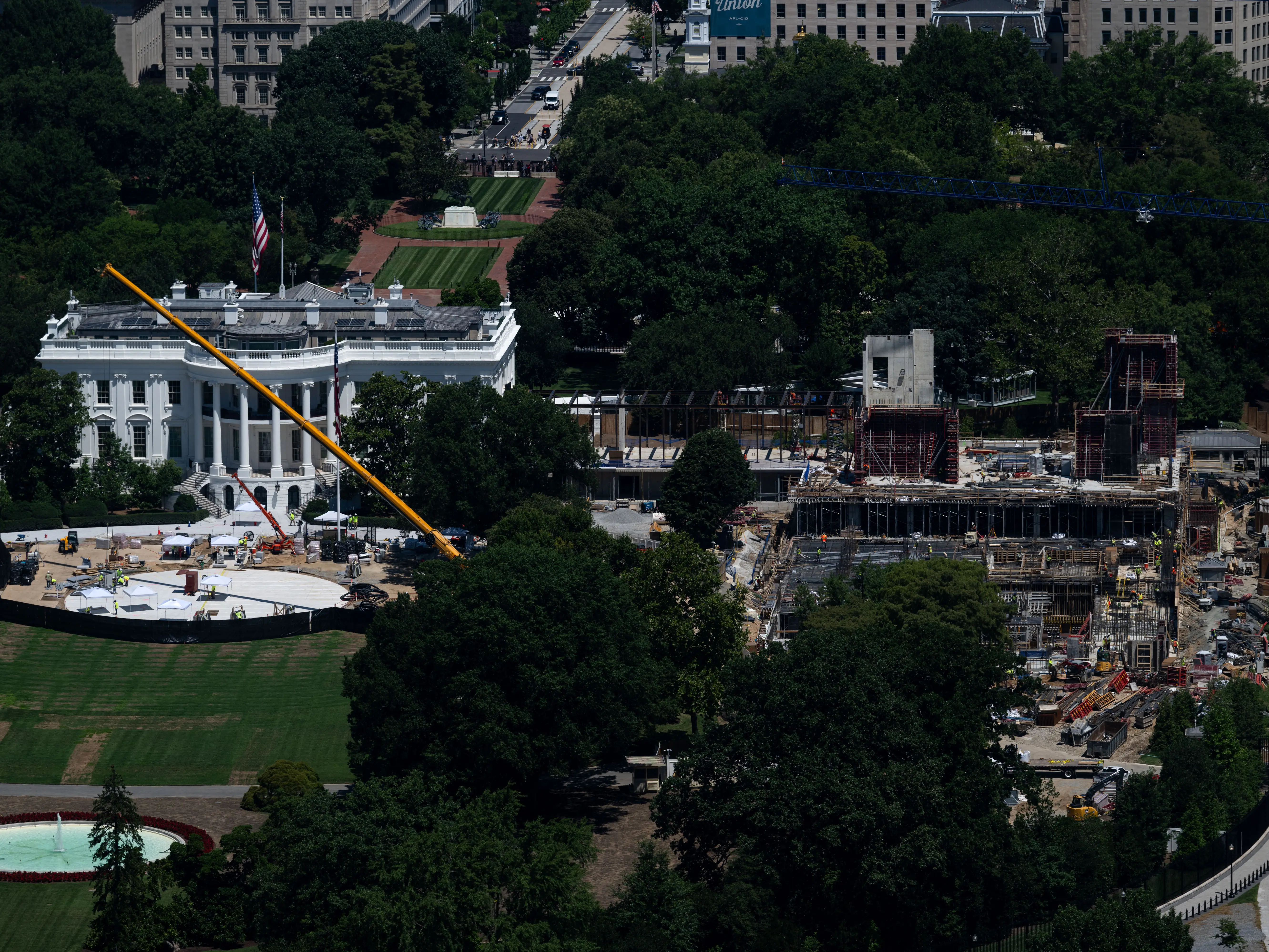)
Trump calls White House ballroom ruling a 'national disgrace' as court says Congress approval needed
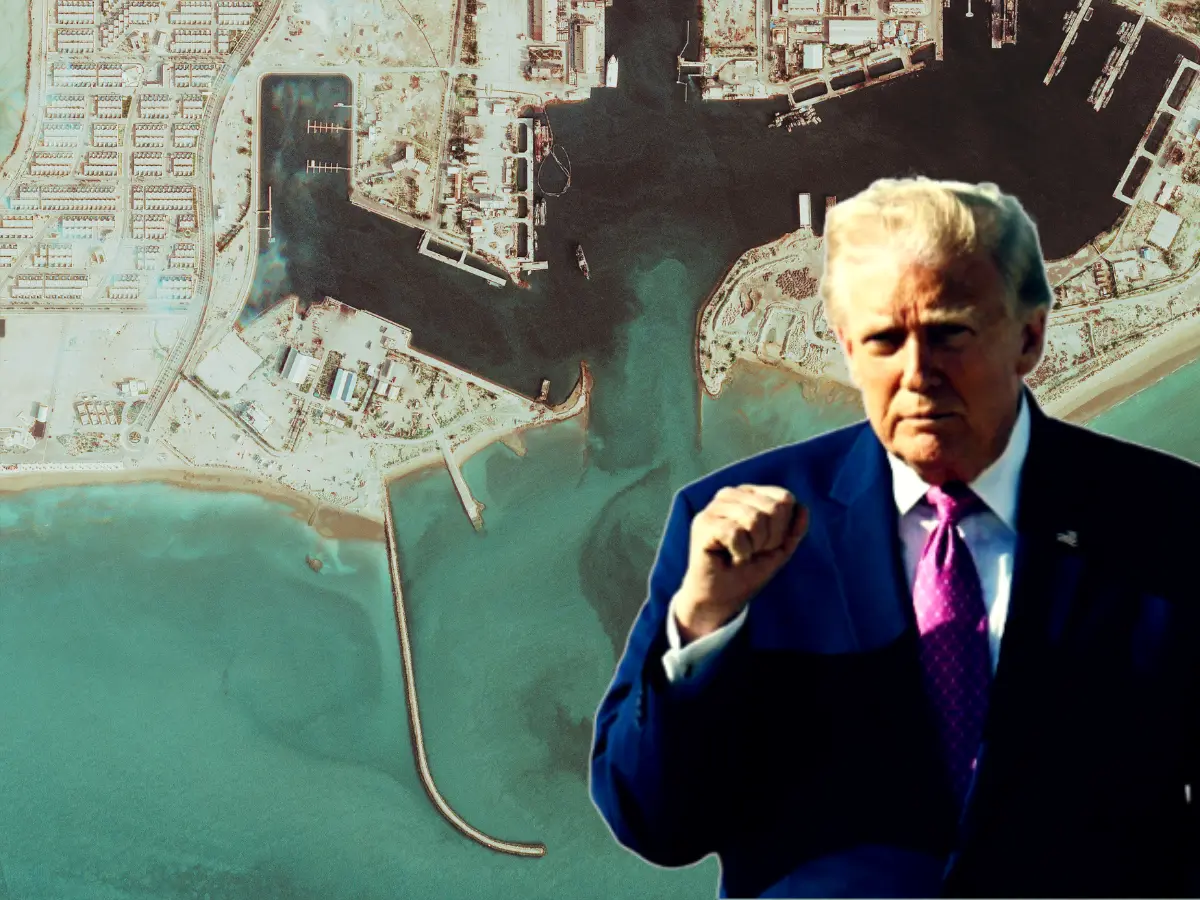)
US sanctions Iran’s crypto network after Strait of Hormuz attacks, offers $15m bounty for intel on IRGC finance
&im=FitAndFill=(700,400))
Why the Su-30MKI is one of the heaviest fighters ever built
)
Uttarakhand young innovator builds India's own flying vehicle, conducts first test flight: WATCH
)
Chilling video shows students take cover as teen opens fire at Thai school
)
Reese Witherspoon's father hospitalised after poolside incident in Nashville: Report
It was this remarkable turnaround that laid the foundation for Modi’s larger vision for India. He often spoke about his intent: to serve the "last person in the queue" and to ensure that no one was left behind. The people of Gujarat had seen firsthand the power of leadership grounded in service and determination.
A national leader: The 2014 journey
In 2013, Modi’s political trajectory took a national turn when he was chosen as the Prime Ministerial candidate for the Bharatiya Janata Party (BJP). At that time, India was embroiled in a crisis of governance. The United Progressive Alliance (UPA) government was synonymous with corruption, cronyism, and policy paralysis. The country's economy was struggling, and India was seen as a weak link in the global order.
But the wisdom of the Indian people shone through in the 2014 Lok Sabha elections. Modi’s vision of a "New India," grounded in good governance, economic reforms, and national pride, resonated with millions. His campaign saw him rallying the country with promises of transformation, empowerment, and self-reliance. The result was a sweeping victory for the BJP, and for Modi, a momentous leap from state leadership to the national stage.
Transforming India
Over the past 11 years, under Modi’s leadership as Prime Minister, India has witnessed transformative change. Millions of people, particularly women, youth, and farmers, have experienced unprecedented empowerment. Over 25 crore Indians have been lifted out of poverty, and India now stands as one of the world’s fastest-growing economies. The government has implemented some of the largest healthcare and social security schemes, making essential services more accessible to the country’s poor and marginalized communities. From "Digital India" to "Make in India," from Swachh Bharat to Aatmanirbhar Bharat, Modi has relentlessly focused on creating a self-reliant and progressive nation. One of the most remarkable features of his governance has been the focus on India’s farmers, ensuring that they not only remain at the heart of the economy but also become pioneers of innovation and sustainability.
A vision for the future
As Modi looks back on his journey, it is clear that his work is far from over. His vision for India is one of a "Viksit Bharat" (Developed India), a nation where every citizen has access to opportunity and prosperity. Guided by the values enshrined in India’s Constitution, Modi remains committed to his mission of building a stronger, more prosperous India. With his tenure now spanning over two decades, Modi’s gratitude for the trust and affection of the Indian people remains unwavering. His journey is not just one of political achievement, but of a deep, abiding bond with the people—a bond that continues to inspire and fuel his commitment to making India a world leader in every sense of the term. In his own words, "To serve our beloved nation is the highest honour, a duty that fills me with gratitude and purpose."

