Why is this Indonesian volcano famous for blue fire?

&imwidth=600&imheight=450&format=webp&quality=medium "Why is this Indonesian volcano famous for blue fire?")
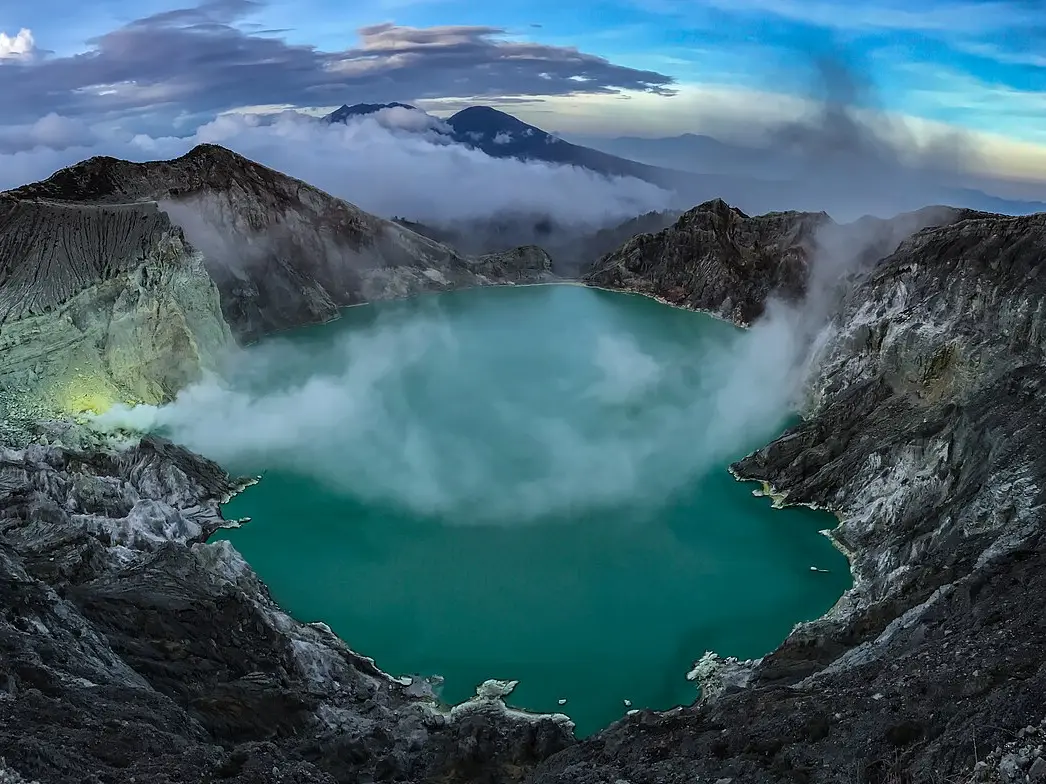
Kawah Ijen volcano Photograph: (Wikimedia Commons)
The Kawah Ijen volcano in Indonesia captivates visitors with a rare "blue fire" phenomenon. Caused by burning sulfuric gases rather than molten lava, this electric glow illuminates the night, contrasting against the world's most acidic crater lake.
Deep in the heart of East Java, Indonesia, the Kawah Ijen volcano hides a spectacular secret that only reveals itself under the cover of darkness. While most volcanoes are known for the glow of red-orange molten rock, Ijen is world-famous for its ethereal "blue fire". This rare, neon-blue phenomenon draws travellers from across the globe, offering a glimpse into one of the most unique geological displays on Earth.
The science behind the blue glow
Contrary to popular belief, the "blue fire" is not actually blue lava. Lava itself is always red or orange, as it would require temperatures far beyond what Earth’s surface can naturally produce to burn blue.
Instead, the phenomenon is caused by the combustion of high-pressure sulfuric gases. These gases escape from volcanic cracks at temperatures exceeding 360°C. When they encounter oxygen-rich air, they ignite into brilliant, electric-blue flames that can reach up to 5 metres in height. In some instances, the sulfur condenses into a liquid state as it cools, flowing down the crater slopes while still burning, which creates the vivid illusion of blue lava streams.
A landscape of extremes
Beyond the blue flames, Kawah Ijen is home to the world’s largest highly acidic crater lake. With pH levels dropping as low as 0.5, the water is as acidic as car battery fluid, capable of dissolving metals and causing severe burns. The turquoise-coloured lake remains warm, averaging 60°C, due to the intense volcanic heat bubbling beneath the surface.
Trending Stories
&im=FitAndFill=(700,400))
)
)
)
)
)
)
)
)
)
)
)
)
)
)
&im=FitAndFill=(700,400))
)
)
)
)
)
)
)
)
)
)
)
)
)
&im=FitAndFill=(700,400))
This hazardous environment is also a site of traditional labour. For centuries, local miners have braved toxic fumes to extract solid sulfur deposits that form after the blue gases cool. It remains one of the world's last remaining manual sulfur mining operations, where workers carry loads weighing up to 90 kilograms up the steep crater rim.
Practical insights for visitors
If you plan to witness this spectacle, timing and safety are essential. The blue fire is only visible at night, making a pre-dawn hike necessary. Visitors are strongly advised to hire a professional guide and wear a high-quality gas mask, as the concentrations of sulfur dioxide can be extremely dangerous to human health. The dry season, typically between May and September, offers the clearest conditions for viewing.
