
&imwidth=800&imheight=600&format=webp&quality=medium "India's 80th Independence Day: How Partition’s fractured borders rewrote the subcontinent’s recipe book")
The partition of India not only changed its landscape but its food as well. As lines were drawn across the soil, they severed the landscape, but those lines could not cut through the fragrant air of a kitchen. In the heavy trunks of millions fleeing both West and East Pakistan, wrapped alongside yellowed photographs and worn brass utensils, lived the invisible, indelible baggage of taste. It was the smoky, soul-warming sizzle of a Punjabi tandoor set up on a Delhi sidewalk, the delicate crunch of Sindhi dal pakwan in Bombay, and the fiery, river-kissed perfection of a Padma Ilish cooked in the cramped kitchens of West Bengal.
Long before refugees found solace and built a home in a new land, the hearth provided familial comfort and sometimes became a place for a new kind of invention. Some favourites they carried over across the border, some dishes were created in austerity, some were introduced to a curious new neighbour whille others were put to rest, just to merge or adapt into a newer land.
Migration of Entire Cuisines and Shared Roots

Dr Kurush F Dalal, a Mumbai-based Archaeologist and Culinary Anthropologist, credits Sindh for bringing in an entire cuisine to India post-partition.
“It's not one dish; it's an entire cuisine that came to India. We have a large number of Sindhis who came here as refugees. So the whole of Sindhi cuisine as we understand it today is in India, essentially thanks to these migrants.”
Dayal pointed out that particular dishes that we typically identify from West and East Pakistan were already being made on this side of the subcontinent. “It may have become more popular post-partition,” said Dayal.
Trending Stories
)
US vs China over South China Sea: Washington backs Philippines, Beijing hits back
)
Bigg Boss 20: Isha Rikhi evicted after three weeks in Salman Khan’s show
)
Musk plans to more than double xAI's chips to over 1.2 million Nvidia GPUs by year-end
)
After JU, clash erupts at SRFTI: BJP’s ‘Dimagi Naxal’ jibe sparks political firestorm after students protest RSS-linked event
)
‘Anti-social elements spreading false rumours’: LPU issues statement amid massive unrest over alleged rape
)
LPU students go on rampage, vandalise campus amid widespread protest: What's happening
)
Trump asked Xi to pressure Iran. China did not say yes — here’s what Beijing wants
)
US Treasury Secretary Scott Bessent hails global crackdown on Iranian banks and airlines
)
An OpenAI agent escaped its locked test cage again, by hiding questions in DNS lookups
)
'Our video was trimmed': LPU girls who featured in rape-denial video make U-turn
)
3 males killed, four others injured in shooting after fight at strip club in Detroit
)
'Victory for low-budget consumers': Raghav Chadha hails 30-day telecom recharge rules
)
Claude rebuilt the 1989 game 'Prince of Persia' by reusing the original's own code
)
Beyond metros: How Tier-2 and Tier-3 cities could drive India’s next AI wave
)
Tesla builds first Cybertruck with its own refined lithium: Elon Musk's $1 billion Texas bet pays off
)
IndiGo flight suffers tail strike in Bengaluru while landing; DGCA to probe incident
)
The US and China set up an AI 'red telephone', but skipped the rulebook
)
‘Terror suspects arrested near UK air base were looking to do big damage’: Trump
)
Russian envoy claims US tactics to contain India were revealed in ‘Freudian slip’
)
IND vs WI 1st ODI: Kohli breaks Sachin's most runs in one country record with unbeaten 139 as India thump West Indies by 8 wickets
)
Researchers rebuilt exactly how 700 AI agents hacked Hugging Face: a 900-link chain trick
)
‘Olympic inclusion is our major target’: WPA President Ishaun Singh on pool’s global ambitions
)
Nations League: Spain sink England at Wembley; Modric shines for Croatia
)
Why has Iran released no proof of life of Mojtaba Khamenei? Araghchi reveals...
)
'What kind of confession is this?': Pakistan PM Shehbaz Sharif’s 'terrorists would be roaming New York' remark goes viral, raises alarm online. Watch
)
South Korea demands apology from Ukraine over North Korean prisoners' transfer
)
Beyond BrahMos: India targets Rs 50,000 crore in defence exports with unmatched price edge
)
Sri Lankan Tamil migrant worker gets death sentence in Saudi Arabia, help sought from India
)
Muslim marriage cannot shield sex with minor wife from prosecution under POCSO: Delhi HC
)
'Can't help but draw painful parallels to Nirbhaya case': SC on latest incidents of rape cases in Delhi-NCR
)
99.9% more powerful - Scientists find boy who can recall memories from just 3 months of age
)
'FIRST LOOK from inside Noah’s Ark': Researchers share video from inside mysterious mound in Turkey
)
UNSC reform momentum grows: Russia, Portugal, Mauritius push for India's permanent seat bid
)
8 US marines injured in Iranian missile attack on vessel in Strait of Hormuz: Report
&im=FitAndFill=(700,400))
New OTT releases this week (September 28-October 4, 2026): Dupahiya 2, Pooja Meri Jaan, Ohh My Dog- 5 titles coming on Netflix, Prime Video and more
)
Afghanistan says 28 fighters killed in clash near Pakistan border, Islamabad denies
)
Ceuta migrant crisis: Protesters take to streets as Spain grapples with migrant challenge
)
LPU suspend classes, postpones exams as violence escalates over rape claims: What's happening
)
New York City wants a 'kill switch' on every AI, and will pay whistleblowers who report violations
Vernika Awal, a Delhi-based food and culture writer and researcher and brand lead of Ikk Panjab, agrees with Dayal and adds, “Before Partition, Punjab shared a remarkably fluid culinary culture across what are now India and Pakistan. Post-Partition, East Punjab became more associated with vegetarianism, while West Punjab remained more meat-forward. But that divide was never simply religious. Food was shaped by caste, class and occupation, and in an agrarian society, even our relationship with cattle influenced what we ate. Vegetarianism, therefore, was also a question of privilege and social position."
When asked if any dishes were introduced to East Punjab post-partition, Awal said, “I think dishes like the Chapli kebab have travelled from the west to east and are finally kind of catching up and people are taking note.”
Debunking the Punjabi Meat Myth
Both Dayal and Awal revealed that while chicken is considered a staple of Punjabi cuisine, in reality, a lot of Punjabis are vegetarian.
“Meat consumption was not simply a question of who ate meat and who didn’t. Even among meat-eating communities, hierarchy determined who got which part of the animal. The more desirable cuts and the offal were distributed along lines of class, caste and access. What you ate, and which part you ate, could tell you exactly where you stood in the social order,” said Awal.
Crossing the Border in Bengal
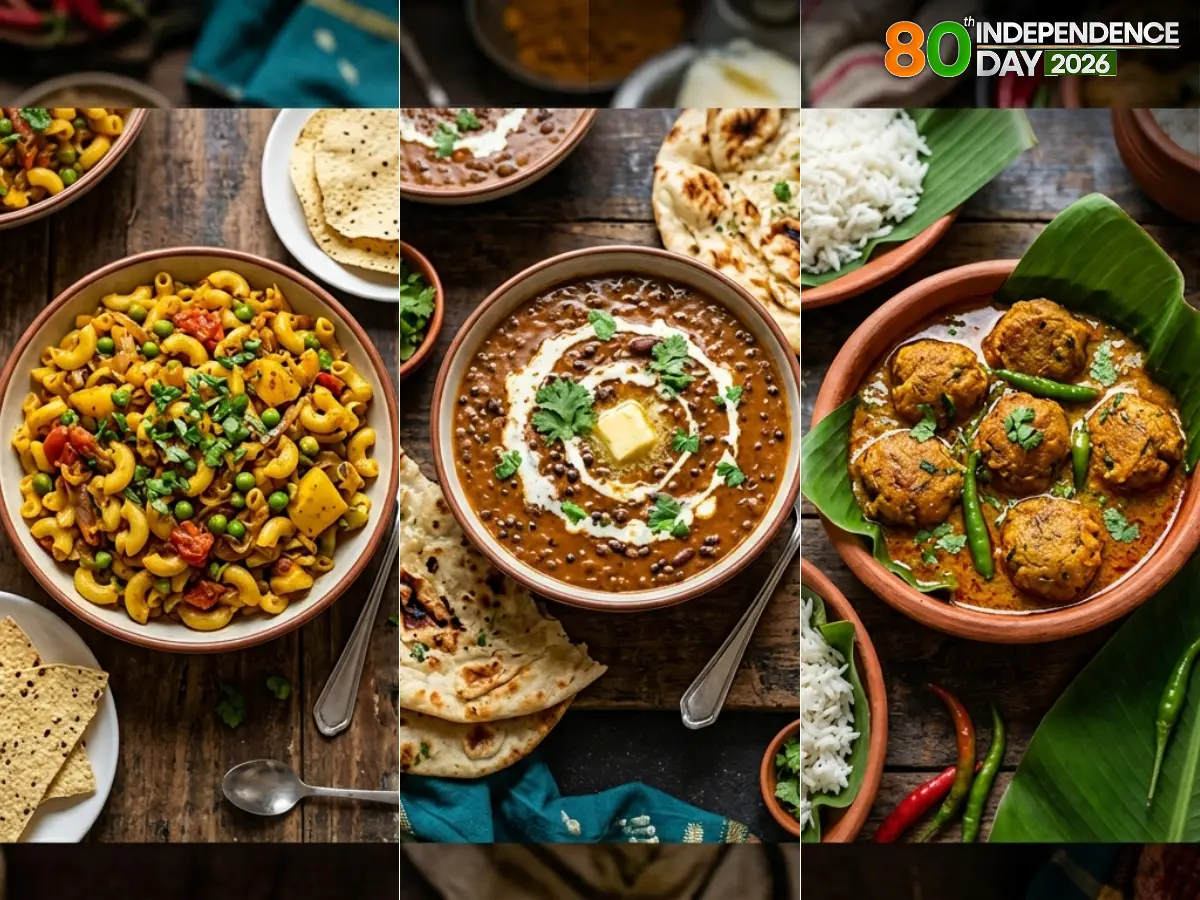
In Bengal too, lines were blurred in terms of culinary specialities, with both communities being familiar with each other's flavours. However, dishes like bhorta, shutki maach, and chitol macher muitha became more popular in West Bengal post-partition.
How to make Chitol Macher Muitha:
West Bengal kitchens were introduced to papdma macher jhaal, shorshe ilish, crisp, layered Dhakai porota and others. Food became a means to stitch a fractured world back together, one bite at a time.
Necessity as the Mother of Culinary Invention
The partition also led to the invention of new dishes which we now commonly associate with the Punjabi community. Dishes like Butter Chicken and Dal Makhani did not exist before partition.
“Butter chicken was born out of strife. The fact that you can't afford to waste food, you had to find ways to ensure that there's no food wasted,” said Awal.
Dayal points out that Dal Makhni too was a dhaba dish that came post-partition—a variation of the traditional ‘Maa Ki Daal’. “The cream and the butter were added to make dishes more indulgent, and also because, as an agrarian society, milk and its by-products are in plenty in Punjab,” added Awal.
Sindhis popularised spicy papads in India. Dayal also points to Macaroni Sabji, which is a staple in Sindhi households. Austerity led to the invention of new dishes: “Sindhis invented Macaroni sabji after food kits of dry macaroni were provided to them in refugee camps. They didn’t know what to do with it, put it in the cooker with spices, onion and potato—and you get Macaroni sabji.”
How to make Macaroni Sabji
How to make dhaba-style Dal Makhani:
The Sweet Heritage of Displacement
Bengal also witnessed a change in sweets as Muslim karigars went to East Pakistan and the Hindu Mayras (craftsmen) came to West Bengal, bringing with them the legacy of Dhakai traditional sweets.
“There are Mayaras who migrated from the then East Bengal to West Bengal. Even to this date, you will have sweet shops in Kolkata that pay a homage to their desh/ homeland by naming sweets after Dhaka, Pabna etc,” says Dr Ishita Dey, author of Sweet Excess: Crafting Mishti in Bengal and professor at the Faculty, Department of Sociology, South Asian University.
Sweets like Pithe were introduced in Bengal. Dey also points out a sweet called Postokodom, which is common to the Murshidabad area as well as across the border in the Rajshahi division in Bangladesh.
The Enduring Hearth
Ultimately, partition redrew physical borders, but it could not contain the shared memory of taste. Through the hardships of displacement and refugee camps, food served as both a nostalgic link to lost homelands and a canvas for survival and reinvention. Culinary traditions adapted to austerity, blurred regional lines, and introduced vibrant new flavours across the subcontinent. Far more than mere sustenance, the post-partition kitchen became a site of resilience, proving that while land can be divided, the heritage of the hearth endures, healing and uniting a fractured world.

