Indian Bharatanatyam dancer Savitha Sastry on dance film 'Colors: White' & more

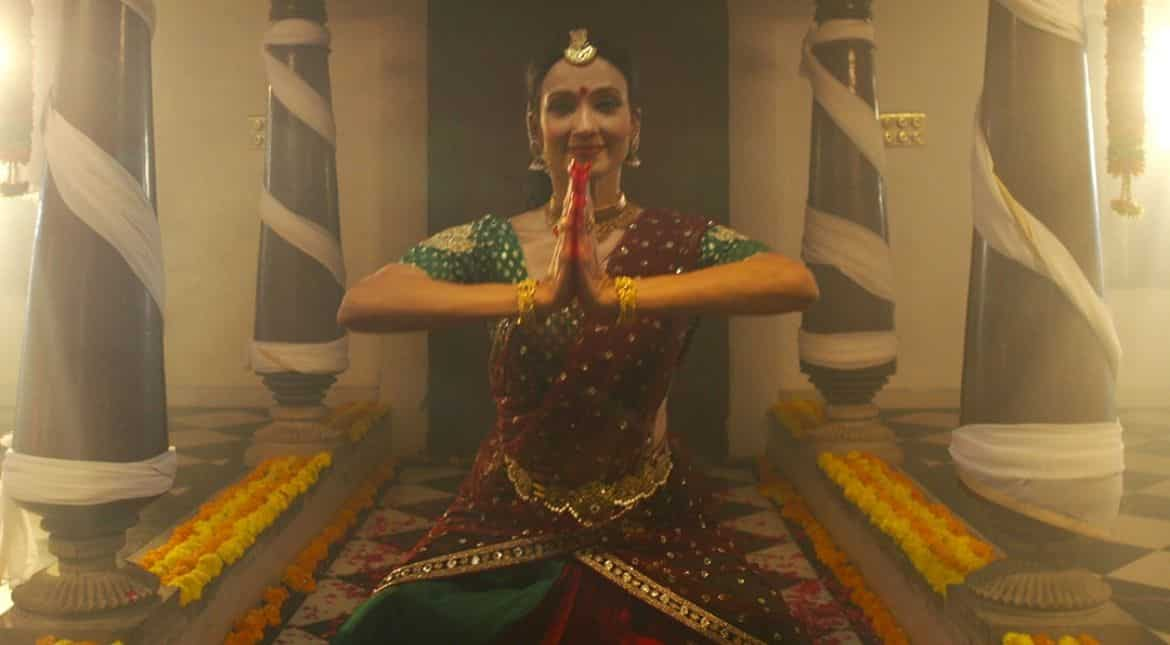
Savitha Sastry
Indian Bharatanatyam dancer Savitha Sastry along with husband AK Srikanth recently released a short dance film ‘Colors: White’ that premiered on YouTube as part of a trilogy series. Named after the colours of the Indian National Flag -- Green, White and Saffron -- the second part of the trilogy features the Bharatanatyam exponent extensively as she uses dance as a form of narrative.
In a chat with WION, the classical dancer cum choreographer spoke about her passion for dance and using it to tell different stories based on novels written incidentally by partner AK Srikanth.
Thematic Interpretation of ‘Colors: White’

“Colors White is a part of a trilogy of which White and Green have been released and Saffron is the next project. Colors’ refers to the three colours of our national flag. The question my partner and author wanted to ask was about the ideals that our forefathers conceptualised for each color. For instance green was chosen for representing prosperity. He chose to examine prosperity from the perspective of ‘Is it equal between the males and the females of this country?’ and not in terms of the bank balance but in terms of the mind, the freedom of choice. So each of these values we are taking up and juxtaposing between the males and females of this country,” said Savitha explaining the thought behind the trilogy.
She added, “Colors White examines truth and peace and it is my belief that you can achieve peace, when you are able to come face-to-face with your own truth. So how do you get there? Most of us and especially women, live inside a box. In the case of Colors White's protagonist, that box could be that of traditional dance. It can be whatever role the society expects you to play. When I learned classical Bharatanatyam, I was expected to confirm to a set piece presentation that spoke of mythology, of Gods, and was made to be sacrosanct. I soon realised that performing dance in traditional style was not something that resonated with me.”
She explained, “Colors White traces what happens when that box becomes suffocating. That breaking away landing at a place where we are making dance films, did not happen overnight. It’s become a reality after years of struggle, emotionally and financially.”
&im=FitAndFill=(700,400)&imwidth=180&imheight=135&format=webp&quality=medium)
Navratri 2026: 9 days, 9 forms of Goddess Durga and 9 colours- Check the complete list
&imwidth=180&imheight=135&format=webp&quality=medium)
Bigg Boss 20: Isha Rikhi evicted after three weeks in Salman Khan’s show
&imwidth=180&imheight=135&format=webp&quality=medium)
US midterm elections 2026: Trump’s picks won primaries. Will they deliver in November?
&imwidth=180&imheight=135&format=webp&quality=medium)
Russian woman and Bihar boy's love story goes viral after she reaches India to marry him
&imwidth=180&imheight=135&format=webp&quality=medium)
Arijit Singh 9-city India stadium tour to start from January: Check venue and ticket prices
&imwidth=180&imheight=135&format=webp&quality=medium)
‘Hernia, aneurysm, injuries’: Salman Khan reveals health struggles behind his changing physique on Koffee With Karan 9
&imwidth=180&imheight=135&format=webp&quality=medium)
F1 set to return to Africa for first time since 1993
&imwidth=180&imheight=135&format=webp&quality=medium)
'Don't ever mess with nature!': Trump’s tiger attack post triggers social media backlash as victim's family issues heartbreaking tribute
&imwidth=180&imheight=135&format=webp&quality=medium)
US judge blocks Trump administration sanctions on human rights groups supporting Gaza war crimes investigation
&imwidth=180&imheight=135&format=webp&quality=medium)
Trump's $100,000 H-1B fee: Why neither Republicans nor Democrats want to make it a 2026 US Midterm issue
&im=FitAndFill=(700,400)&imwidth=180&imheight=135&format=webp&quality=medium)
Which jobs are safest from humanoid robots?
&imwidth=180&imheight=135&format=webp&quality=medium)
US midterms: Trump rallies behind Husted as Brown mounts challenge in crucial Ohio race
&imwidth=180&imheight=135&format=webp&quality=medium)
‘Rise up, young patriots!’: American singer Mary Millben says US donors funding CJP, backs Modi govt
&imwidth=180&imheight=135&format=webp&quality=medium)
Nobel Peace Prize winner Navi Pillay calls on US to 'get back to' being defender of human rights
&imwidth=180&imheight=135&format=webp&quality=medium)
Iranian woman, 23, handed death sentence for ‘blasphemy’ in social media post; appeals for help
&imwidth=180&imheight=135&format=webp&quality=medium)
'Turn approver, resign, we'll forgive you': Rahul Gandhi claims receiving messages from CEC Gyanesh Kumar
&imwidth=180&imheight=135&format=webp&quality=medium)
Somaliland celebrates after Trump calls it 'a totally different country', raise hopes of US recognition
&imwidth=180&imheight=135&format=webp&quality=medium)
Afghan FM Muttaqi to CdA Yatin Patel: We attach importance to relations with India
&imwidth=180&imheight=135&format=webp&quality=medium)
'FWD Supreme' to use AI for flight and threat identification
&imwidth=180&imheight=135&format=webp&quality=medium)
‘My president, I mean my husband’: Trump's new press secretary Katie Zacharia's first briefing goes off the rails in 14 minutes
&imwidth=180&imheight=135&format=webp&quality=medium)
Mars is not for man: Human heart is too weak to survive the trip, study shows
&imwidth=180&imheight=135&format=webp&quality=medium)
‘600,000 people without electricity’: Zelensky calls for ‘strong’ US sanctions on Russia, accuses Moscow of violating Trump’s energy ceasefire
&imwidth=180&imheight=135&format=webp&quality=medium)
Sheikh Hasina warns of 'deep sense of insecurity' among Bangladesh's minorities in Durga Puja message
&imwidth=180&imheight=135&format=webp&quality=medium)
FBI refutes media report claiming Kash Patel is in Russia for talks, says he is in Virginia
&imwidth=180&imheight=135&format=webp&quality=medium)
US inflation hits 3.7% as rising fuel prices pose challenge for Trump ahead of midterms
&imwidth=180&imheight=135&format=webp&quality=medium)
IND vs WI 4th T20I: Shai Hope hundred and Keemo Paul's five-for level series for West Indies
&imwidth=180&imheight=135&format=webp&quality=medium)
Girl 'dead' for 8 hours wakes up at her own funeral, dad insists she wasn't breathing
&imwidth=180&imheight=135&format=webp&quality=medium)
'Ouch!!! That must hurt': Kangana Ranaut hails Kamal Haasan's sharp reply to Elon Musk over Starlink row
&imwidth=180&imheight=135&format=webp&quality=medium)
Three Indians killed in suspected arson attack in Germany, Romanian resident arrested
&imwidth=180&imheight=135&format=webp&quality=medium)
'Totally unacceptable': MEA slams attacks on Saudi civilian infrastructure after Indian national's death
&im=FitAndFill=(700,400)&imwidth=180&imheight=135&format=webp&quality=medium)
New OTT releases this week (October 12-18, 2026): Sacrifice, Koffee with Karan S9, Roadies Rebirth- 6 titles coming on Netflix, JioHotstar and more
&imwidth=180&imheight=135&format=webp&quality=medium)
US Singer Mary Millben alleges foreign funding for CJP, warns against anti-Modi forces: All you need to know
&imwidth=180&imheight=135&format=webp&quality=medium)
Global energy crisis hits Indian economy
&imwidth=180&imheight=135&format=webp&quality=medium)
Durga Puja 2026: Power banks, water bottles and more, a foolproof guide to pandal hopping
&imwidth=180&imheight=135&format=webp&quality=medium)
Netflix layoffs: Streaming giant to cut 1,000 jobs globally amid slow growth and declining user engagement
&imwidth=180&imheight=135&format=webp&quality=medium)
Zelensky feels betrayed by Trump, urges Musk to restore Starlink in Ukraine; Musk responds
&imwidth=180&imheight=135&format=webp&quality=medium)
'Girls are uncomfortable': Salman Khan calls out paparazzi for bad angles, speaks on PR on Koffee With Karan
&imwidth=180&imheight=135&format=webp&quality=medium)
After flydubai co-pilot attack, Air France bans Pakistani, Muslim-majority crew on Israel flights
She describes Colors: White as “a poetry of a film and is written to be a real film.” Savitha believes there is an allegory of Gandhari, the Queen mother from Mahabharat who blindfolds herself as a sacrifice for husband Dhritrashtra who is visually impaired. The allegory is of society heaping praises on Gandhari for giving up on vision and sacrificing for husband. In this dance film, the protagonist removes the manifested blindfold.
Are Traditional Dance Forms Sacrosanct?
“The question here is when does it change from Bharatanatyam to something else?” asks Savitha in reply to whether traditional dance forms are sacrosanct. She added, “I have preserved the form, structure, movement but have added what those movements are used to convey in my take. Originally, they were used to tell stories of mythology, of gods and goddesses with a set style of presentation. What I have done is take it out of the context of religion. Now I am using it as a medium to tell new stories.”
It took an effort to break the mould but Savitha did it anyhow.
International Recognition
‘Colors: White’ has travelled to various film awards.
Savitha believes that the recognition has been “most revealing” to her in how “transparent and how deep our Indian artforms are.” ‘Colors: White has travelled to many countries in the world including Germany, Paris, UK, America among many others.
The dance exponent said, “In various countries of the world, Colors White was being looked at from the perspective of storytelling. It supports my conviction that Bharatanatyam is a storytelling medium and surpasses other dance forms that are now taking over in India like the Latin Dance and Hip Hop -- as the Indian dance has much more depth.”
On how to lure the youngsters to the traditional dance forms of India vs the contemporary forms that are easier to pick up because of pop culture influence, she said, “It is my vision to make Bharatanatyam mainstream and the next generation plays an important role in that. I feel we are not just competing with other dance forms but streamers like Netflix, Amazon or mobile phones for that matter.I feel, we must start with goingdigital and finding a way of using the technology to connect with the younger lot. It has to be entertaining enough for them to pick it.”

