India Independence: Doordarshan to Netflix: Evolution of the small screen

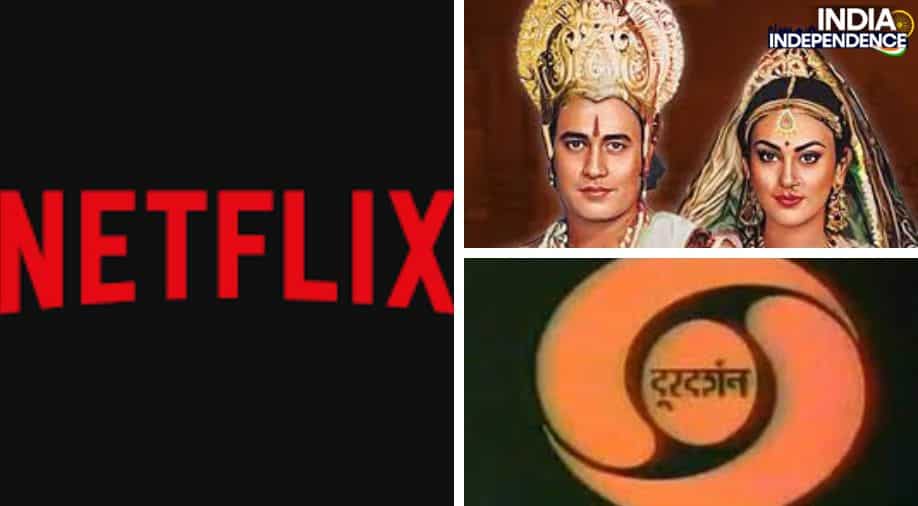
Evolution of small screen in India
India has come a long way in terms of viewing content on the small screen. The humble television came to India comparatively later than the rest of the world.
Over the years, TV has become one of the most powerful media in the country. With multiple channels at disposal, the humble TV is no longer a poorer version of the cinema.
The shows that air on Indian TV have their own cult following.

The production, the scale at which these shows are mounted is also huge and often film actors resort to promoting their films on the small screen in one of the shows.
In the last decade, TV too has been facing stiff competition from OTT platforms.
The smaller screen has always been a medium to unite the family and make every family member come together to watch their favourite show on primetime.
Most shows have been family dramas which talk of familial bonding, societal norms, traditions and festivals.
&imwidth=180&imheight=135&format=webp&quality=medium)
China's counter-surveillance industry booms amid heightened espionage fears | Gravitas
&im=FitAndFill=(700,400)&imwidth=180&imheight=135&format=webp&quality=medium)
Navratri 2026: 9 days, 9 forms of Goddess Durga and 9 colours- Check the complete list
&imwidth=180&imheight=135&format=webp&quality=medium)
Trump accuses Houthis of driving up oil prices before US midterms, warns of consequences
&imwidth=180&imheight=135&format=webp&quality=medium)
Russian woman and Bihar boy's love story goes viral after she reaches India to marry him
&imwidth=180&imheight=135&format=webp&quality=medium)
US Midterms 2026: In Alaska, cost-of-living anxiety meets strangest ballot in high-stakes Senate race
&imwidth=180&imheight=135&format=webp&quality=medium)
Arijit Singh 9-city India stadium tour to start from January: Check venue and ticket prices
&imwidth=180&imheight=135&format=webp&quality=medium)
F1 set to return to Africa for first time since 1993
&imwidth=180&imheight=135&format=webp&quality=medium)
'Don't ever mess with nature!': Trump’s tiger attack post triggers social media backlash as victim's family issues heartbreaking tribute
&imwidth=180&imheight=135&format=webp&quality=medium)
CMs Vijay-Naidu meet in Vijayawada, discuss water sharing, river-linking
&imwidth=180&imheight=135&format=webp&quality=medium)
Air India Flight from Frankfurt diverted to Jaipur after hijack alert, probe on
&imwidth=180&imheight=135&format=webp&quality=medium)
1,500 drones illuminate Mumbai sky as Cordelia Cruises unveils second ship, Cordelia Sky
&imwidth=180&imheight=135&format=webp&quality=medium)
Delhi Police arrest Cockroach Janta Party's Saurav Das, Ashutosh Ranka, Ajinkya Shinde in Jantar Mantar case, to be produced before court
&imwidth=180&imheight=135&format=webp&quality=medium)
Pakistan to chair UN-backed global Borrowers’ Platform as its own debt burden mounts, triggers sarcastic reactions on social media
&imwidth=180&imheight=135&format=webp&quality=medium)
Nobel Peace Prize winner Navi Pillay calls on US to 'get back to' being defender of human rights
&imwidth=180&imheight=135&format=webp&quality=medium)
France accuses Musk of ‘online harassment’ of European leaders, warns of poll interference
&imwidth=180&imheight=135&format=webp&quality=medium)
'Turn approver, resign, we'll forgive you': Rahul Gandhi claims receiving messages from CEC Gyanesh Kumar
&imwidth=180&imheight=135&format=webp&quality=medium)
MI5 chief warns Russia is UK’s ‘aggressor number one’ as Iran and AI threats grow
&imwidth=180&imheight=135&format=webp&quality=medium)
At least 80 newborns die at Madhya Pradesh Hospital over six months, BJP MLA demands probe
&imwidth=180&imheight=135&format=webp&quality=medium)
Trump reconsidering calling off Nidal Hasan's execution livestream. Here's why
&imwidth=180&imheight=135&format=webp&quality=medium)
‘My president, I mean my husband’: Trump's new press secretary Katie Zacharia's first briefing goes off the rails in 14 minutes
&imwidth=180&imheight=135&format=webp&quality=medium)
‘How many people did she illegally bring from Somalia?’ Trump targets Ilhan Omar, questions her net worth
&imwidth=180&imheight=135&format=webp&quality=medium)
Marco Rubio to visit India next week, focus on energy cooperation and strategic ties
&imwidth=180&imheight=135&format=webp&quality=medium)
US politicians mistakenly use Indian, Russian warship images for Navy's birthday posts
&imwidth=180&imheight=135&format=webp&quality=medium)
'Ouch!!! That must hurt': Kangana Ranaut hails Kamal Haasan's sharp reply to Elon Musk over Starlink row
&imwidth=180&imheight=135&format=webp&quality=medium)
Girl 'dead' for 8 hours wakes up at her own funeral, dad insists she wasn't breathing
&imwidth=180&imheight=135&format=webp&quality=medium)
Sidhu Moose Wala’s younger brother wins hearts by recreating late singer’s signature move at Toronto Hologram Show
&imwidth=180&imheight=135&format=webp&quality=medium)
UK school ditches technology, shifts from screen to pen and paper for learning
&imwidth=180&imheight=135&format=webp&quality=medium)
Durga Puja 2026: Kolkata roads get a splash of colours
&im=FitAndFill=(700,400)&imwidth=180&imheight=135&format=webp&quality=medium)
New OTT releases this week (October 12-18, 2026): Sacrifice, Koffee with Karan S9, Roadies Rebirth- 6 titles coming on Netflix, JioHotstar and more
&imwidth=180&imheight=135&format=webp&quality=medium)
Inside Aneet Padda's 24th birthday bash with rumoured boyfriend Ahaan Panday and Alia Bhatt
&imwidth=180&imheight=135&format=webp&quality=medium)
New Cold War: Why is China buying more gold? Explained
&imwidth=180&imheight=135&format=webp&quality=medium)
Netanyahu wants to join Saudi's war on Houthis, but Crown Prince denies: Report
&imwidth=180&imheight=135&format=webp&quality=medium)
Anupam Kher joins Ranbir Kapoor's Ramayana as Jatayu, new poster unveiled
&imwidth=180&imheight=135&format=webp&quality=medium)
Measles kills again: 6 dead in Pennsylvania as America faces its worst outbreak in decades | Gravitas
&imwidth=180&imheight=135&format=webp&quality=medium)
Cornell University suspends fraternity parties over 2024 gang rape allegations
OTT, on the other hand, has challenged the notion of ideal families with their experimental stories, Makers have been more brave with story telling, with characters.
On India's 77th Independence day, here's a brief look at how far we have come in terms of storytelling on the small screen.
Television started in India in September 1959 as an experiment. Transmission back then was restricted to three days a week.
The purpose of the shows was mostly educational and to create awareness. Most shows were educational and broadcast in limited areas of New Delhi.
In 1965, a daily one-hour show was broadcast but the reception was limited to Delhi. In 1972, the broadcast was extended to Bombay- the hub for Hindi cinema since pre-Independent India.
In 1976, independent body Doordarshan (DD) took up the reins of television from All India Radio (AIR).
In 1982, as India hosted the Asian Games, DD switched over to colour transmission.
By the 1980s, DD introduced another channel and fiction shows like 'Buniyaad', 'Hum Log' aired on prime time on a weekly basis. And the serials 'Ramayana' and 'Mahabharat' led to massive popularity of DD.
The 1990s saw the emergence of satellite television as the country went through economic reforms.
In 1992, a Hong Kong-based group of companies launched Star Television. In the initial days, Star aired English content on TV dubbed in regional languages.
In 1992, Subhash Chandra launched India's first privately owned TV channel - Zee TV.
The 1990s saw the emergence of news and entertainment channels- all under satellite television. By the early 2000s, Indian audience had a plethora of channels and content to choose from.
The satellite boom continued for nearly two decades with pay-to-view channels coming in with the advent of set-top boxes. It gave us saas-bahu dramas, reality shows, game shows and resurrected careers of several film actors as reality show judges and TV hosts.
The first OTT platform was introduced back in 2008 called BigFlix, where audiences could subscribe to and stream content on the internet. In 2016, Netflix came to India and since then there have been several major players in the market, including homegrown Zee5.
In 2020 as the Covid pandemic hit countries worldwide, subscription for OTT platforms increased manifold. Now, with nearly 15 million subscribers of OTT, the digital boom is posing a threat to the good old TV
At first, Netflix streamed mostly international content. But after a year in India, they started creating content for the Indian audience and premiered Sacred Games- a thriller series created by Anurag Kashyap and Vikramaditya Motwane. The show starred film actors Saif Ali Khan and Nawazuddin Siddiqui and became an instant hit.
Post the success of Sacred Games, several other film stars have attempted to create a niche for themselves in the digital space. Meanwhile, TV continues to thrive with long and limited fiction shows and reality shows. OTT may have now reached to smaller screens i.e phones and laptops but TV's reach - especially in the interior remains predominant.

