Unravelling ketamine: The drug linked to actor Matthew Perry's death

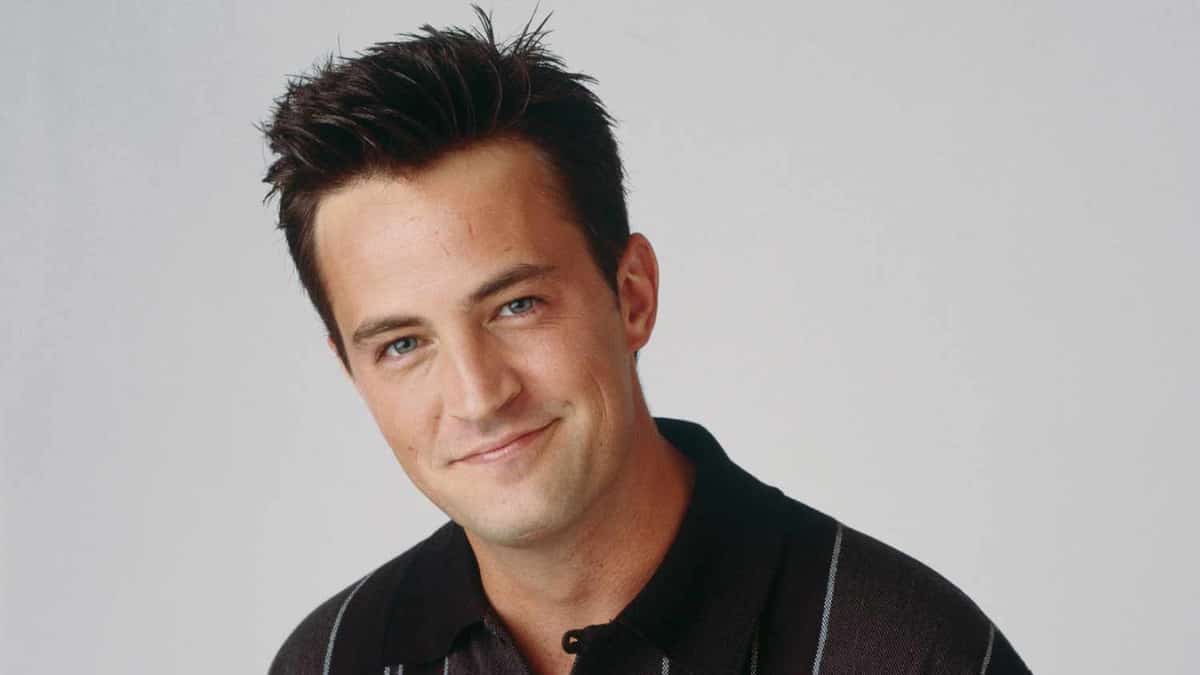
Matthew Perry was undergoing ketamine infusion therapy.
Matthew Perry's cause of death has been disclosed as stemming from the acute effects of ketamine, a potent anesthetic that has found diverse applications in both medical and experimental psychiatric treatments. Perry, widely known for his role as Chandler Bing in the iconic television series Friends, was undergoing ketamine infusion therapy — a procedure intended to address severe depression and anxiety. The revelation from the medical examiner's report has brought to light the specific circumstances surrounding Perry's tragic demise.
What is Ketamine?
Ketamine, chemically classified as a dissociative anesthetic, has long been employed in medical settings for inducing and maintaining anesthesia during surgical procedures. Its ability to produce sedation, analgesia, and dissociation from the surrounding environment has made it a valuable tool in various medical contexts. However, the past decade has witnessed an expansion of its use beyond its traditional role, particularly in the field of mental health.

Also Read |Matthew Perry's cause of death revealed
Ketamine infusion therapy
Ketamine infusion therapy represents one such off-label application, where controlled doses of ketamine are administered intravenously to individuals grappling with severe depression and anxiety. The rationale behind this unconventional use stems from the drug's ability to rapidly alleviate symptoms in some patients, offering a potential breakthrough in the treatment of mood disorders that are often resistant to conventional therapies.
)
Nigeria: Protesters take to the streets, police fire shots
)
US-Iran war: Tehran draws red lines — seven demands before any peace talks
)
Russia-Europe tensions: Polish PM warns Russian attacks could test NATO's unity
&im=FitAndFill=(700,400))
‘Not the US or China’: These are the countries leading the world in arable land
)
Mark Carney mimics Trump in hilarious moment over C$70 billion clean-energy investment; room erupts in laughter
)
Pentagon revives mandatory testosterone testing for male troops aged 30 and above
)
‘End of my career...’: NSA Doval recalls tense Sikkim mission when China captured Indian intelligence team
)
Trump defends AI amid growing alarm, announces new 'AI force' and promises an 'AI czar'
)
Iran sets 7 conditions to end war with US: What are Tehran’s demands?
)
Trump announces ‘AI Force’ as debate grows over AI risks and regulation
)
China may have gained access to US's classified F-35 jets; parts meant for repairs diverted to Hong Kong, sparking Pentagon inquiry
)
Gaza under attack: Health chief's son killed in IDF strikes
)
Inspired by podcasts and Meghalaya murder case: How Siya allegedly planned Ketan Agarwal’s Lohagad fort murder
)
Arvind Kejriwal, family members, Delhi CM Rekha Gupta get SIR notices
)
Cochin shipyard starts building Indian Navy's next-gen missile vessels
)
Saudi vs Houthis: Houthis claim missiles & drones used in attack on key Saudi sites
)
Ed Sheeran addresses Macklemore's removal, Gaza conflict during Philadelphia concert: 'I cannot hide how I feel'
)
Brigitte Bardot’s private collection set for Paris auction; key items and prices revealed
)
‘Will go to any extent’: Pakistan vows to defend Saudi Arabia amid Houthi attacks
66 years of the Indus Waters Treaty: How India and Pakistan settled a bitter river dispute
)
The Verdict | When precision fails: US commits war crime in Minab school strike, UN finds
)
9 women found dead near Johannesburg: South Africans rally, demand 'enough' to femicide
)
Trump wants to rename ‘Artificial Intelligence’, gives 3 options: Which one would you pick?
)
US-Iran war: Tehran sets seven conditions to re-engage in talks with US
)
Reacher star Alan Ritchson opens up about alleged blackmail, suicide attempt during difficult period
)
Africa is splitting, and a lot sooner than estimated, giving way to a new ocean
)
Flying cars in UAE: Ras Al Khaimah signs deal with Chinese company to test new transport
)
Trump bans CNN, MS NOW and Politico from White House over ‘FAKE NEWS’
)
Trump 2.0: Dark days ahead for America’s ‘imperial presidency’
&im=FitAndFill=(700,400))
How many F-35s does Britain, Japan and Israel have?
)
Harry Brook targets long reign at top of T20I rankings after Sri Lanka sweep
)
Russia's deadly Ukraine strikes kill 2 in Sumy, hit Dnipro mall
)
Russia holds first parliamentary elections since the beginning of the Ukraine war
&im=FitAndFill=(700,400))
Meet top 5 Indian batters with fastest T20I centuries
)
Raphinha hat-trick powers Barcelona to 3-1 win over Sevilla in La Liga
)
As per the medical examiner's report, the levels of ketamine in Perry's body were not consistent with those expected during routine ketamine infusion therapy sessions. Instead, the concentrations were akin to the levels utilised for general anesthesia in the context of surgical procedures.
Crucially, as per an Associated Press report, the last ketamine infusion therapy session Perry underwent, occurring one and a half weeks before his death, did not align with the persistently elevated ketamine levels found in his body. The drug is typically metabolised and eliminated from the body within a matter of hours.
How does ketamine work as an anesthetic and as an anti-depressant and anxiolytic (anti-anxiety drug)?
Ketamine acts primarily as an N-methyl-D-aspartate (NMDA) receptor antagonist, blocking the action of glutamate, a neurotransmitter involved in synaptic transmission. Its effects on the central nervous system lead to dissociation, analgesia, and, in some instances, psychedelic experiences. The rapid onset and short duration of action have contributed to its popularity in medical settings.
In the context of ketamine infusion therapy, the drug is administered at sub-anesthetic doses, often in a series of sessions over a prescribed period. This controlled exposure is believed to modulate neural pathways and receptor functions, potentially providing relief to individuals grappling with treatment-resistant depression and anxiety. The exact mechanisms underlying ketamine's antidepressant effects are not yet fully understood, but it is thought to involve complex interactions with various neurotransmitter systems and synaptic plasticity.