Rudyard Kipling, a literary colossus built on colonial sand

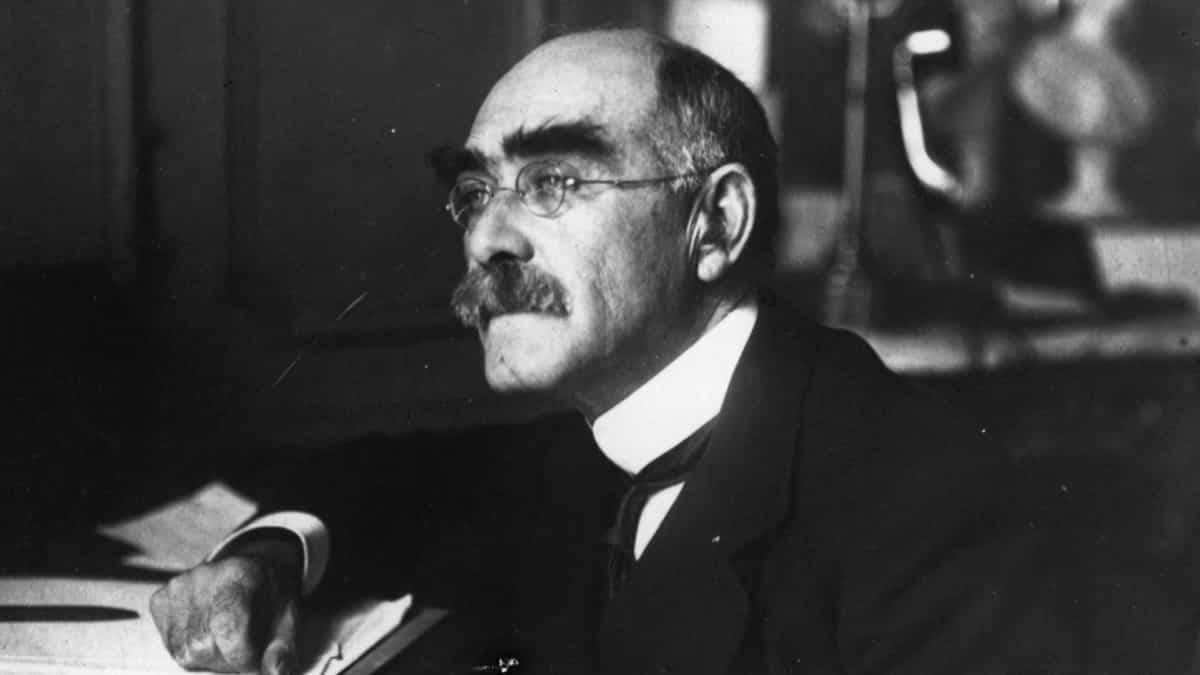
Rudyard Kipling was born 158 years ago.
Today marks the 158thanniversary of Rudyard Kipling's birth. The occasion prompts a comprehensive reflection on his complex legacy, particularly for those who, like me, grew up enchanted by his stories and discovered the disturbing undercurrents of his beliefs much later. Born on December 30, 1865, in Bombay, British India, Kipling's literary contributions are undeniably significant, yet the shadows of his colonial-era prejudices cast a disquieting pall over his work.
Kipling's tales, notably The Jungle Book and Kim, seamlessly incorporated the cultural richness and complexity of India, enchanting readers worldwide. His ability to evoke the essence of the country, its incredible diversity, and the sheer beauty of its landscapes established him as a literary giant. Yet, if ones explores deeper, unsettling revelations about Kipling's beliefs come to the fore.
The same man who penned the mesmerising tales of the jungle also harboured deeply racist views.

Take The White Man's Burden, for instance. It was a poem that espoused the virtues of colonialism, and a paternalistic attitude that mirrored the prevailing imperialistic ideologies of the time. The very title implies a heavy responsibility that falls upon the shoulders of those of European descent. The use of the word "burden" here suggests a self-imposed duty, portraying the colonial enterprise as a noble sacrifice for the betterment of less developed societies.
It constructs a narrative where the colonisers sees themselves as morally obligated to bring the benefits of Western civilisation to what they perceive as the uncivilised and inferior peoples in the colonised world.
The poem portrays the colonised peoples as "new-caught, sullen peoples, half devil and half child," depicting them as primitive and in need of the guiding hand of the superior white race. The phrase "new-caught" reinforces the notion of these nations as recently captured or acquired territories, in need of the civilising influence of their colonial masters. The poem served as a rallying cry for imperialistic endeavours, and not just the British, providing a seemingly moral foundation for the expansion of colonial powers.
&im=FitAndFill=(700,400))
National Handloom Day 2026: From Alia Bhatt to Samantha Ruth Prabhu; Actresses who celebrated India's textile heritage as brides
)
The Royals enter the Doctor Who universe: King Charles and Queen Camilla beam into Commonwealth Games in TARDIS
)
Unitree Robotics targets $9 billion valuation in landmark IPO backed by DeepSeek and Tencent
)
India names 27 sites in Arunachal Pradesh
)
Bharat Bhhagya Viddhaata OTT: When will Kangana Ranaut's film stream online?
&im=FitAndFill=(700,400))
How many soldiers operate one S-400 battery?
)
Shakib Al Hasan ready to return to Bangladesh—under one condition
)
‘Fake news’: MEA rejects report claiming India sought defence pact with Israel after Pakistan, Saudi Arabia, Turkey deal
)
Rockstar to unveil GTA 6 extended look ahead of November launch
)
Russia forms Ukrainian Volunteer Spetsnaz Brigade to fight Ukraine
)
Drug-resistant fungus that hides in hair and enters bloodstream reported in 23 US states
)
Technology transfer deal boosts India's defence manufacturing ambitions
)
Border row erupts in Europe after Ceuta crossings, Spain imposes border controls on Italy
)
Morale plummets on USS Abraham Lincoln: Are US sailors reaching a breaking point? | GRAVITAS
)
'Security can't be bought with Pakistan, Turkey deal': Iran tells Saudi Arabia
)
Baba Vanga's 2026 prophecy: 2 predictions 'already came true', 3 terrifying ones remain. Details inside
)
Colombia’s new president Abelardo de la Espriella vows to ‘defeat narco-terrorists’, signals hardline shift
&im=FitAndFill=(700,400))
New Friday OTT releases (August 7, 2026): Operation Safed Sagar, Vadhandhi, Main Vaapis Aaunga- 6 movies and TV shows on Netflix, Prime Video and more
)
Squadron Leader Bhawana Kanth scripts history as Indian Air Force gets its first woman ‘Top Gun’ pilot
)
RSS says Gen Z protests reflect genuine distress
)
Trump says Iranian school bombing photos could be AI-generated - 'I don’t think...'
)
IAF officer held for sharing sensitive information in 'honey trap' case, booked under Official Secrets Act
)
Stray Kids under scrutiny? Fans react to Grammy submission silence after BTS boycott
&im=FitAndFill=(700,400))
Why the Su-30MKI doesn't need external fuel tanks to fly vast distances
)
Jugal Hansraj reunites with Shekhar Kapur after 40 years for Masoom: The Next Generation
)
New speed limits, automatic challans: Big traffic change coming to Delhi-Meerut Expressway. All you need to know
)
India officially names 27 places in Arunachal to counter China's renaming claims
)
Trump calls White House ballroom ruling a 'national disgrace' as court says Congress approval needed
)
US sanctions Iran’s crypto network after Strait of Hormuz attacks, offers $15m bounty for intel on IRGC finance
&im=FitAndFill=(700,400))
Why the Su-30MKI is one of the heaviest fighters ever built
)
Uttarakhand young innovator builds India's own flying vehicle, conducts first test flight: WATCH
)
Chilling video shows students take cover as teen opens fire at Thai school
)
Reese Witherspoon's father hospitalised after poolside incident in Nashville: Report
As you can probably tell, it became increasingly challenging for me to reconcile the brilliance of his stories with his jaundiced worldview. As a young Indian reader who read and reread his works to the point of almost memorising passages, this revelation stirred conflicting emotions. How does one celebrate literary brilliance when it is intertwined with ideologies that perpetuated, and continues to perpetuate, oppression of entire peoples?
The colonial-era context in which Kipling lived undoubtedly influenced his perspectives, but it does not absolve him of the responsibility embedded in his words. The celebration of his literary genius must coexist with an acknowledgment of the harm perpetuated by his narratives. This duality prompts a broader conversation about the intersection of art and ideology, forcing us to question the ethical dimensions of celebrating works that endorse racist worldviews.
We have to embrace the discomfort of his prejudiced beliefs while also recognising his undeniable storytelling prowess. Two can (and I feel should) coexist together. It is an exploration of literature that necessitates a discerning gaze, embracing the beauty of the tales and at the same time remaining vigilant against the shadows that mar the canvas.
On this day, let's confront the inherent contradictions of literary appreciation, recognising that art, like life, is multifaceted. Kipling's legacy serves as a reminder that literature is not immune to the flaws of the human condition.