Meryl Streep for president

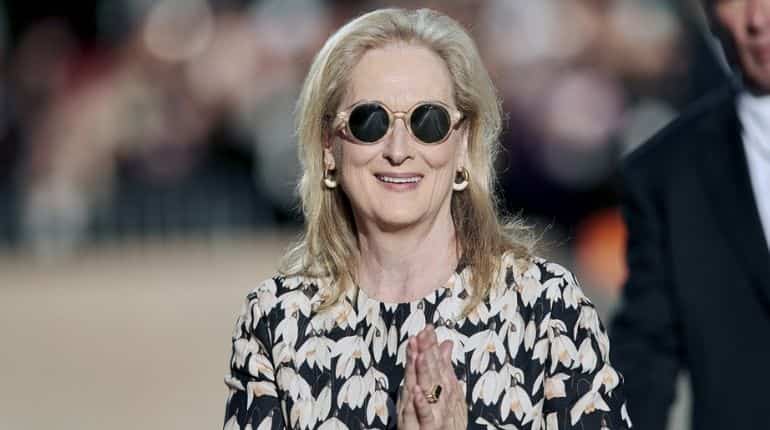
Meryl Streep arrives for the premiere of 'The Laundromat' during the 2019 Toronto International Film Festival
To whom would you turn if you learned a comet was on a collision course with Earth and decisive action was required to prevent the extinction of all life on this planet? If your first thought was Meryl Streep, you have made both an excellent and terrible choice.
In “Don’t Look Up,” from writer-director Adam McKay (“The Big Short,” “Vice”), two scientists played by Leonardo DiCaprio and Jennifer Lawrence find themselves facing this end-of-the-world scenario and must turn to a U.S. government led by the fictional President Orlean for assistance.
The good news (for the movie, which will reach theaters on Dec. 10 and Netflix on Dec. 24) is that Orlean is played by Streep, the venerated film and TV star; the bad news (for humanity) is that Orlean is a self-centered scoundrel who cares a great deal about her public image but little to nothing about running the country.

Orlean is one of several malefactors in “Don’t Look Up,” a social satire that McKay wrote about climate change but that he fully expects will be interpreted as a commentary on the pandemic. The president is also a character whose many faults and shortcomings Streep delighted in bringing to life, and she credits McKay for giving her and her co-stars the latitude to indulge in awfulness.
As Streep explained in a recent phone interview, “He never lost heart or confidence in this vision that he had for this thing, which was to make an atmosphere as free as possible for everybody — just go nuts and do what you want. But with a deadly serious intent.”
Here, Streep and McKay explained the steps they followed to put Orlean in the Oval Office.
)
What’s in a name? Trump’s 'Lake America' move gets a tit-for-tat response from Canada
)
US judge questions Trump’s decision to ban CNN, MS NOW and Politico from White House
)
Trump and Xi Jinping: Timeline of key meetings and major agreements
)
Italy hit by floods in the north, drought in the south
)
'We would all be dead': Netanyahu defends decision to strike Iran's nuclear facilities in his UN speech
)
Mumbai Indians appoint Luke Williams as head coach for Women’s Premier League
)
'There will be elections': Venezuela's interim leader Delcy Rodriguez makes big announcement at UN
)
IIT Bombay CCTV footage emerges: Sahil Wakode seen looking at phone in examination hall
)
Welcome actor Mushtaq Khan dies at 56 after battling cancer
)
Shah Rukh Khan is India's richest actor, Amitabh Bachchan is second: Hurun List 2026
)
WION Iconic Tourism Summit 2026: Union Minister Shekhawat on 'experiential travel', peace diplomacy
)
250-pound WWII bomb found in Falmouth harbour in England
)
Property registration becomes faster, convenient as model sub-registrar offices open in Maharashtra
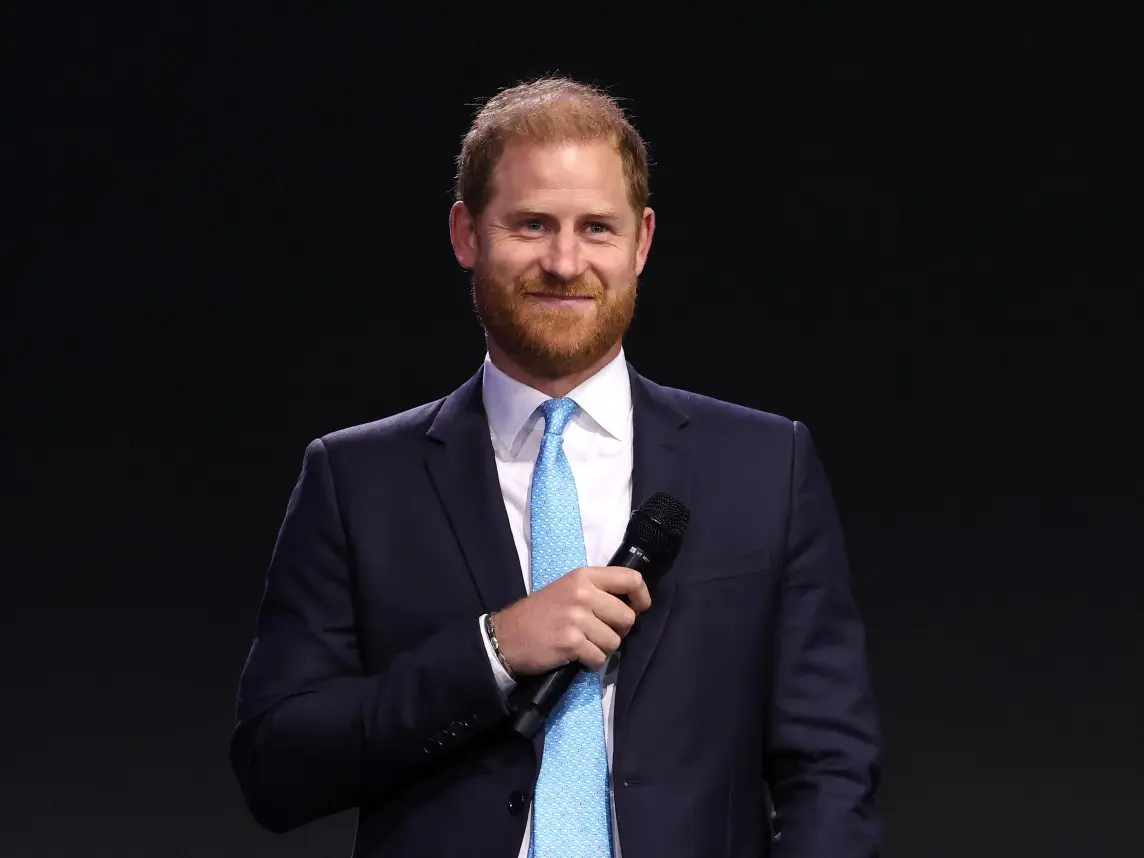)
'AI got into my speech': Prince Harry jokes after teleprompter failure at event in New York
)
Asian Games 2026: Seema breaks 16-year drought for India in women’s 10,000m with historic bronze
)
Scientists detect first radio signals directly from faraway planet
)
What’s on the menu? Inside Trump’s lavish White House state dinner for Xi
)
China to test supersonic jet that moves at Mach 2, double the speed of sound
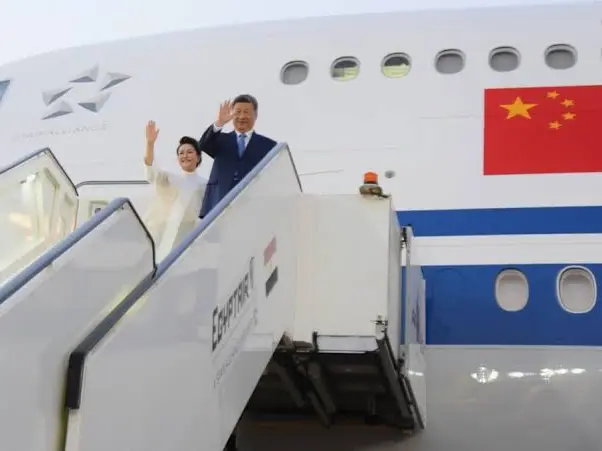)
Xi Jinping's 'special plane' vs Trump's Air Force One: What's the difference?
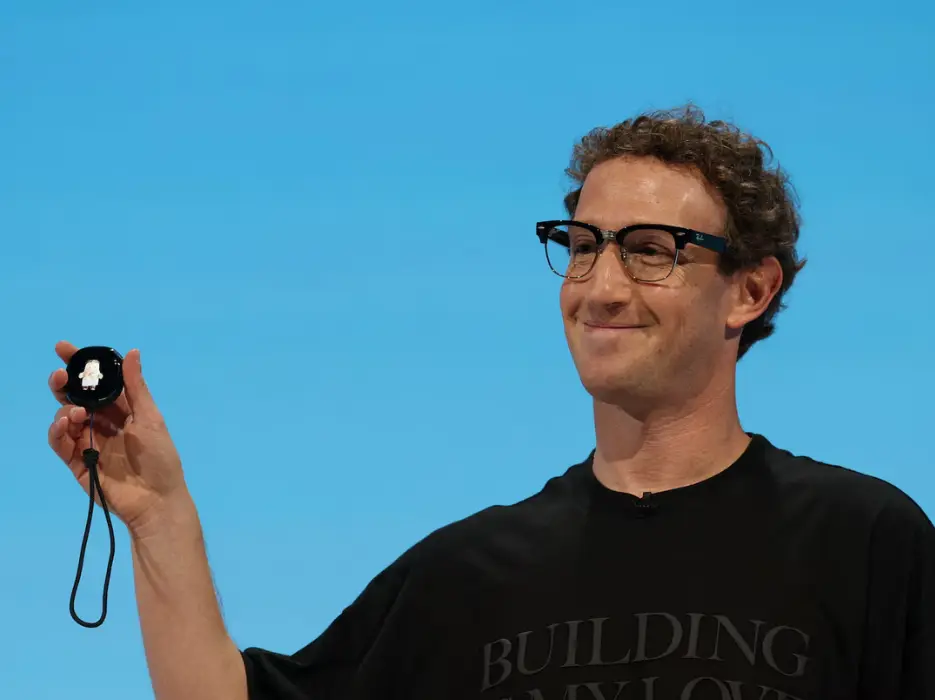)
Forget the smartphone: This tiny gadget could be Meta’s answer to the post-smartphone era
)
Hours before Xi-Trump meeting, US announces visa curbs targeting birth tourism: What is it?
)
'Partners rather than rivals': Xi Jinping's first message after landing in US for Trump summit
)
WION Iconic Tourism Summit: Is India's travel boom outrunning its airports, airlines and hotels?
)
2,000-foot tube, laser tests and more: China builds towns to expand nuclear arsenal, satellite images show
)
Meet Adrian Abraham: 9-year-old Indian-origin guitar prodigy aiming for a Guinness World Record
)
Winter coat, gloves in September? Trump’s Xi welcome sparks social media buzz
)
Trump-Xi state dinner 2026: Who is invited? Full guest list of tech CEOs, business leaders and officials
)
Who is Peng Liyuan? Xi Jinping's singer wife and China's most visible First Lady
)
Australian PM Anthony Albanese calls OpenAI AI incident 'unacceptable' after restricted data access
)
'What kind of confession is this?': Pakistan PM Shehbaz Sharif’s 'terrorists would be roaming New York' remark goes viral, raises alarm online. Watch
)
Russia likely to target Spain, France and Italy in drone attacks, warns CIA: Report
)
WION Iconic Tourism Summit: How local tourism MSMEs must upskill for AI integration
)
Trump’s Board of Peace unveils $2.45bn Gaza plan,66 projects: But where’s the money?
)
‘Both will lose in confrontation’: Xi says US and China should ‘coexist in peace’
)
For the first time, the UN Security Council sat US and Chinese AI makers at the same table
)
EC appointment law: Why is the 2023 act controversial, and what happens next? WION explains
)
Israeli envoy to US Yechiel Leiter’s son critically injured in West Bank ramming attack
)
WATCH | China President Xi Jinping lands in US as Trump greets him ahead of high-stakes summit
)
Report: UK using ground-based system to jam hostile satellites
Create a Backstory
Based on what she had read in McKay’s screenplay, Streep said she was already envisioning how Orlean could have won office. “You could imagine a group of various miscreants was pulled together, and she was the least bad of a lot of other candidates that they could have put out there,” Streep said, adding that she thought of Orlean “as someone whose elderly husband had a lot of money, and she got rid of him, and it was in California, so she got half. She had no real agenda except to have and retain power, and when she got there, she just realized that the job was pretty easy.”
McKay said that in naming the character, he was thinking of New Orleans — “It’s a fun city, but it’s kind of in jeopardy” — and not the fact that Streep played author Susan Orlean in “Adaptation.” (The notion that he manifested Streep in the role by naming it for her, McKay said, is “definitely not the case.”)
Draw on Real-Life Inspiration
McKay said he thought of Orlean as “a goulash” of recent presidents. That meant “the self-serving con man aspects of the last president, the dangerous inexperience of George W. Bush, the slick polish of Bill Clinton, the celebrity of Barack Obama and the coziness with big money,” McKay said. Another inspiration was finance expert Suze Orman, whom McKay described as “a brash populist with a strong fashion statement.”
To that recipe, Streep said she added a dash of the “Real Housewives,” whose televised squabbles often play in her house when her daughters come to visit. Although Streep won an Oscar for playing Margaret Thatcher in “The Iron Lady,” she said that performance was instructive only up to a point. Thatcher, she said, “wielded a kind of femininity that was intimidating to men, and part of her power was how she could pull it together — it was very specific to the ladder she climbed there.” Orlean, she said, is “more of our time — algorithmically put together.”
<b>Look the Part</b>
Streep had a hand in devising Orlean’s fashion sensibility, which she said communicated something essential about the character: “So what if she’s 70 years old and dresses like she’s 35?” she said. “No one told her you can’t be 35 forever.” That meant attire modeled after TV news anchors who, Streep said, “tend to pick these broad swaths of bright, happy colors to put on themselves — no prints, no polka dots or plaids or, God forbid, florals. None of the things that other people wear. Just these power suits and pencil skirts.” It also called for a specific hair regimen: “When I was in high school, you’d set your hair in rollers, then take it out and brush it 100 times,” Streep said. “This is the kind of hair where you take it out of rollers and just leave it like that — the longer, the better. And then those are sprayed and crisped and the ends curl out in weird ways. And that’s a thing. It has always escaped me why this was good. So I thought, well, I’m going to try to that — God knows I won’t do it in my real life.”
Get Ready to Face the Crowds
All that advance planning may still not fully prepare you for the demands of the presidency, as Streep discovered on her first day of shooting. She had spent several weeks in isolation, as screen actors have been required to do during the pandemic. Then, on the appointed day, she said, “I bundled up in my big down coat, put the dog in the back of my car, drove through a snowstorm to Worcester, Massachusetts, and got out at a stadium and parked.” Once there, Streep said, “They tried to turn me away at several points to get into the set. I said no, I’m in it.” After getting into hair, makeup and costume, Streep took to the stage where she saw her face on a Jumbotron and heard the delayed echo of her voice as she spoke to a crowd of several hundred extras. “And I just lost it,” she said. “I thought, well, I clearly have to retire. I can’t do this. I actually can’t do this. It was really a crisis of confidence.” Needless to say, Streep did find her bearings, but, she said, “it took awhile.”
Ad-Lib as Necessary
As he did on his movies such as “Step Brothers” and “Anchorman: The Legend of Ron Burgundy,” McKay allowed for some improvisation in “Don’t Look Up,” and McKay said Streep had a talent for extemporaneous dialogue and reactions. “Her character is almost never bothered by horrible things that people say to her or how horrible she is,” McKay said. “She has an utter shamelessness that could almost be misconstrued as confidence.”
Streep — who had just completed “Let Them All Talk,” a Steven Soderbergh movie with entirely improvised dialogue, before filming “Don’t Look Up” — isn’t immediately thought of as an ad-libber. But she enjoys the process and admires colleagues who can expertly riff. “Actors get a raw deal,” she said. “People think they’re dopey. But most of the good actors I know are really, really smart — I haven’t seen their math SATs, but I don’t care. Being able to pull that brilliance out of the air, really, it’s a form of writing. It’s an amazing thing when people are good at it.”
Don’t Actually Run for Office
Despite a successful sojourn into fictional politics, Streep said she harbored no desire to pursue elected office in real life. For one, the experience of waging a campaign, she said, is likely more than she could bear: “The cost, since the rise of social media, is so high that you have to be a nun to be elected,” she said. “Anybody in your family who was in trouble or in jail or anything, your family is offered up on the altar for sacrifice. I can’t even imagine what that’s like.”
Acting, said Streep, “is the only thing I can do. I could act like a politician, but I wouldn’t be good at it. I acted like I could play the violin, but I can’t really play the violin.”

