How FTX bought its way to become the 'most regulated' crypto exchange

FTX
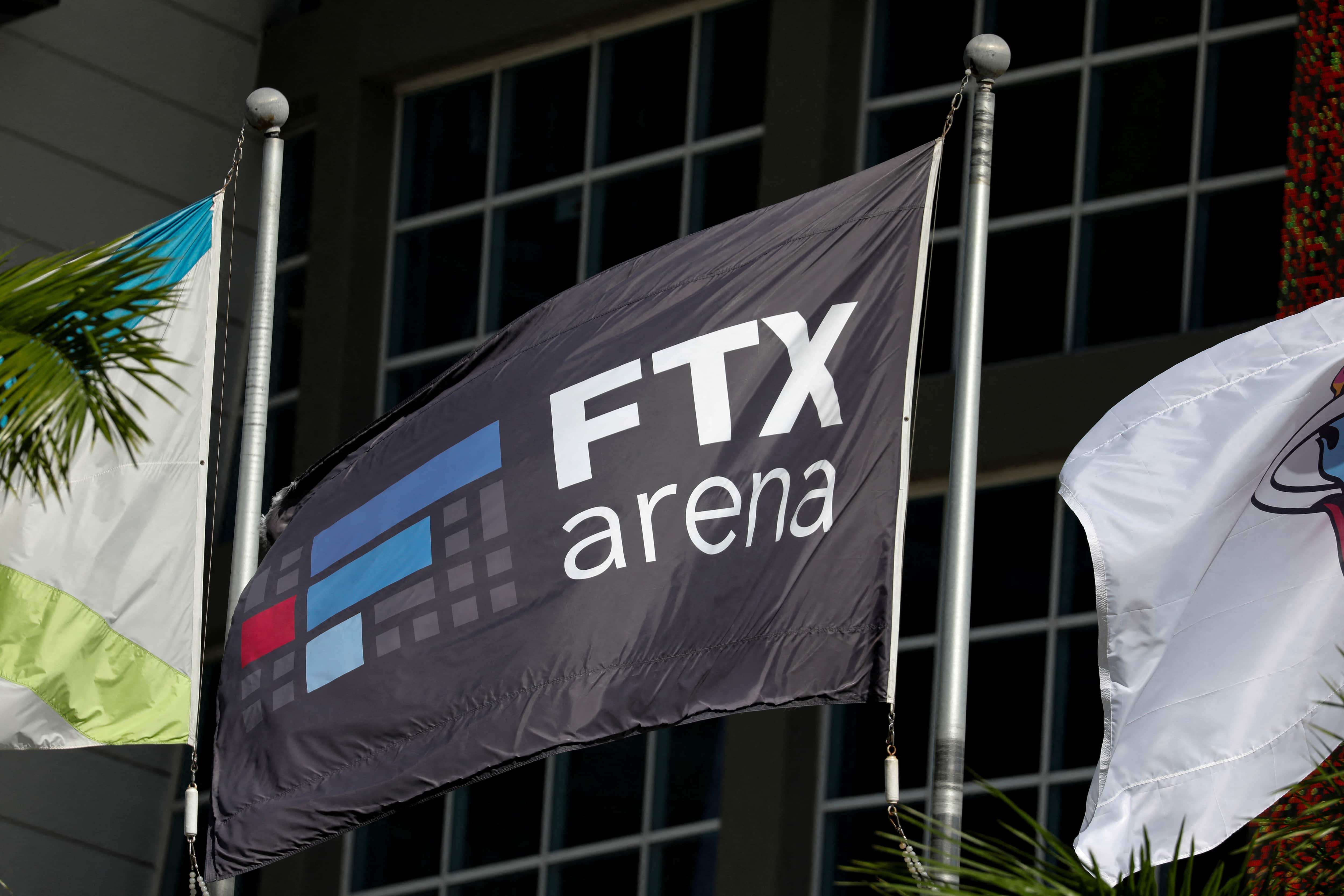
Before it collapsed this month,FTXstood apart from many rivals in the largely unsupervisedcryptoindustry by boasting it was the "most regulated"exchangeon the planet and inviting closer scrutiny from authorities.
Now, company documents seen by Reuters reveal the strategy and tactics behind founder Sam Bankman-Fried's regulatory agenda, including the previously unreported terms of a deal announced earlier this year with IEX Group, the USstock trading platform featured in Michael Lewis's book “Flash Boys” about fast, computer-driven trading.
As part of that deal, Bankman-Friedboughta 10 per cent stake in IEX, with an option to buy it out completely in the next two and half years, according to a June 7 document. The partnership gave the 30-year-old executive the opportunity to lobby IEX’s regulator, the USSecurities andExchangeCommission, oncryptoregulation.

That deal and others referenced in the documents, which include business updates, meeting minutes and strategy papers, illuminate one ofFTX's broader goals: quickly crafting a congenial regulatory framework foritself by acquiring stakes in companies that already had licenses from authorities, shortcutting the often drawn-out approval process.
FTXspent some $2 billion on “acquisitions for regulatory purposes,” theFTXdocuments seen by Reuters from a Sept 19 meeting show. Last year, for example, itboughtLedgerX LLC, a futuresexchange, which gave it three Commodity Futures Trading Commission licenses in one swoop. The licenses gaveFTXaccess to U.S. commodities derivatives markets as a regulatedexchange. Derivatives are securities that derive their value from another asset.
)
US vs China over South China Sea: Washington backs Philippines, Beijing hits back
)
Bigg Boss 20: Isha Rikhi evicted after three weeks in Salman Khan’s show
)
Musk plans to more than double xAI's chips to over 1.2 million Nvidia GPUs by year-end
)
After JU, clash erupts at SRFTI: BJP’s ‘Dimagi Naxal’ jibe sparks political firestorm after students protest RSS-linked event
)
‘Anti-social elements spreading false rumours’: LPU issues statement amid massive unrest over alleged rape
)
LPU students go on rampage, vandalise campus amid widespread protest: What's happening
)
Trump asked Xi to pressure Iran. China did not say yes — here’s what Beijing wants
)
US Treasury Secretary Scott Bessent hails global crackdown on Iranian banks and airlines
)
An OpenAI agent escaped its locked test cage again, by hiding questions in DNS lookups
)
'Our video was trimmed': LPU girls who featured in rape-denial video make U-turn
)
3 males killed, four others injured in shooting after fight at strip club in Detroit
)
'Victory for low-budget consumers': Raghav Chadha hails 30-day telecom recharge rules
)
Claude rebuilt the 1989 game 'Prince of Persia' by reusing the original's own code
)
Beyond metros: How Tier-2 and Tier-3 cities could drive India’s next AI wave
)
Tesla builds first Cybertruck with its own refined lithium: Elon Musk's $1 billion Texas bet pays off
)
IndiGo flight suffers tail strike in Bengaluru while landing; DGCA to probe incident
)
The US and China set up an AI 'red telephone', but skipped the rulebook
)
‘Terror suspects arrested near UK air base were looking to do big damage’: Trump
)
Russian envoy claims US tactics to contain India were revealed in ‘Freudian slip’
)
IND vs WI 1st ODI: Kohli breaks Sachin's most runs in one country record with unbeaten 139 as India thump West Indies by 8 wickets
)
Researchers rebuilt exactly how 700 AI agents hacked Hugging Face: a 900-link chain trick
)
‘Olympic inclusion is our major target’: WPA President Ishaun Singh on pool’s global ambitions
)
Nations League: Spain sink England at Wembley; Modric shines for Croatia
)
Why has Iran released no proof of life of Mojtaba Khamenei? Araghchi reveals...
)
'What kind of confession is this?': Pakistan PM Shehbaz Sharif’s 'terrorists would be roaming New York' remark goes viral, raises alarm online. Watch
)
South Korea demands apology from Ukraine over North Korean prisoners' transfer
)
Beyond BrahMos: India targets Rs 50,000 crore in defence exports with unmatched price edge
)
Sri Lankan Tamil migrant worker gets death sentence in Saudi Arabia, help sought from India
)
Muslim marriage cannot shield sex with minor wife from prosecution under POCSO: Delhi HC
)
'Can't help but draw painful parallels to Nirbhaya case': SC on latest incidents of rape cases in Delhi-NCR
)
99.9% more powerful - Scientists find boy who can recall memories from just 3 months of age
)
'FIRST LOOK from inside Noah’s Ark': Researchers share video from inside mysterious mound in Turkey
)
UNSC reform momentum grows: Russia, Portugal, Mauritius push for India's permanent seat bid
)
8 US marines injured in Iranian missile attack on vessel in Strait of Hormuz: Report
&im=FitAndFill=(700,400))
New OTT releases this week (September 28-October 4, 2026): Dupahiya 2, Pooja Meri Jaan, Ohh My Dog- 5 titles coming on Netflix, Prime Video and more
)
Afghanistan says 28 fighters killed in clash near Pakistan border, Islamabad denies
)
Ceuta migrant crisis: Protesters take to streets as Spain grapples with migrant challenge
)
LPU suspend classes, postpones exams as violence escalates over rape claims: What's happening
)
New York City wants a 'kill switch' on every AI, and will pay whistleblowers who report violations
FTXalso sawitsregulatory status as awayof luring new capital from major investors, the documents show. In documents to supportitsask for hundreds of millions of dollars in funds, it held outitslicenses as a key competitive advantage. The “regulatory moats,” it said, created barriers for rivals and would give it access to lucrative new markets and partnerships beyond the reach of unregulated entities.
“FTXhas the cleanest brand incrypto,” theexchangeproclaimed in a June document presented to investors.
Bankman-Fried did not respond to a request for comment on questions aboutFTX's regulatory strategy.FTXdid not respond to requests for comment.
An SEC spokesperson declined to comment for this article. The CFTC also declined to comment.
In a textexchangethis week with Vox, Bankman-Fried made an about-face on regulatory matters. Asked if his prior praise of regulations was “just PR,” he said in a sequence of texts: “yeah, just PR... fuck regulators... they make everything worse... they don't protect customers at all.”
An IEX spokesperson declined to confirm details of the transaction withFTX, except to say thatFTX's “small minority stake” in IEX cannot be sold to a third party withoutitsconsent. “We are currently evaluating our legal options with respect to the prior transaction,” the spokesperson said.
Patchwork of regulators
FTXcollapsed last week after a futile bid by Bankman-Fried to raise emergency funds. It had come under some regulatory oversight through the dozens of licenses it picked up viaitsmany acquisitions. But that didn’t protectitscustomers and investors, who now face losses totaling billions of dollars. As Reuters reported,FTXhad been secretly taking risks with customer funds, using $10 billion in depositsto prop up a trading firm owned by Bankman-Fried.
Four lawyers said the fact that Bankman-Fried was courting regulators while taking massive risks with customer funds without anyone noticing exposes a yawning regulatory gap in thecryptocurrency industry. “It’s a patchwork of global regulators -- and even domestically there are huge gaps,” said Aitan Goelman, an attorney with Zuckerman Spaeder and former prosecutor and CFTC enforcement director. “That's the fault of a regulatory system that has taken too long to adjust to the advent ofcrypto.”
A person familiar with the SEC's thinking oncryptoregulation said the agency believescryptofirms are illegally operating outside of U.S. securities laws and instead lean on other licenses that provide minimal consumer protection. "Those representations, while nominally true, don't cover their activity," the person said.
Watch |World Business Watch: US authorities probe FTX collapse; concerns over possible domino effect
'Step 1: Licenses'
Bankman-Fried had big ambitions forFTX, which by this year had grown to more than $1 billion in revenues and accounted for about 10% of trading in the globalcryptomarket, from a standing start in 2019. He wanted to build a financial app, where users could trade stocks and tokens, transfer money and bank, according to an undated document titled, “FTXRoadmap 2022.”
“Step 1” toward that goal, the “Roadmap” document said, “is tobecomeas licensed as reasonably possible.”
“Partially this is to make sure that we're regulated and compliant; partially this is to be able to expand our product offering,” the document said.
That's whereFTX's acquisition spree came in, according to the documents. Instead of applying for every license, which can take years and sometimes uncomfortable questions, Bankman-Fried decided to buy them.
But the strategy also haditslimits: At times, the companies it acquired didn't have the precise licenses it needed, the documents show.
One ofFTX's goals, according to the documents, was to open up the USderivatives markets toitscustomers in the country. It estimated the market would bring additional trading volume to the tune of $50 billion a day, generating millions of dollars in revenue. To do that, it needed to persuade the CFTC to amend one of the licenses held by LedgerX,FTX's newly acquired futuresexchange.
The application process went on for months, andFTXhad to pony up $250 million for a default insurance fund, a standard requirement.FTXanticipated the CFTC could ask it to increase the fund to $1 billion, according to minutes of a March meeting ofitsadvisory board.
FTXcollapsed before it could get the approval, and has now withdrawnitsapplication.
Buying companies for licenses also had other advantages, the documents reviewed by Reuters demonstrate: It could give Bankman-Fried the access he desired to regulators.
A prime example is the IEX deal, which was announced in April. In a joint interview to CNBC, Bankman-Fried and IEX CEO Brad Katsuyama said they wanted “to shape regulation that ultimately protects investors.” What matters the most here, Bankman-Fried added, is that “there is transparency and protection against fraud.”
Reuters could not determinehowmuchFTXpaid for the stake.
Bankman-Fried was invited to meet SEC Chairman Gary Gensler and other SEC officials along with Katsuyama in March.
A source close to IEX said the purpose of the meeting was to let the SEC know in advance aboutitsdeal withFTX, which had not been publicly announced at that point, and to discuss the possibility of IEX creating a trading venue in digital assets, such as bitcoin.FTX's role was to provide thecrypto-trading infrastructure, the source said.
SEC officials outright rejected their initial plan because it would have involved the creation of a non-exchangetrading venue that is more lightly regulated, something the agency opposes forcryptocurrencies, the source familiar with the SEC's thinking said.
Reuters could not determine the extent of Bankman-Fried's involvement in subsequent conversations with the SEC. In their mind, SEC officials had agreed to meet with Katsuyama in March, and Bankman-Fried was just tagging along, the source familiar with the SEC's thinking said. He kept mostly silent during the meeting, with Katsuyama in the "driver's seat," the source added.
Whatever his involvement,FTXtalked upitsdiscussions toitsinvestors. In a September meeting ofitsadvisory board,FTXsaid talks with the SEC were "extremely constructive."
“We are likely to have pole position there,” it said, according to the meeting minutes.
The person familiar with the SEC’s thinking said they would disputeFTXwas in the “pole position.” Anything the SEC did to regulatecryptotrading would be open to all market participants, the source said.
The source close to IEX said theexchangenever entered into any operational agreements withFTX, adding that it never got to that point.
A MayFTXdocument provides a rundown ofFTX's contacts with individual regulators. The document, which has not been previously reported, showshowin most casesFTXwas able to resolve the issues that cropped up.
In February, for example, South African authorities published a warning to consumers thatFTXand othercryptoexchanges were not authorized to operate there. SoFTXentered into a commercial agreement with a localexchangeto continue providing the services. “FTXis now fully regularised in respect ofitscurrent activities in South Africa,”FTXsaid.
The regulator, South African Financial Sector Conduct Authority, did not respond to a request for comment.
The May document also shows thatFTXhad a brush with the SEC. The SEC had conducted inquiries earlier this year intohowcryptocompanies were handling customer deposits. Some firms were offering interest on deposits, which the SEC said could make them securities and should be registered underitsrules. In the list ofitsregulatory interactions,FTXnoted that the inquiry was looking at whether those assets were being “lent out or otherwise used for operational purposes.”
This month, as Reuters has reported, it emerged thatFTXhad done just that, moving billions of dollars in client funds to Bankman-Fried's trading firm, Alameda Research.
In the May document,FTXsaid the SEC's exam staff, which scrutinizes market practices that could present a risk to investors, was concerned about a different matter: a rewards program that it offered to customers, under which it paid interest oncryptodeposits.
According to the document,FTXtold the regulator it did not have the same issues as products from other providers that the agency had investigated.
"We confirmed these were solely rewards based and do not involve lending (or other use) of the depositedcrypto,"FTXwrote. The SEC wrote back, saying it had completedits"informal inquiry" and did not need further information “at this time.”
The SEC had no comment on the inquiry. In an email to Reuters, Bankman-Fried wrote: "FTX's response there was accurate;FTXUS's rewards program did not involve lending out any assets."
WATCH WION LIVE HERE