Alec Baldwin shooting case: Prosecutors struggle to solve the mystery of live rounds

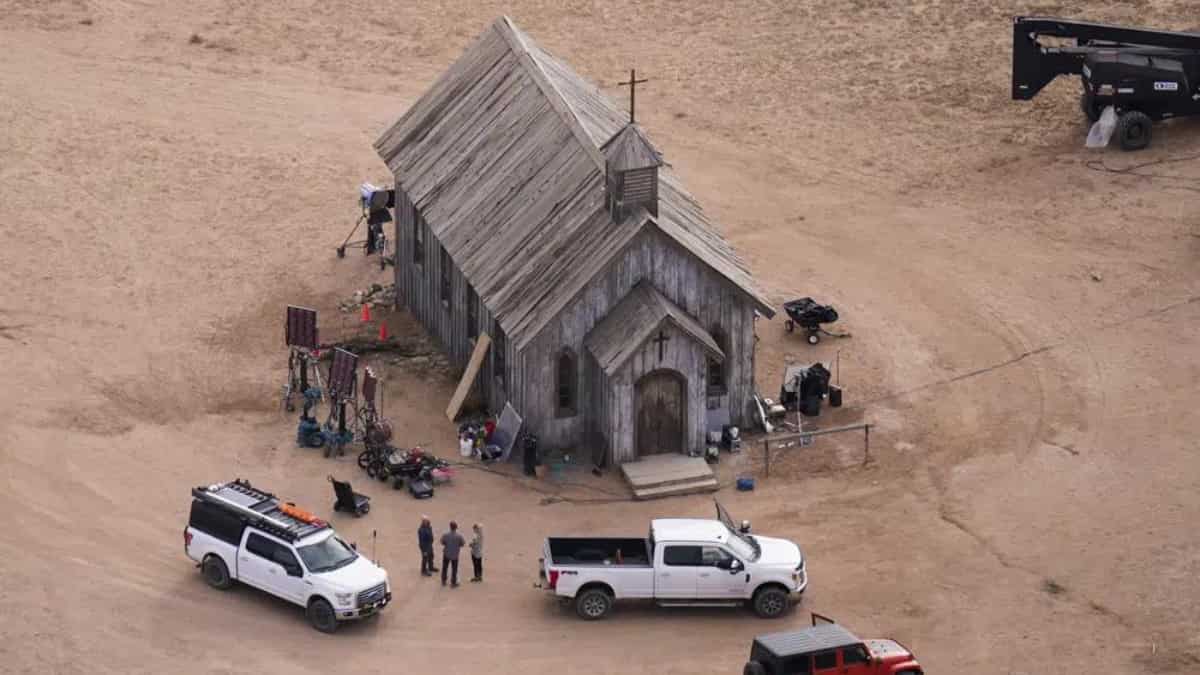
We still do not know how live rounds found their way to Rust's set.
The case surrounding Alec Baldwin's tragic shooting incident, where a cinematographer called Halyna Hutchins lost her life during a rehearsal in New Mexico over a year and a half ago, remains shrouded in mystery. Despite their latest court filing suggesting that weapons expert Hannah Gutierrez-Reed may be responsible for introducing the live rounds, prosecutors have yet to provide substantial evidence. In an attempt to build their case, the Associated Press reported, they are now arguing that an evening of indulgence in alcohol and marijuana impaired Gutierrez-Reed's judgment, potentially compromising set safety. However, Gutierrez-Reed's legal team contends that prosecutors are resorting to character assassination, while skeptical legal experts question the viability of such a strategy.
What happened in the Rust shooting case?
On October 21, 2021, a bullet fired by Baldwin on the Bonanza City, New Mexico near Santa Fe set of the movie hit Hutchins and writer-director Joel Souza. The gun was a prop and Baldwin was told it was "cold" (without ammunition). While Souza survived his injuries, Hutchins did not.

Dothe prosecution's arguments hold any water?
Observers closely following the case note that the prosecution's statements in response to a defence motion lack specificity and could prove challenging to substantiate. Prosecutors claim to have witnesses who will testify to Gutierrez-Reed's drinking and marijuana use during the filming of Rust. However, she was never tested, leaving uncertainty about the evidence that could support the allegation of her potential impairment while loading the live bullet into the actor's revolver.
John Day, a criminal defence attorney based in Santa Fe, points out that prosecutors have not explicitly stated impairment but rather used the colloquial term "hungover," which allows for multiple interpretations. The absence of a clear explanation regarding the presence of live rounds on set further complicates the situation.
)
Nigeria: Protesters take to the streets, police fire shots
)
US-Iran war: Tehran draws red lines — seven demands before any peace talks
)
Russia-Europe tensions: Polish PM warns Russian attacks could test NATO's unity
&im=FitAndFill=(700,400))
‘Not the US or China’: These are the countries leading the world in arable land
)
Mark Carney mimics Trump in hilarious moment over C$70 billion clean-energy investment; room erupts in laughter
)
Pentagon revives mandatory testosterone testing for male troops aged 30 and above
)
FACT CHECK: Why did PM Modi ask Xi ‘is it okay’ at BRICS Summit? New video reveals...
)
Trump defends AI amid growing alarm, announces new 'AI force' and promises an 'AI czar'
)
Iran sets 7 conditions to end war with US: What are Tehran’s demands?
)
Trump announces ‘AI Force’ as debate grows over AI risks and regulation
)
China may have gained access to US's classified F-35 jets; parts meant for repairs diverted to Hong Kong, sparking Pentagon inquiry
)
Gaza under attack: Health chief's son killed in IDF strikes
)
Arvind Kejriwal, family members, Delhi CM Rekha Gupta get SIR notices
)
Cochin shipyard starts building Indian Navy's next-gen missile vessels
)
Saudi vs Houthis: Houthis claim missiles & drones used in attack on key Saudi sites
)
Russia extends ban on Western food imports for two more years in extended sanctions countermeasure
)
Ed Sheeran addresses Macklemore's removal, Gaza conflict during Philadelphia concert: 'I cannot hide how I feel'
)
Brigitte Bardot’s private collection set for Paris auction; key items and prices revealed
)
How did an Australian river with 500 crocodiles pass the Olympic test? Here's how
)
‘Will go to any extent’: Pakistan vows to defend Saudi Arabia amid Houthi attacks
&im=FitAndFill=(700,400))
Ananya Panday to Sharvari: 5 actresses serving major princess vibes
66 years of the Indus Waters Treaty: How India and Pakistan settled a bitter river dispute
)
The Verdict | When precision fails: US commits war crime in Minab school strike, UN finds
)
9 women found dead near Johannesburg: South Africans rally, demand 'enough' to femicide
)
Trump wants to rename ‘Artificial Intelligence’, gives 3 options: Which one would you pick?
)
Reacher star Alan Ritchson opens up about alleged blackmail, suicide attempt during difficult period
)
Africa is splitting, and a lot sooner than estimated, giving way to a new ocean
)
Flying cars in UAE: Ras Al Khaimah signs deal with Chinese company to test new transport
)
Trump bans CNN, MS NOW and Politico from White House over ‘FAKE NEWS’
)
Trump 2.0: Dark days ahead for America’s ‘imperial presidency’
&im=FitAndFill=(700,400))
How many F-35s does Britain, Japan and Israel have?
)
Harry Brook targets long reign at top of T20I rankings after Sri Lanka sweep
)
Russia holds first parliamentary elections since the beginning of the Ukraine war
&im=FitAndFill=(700,400))
Meet top 5 Indian batters with fastest T20I centuries
)
Raphinha hat-trick powers Barcelona to 3-1 win over Sevilla in La Liga
)
Gutierrez-Reed's preliminary hearing is scheduled for August, during which a judge will determine if there is sufficient probable cause for the charges to proceed. Meanwhile, prosecutors anticipate deciding whether to recharge Baldwin within the next 60 days, pending the outcome of a gun analysis.
In April, the involuntary manslaughter charge against Baldwin, who also served as a producer on the film, was dismissed due to new evidence and the need for further investigation.
Ted Spaulding, an Atlanta attorney not involved in the case, highlights that while proving active impairment would make negligence arguments easier, prosecutors can still contend that alcohol, drug use, and potential hangover contributed to negligence.
Ultimately, the crux of the matter hinges on whether credible evidence exists to establish a link between impaired judgment and the shooting incident. The absence of immediate testing following the tragedy leaves prosecutors with no concrete proof of marijuana use in Gutierrez-Reed's system, aside from witness testimonies.
Miguel Custodio, a Los Angeles personal injury attorney, suggests that the prosecution's insinuation of Gutierrez-Reed being hungover might actually work in the defence's favor, given the pattern of sloppiness surrounding the case. Describing her as "probably hungover" appears to be a tenuous assumption, further calling into question the prosecution's approach.
What is Rust all about?
In the lawless landscape of 1880s Kansas, the notorious outlaw Harland Rust emerges from his seclusion with a singular purpose: to save his young grandson Lucas from the gallows. Lucas, only thirteen years old, finds himself facing a grim fate, condemned to hang for an unintentional killing. Determined to protect his flesh and blood, Rust embarks on a treacherous mission to rescue Lucas and ensure his survival. Apart from Baldwin, the film also stars Travis Fimmel, Patrick Scott McDermott, Frances Fisher, and Josh Hopkins.
WATCH WION LIVE HERE
You can now write for wionews.com and be a part of the community. Share your stories and opinions with us here.