The untold story of Vithabai Narayangaonkar: The Tamasha queen whose life inspired Shraddha Kapoor's Eetha

&imwidth=600&imheight=450&format=webp&quality=medium "The untold story of Vithabai Narayangaonkar: The Tamasha queen whose life inspired Shraddha Kapoor's Eetha")
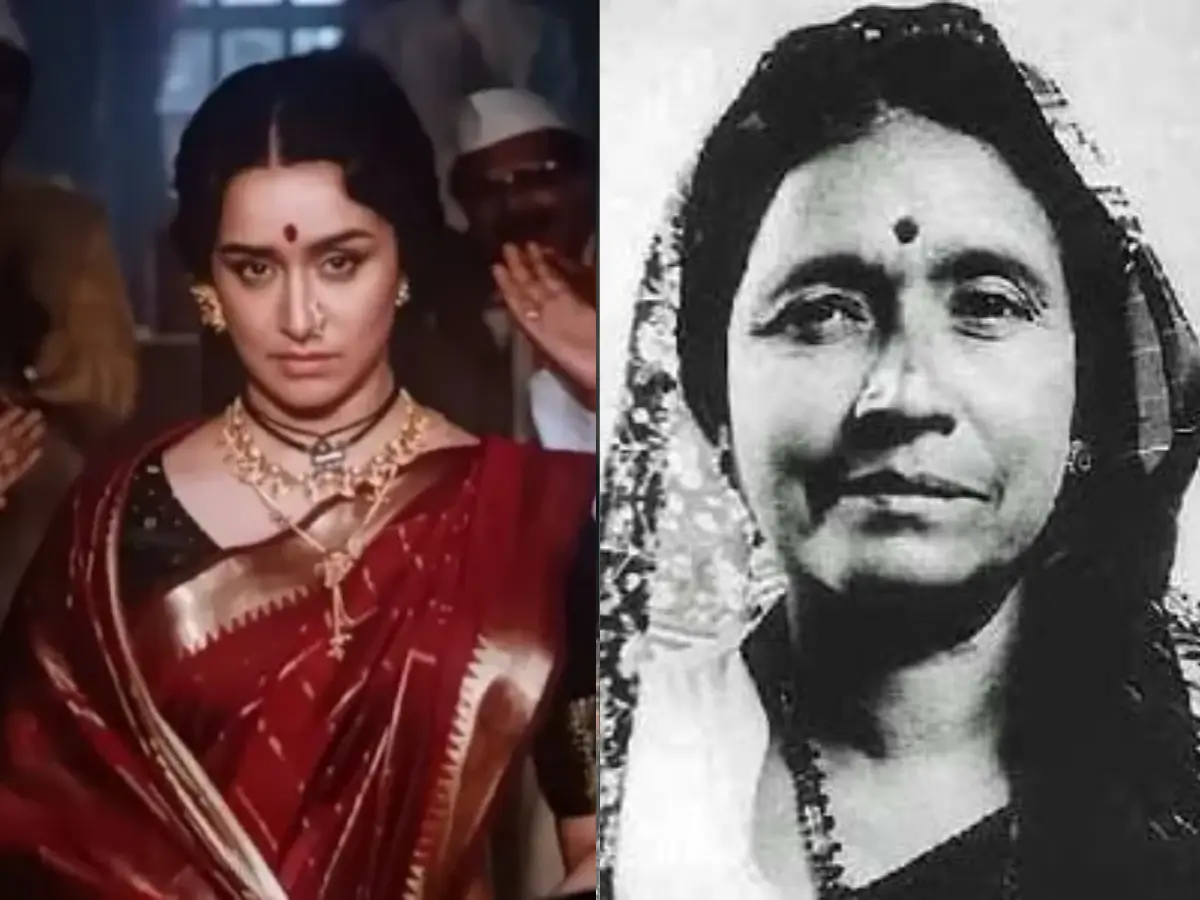
The real story of Eetha Photograph: (X)
Shraddha Kapoor is gearing up for her upcoming film Eetha, which is inspired by the extraordinary journey of Vithabai Bhau Mang Narayangaonkar, a celebrated figure in Maharashtra's folk arts tradition.
The teaser of Shraddha Kapoor's upcoming film Eetha has taken over the internet, and fans can't stop praising the actress. The promotional clip was screened alongside Cocktail 2 in theatres and it has found its way on social media through leaked clips. While Kapoor's transformation is commendable, do you know the real inspiration behind the film? The film is set to showcase the extraordinary journey of Vithabai Bhau Mang Narayangaonkar, a renowned Tamasha artist of Maharashtra.
The early life of Vithabai Bhau Mang Narayangaonkar
She was born in Maharashtra’s Pandharpur in 1935 in a family deeply connected to folk performance. Her family members, including her father, were associated with the Bhau-Bapu Mang Narayangaonkar Tamasha troupe, which is said to have played a key role in preserving traditional performance arts in the region.
Growing up in a family filled with artists, Narayangaonkar learned Lavani, Gavlan, Bhedik, and Tamasha, and gradually became one of Maharashtra's most celebrated performers.
Over the years, she gained popularity across the state and was given the title "Tamasha Samradni" or "Empress of Tamasha" for her talent.
Trending Stories
)
&im=FitAndFill=(700,400))
&im=FitAndFill=(700,400))
)
)
&im=FitAndFill=(700,400))
)
&im=FitAndFill=(700,400))
)
)
)
)
)
)
)
)
&im=FitAndFill=(700,400))
)
)
)
)
)
)
)
)
)
)
)
)
)
)
&im=FitAndFill=(700,400))
)
)
However, life was not so easy for her. Following the death of her father and the financial loss of the family troupe, she assumed greater responsibility to run the legacy of her family. Rather than stepping away from the folk theatre, she immersed herself further into it.
Through decades of performances, she became one of the most recognisable faces in Marathi folk culture and played an important role in preserving the traditional art.
An incident that made her a legend
While her whole journey is inspiring, what turned her into a legend was an incident that occurred when she was nine months pregnant. It is said that during a show, she went into labour, and instead of leaving the stage altogether, she stepped backstage and gave birth.
As per reports, she managed the delivery herself, tied and cut the umbilical cord, and returned to the stage shortly afterward. Her unwavering dedication to the stage had shocked the audience.
Her achievements
Through the 1950s, 1960s, and the decades that followed, she became one of the foremost ambassadors of Tamasha and Lavani. She received honours from the President of India twice, first in 1957 and again in 1990, for her contribution to Indian folk arts.
In 2006, the Maharashtra government instituted the Vithabai Narayangaonkar Lifetime Achievement Award to honour individuals who have made significant contributions to the Tamasha tradition.
However, her later years were filled with financial difficulties, health issues, and challenges within her personal life. When she passed away in 2002, her family reportedly struggled to meet medical expenses, and assistance from social workers became necessary.
About Eetha
Directed by Laxman Utekar, Eetha revolves around her journey from the 1940s through the 1990s. Alongside Kapoor, the film also features Randeep Hooda, Nana Patekar, Mohammed Zeeshan Ayyub and Siddharth Jadhav in key roles.
Eetha is slated to hit theatres on August 28, 2026.

