

&imwidth=800&imheight=600&format=webp&quality=medium "From a leopard skin seizure to a wider probe: What we know so far")
A wildlife crime investigation in Madhya Pradesh has taken a new turn, bringing a Delhi-based conservation organisation into the focus of investigators.
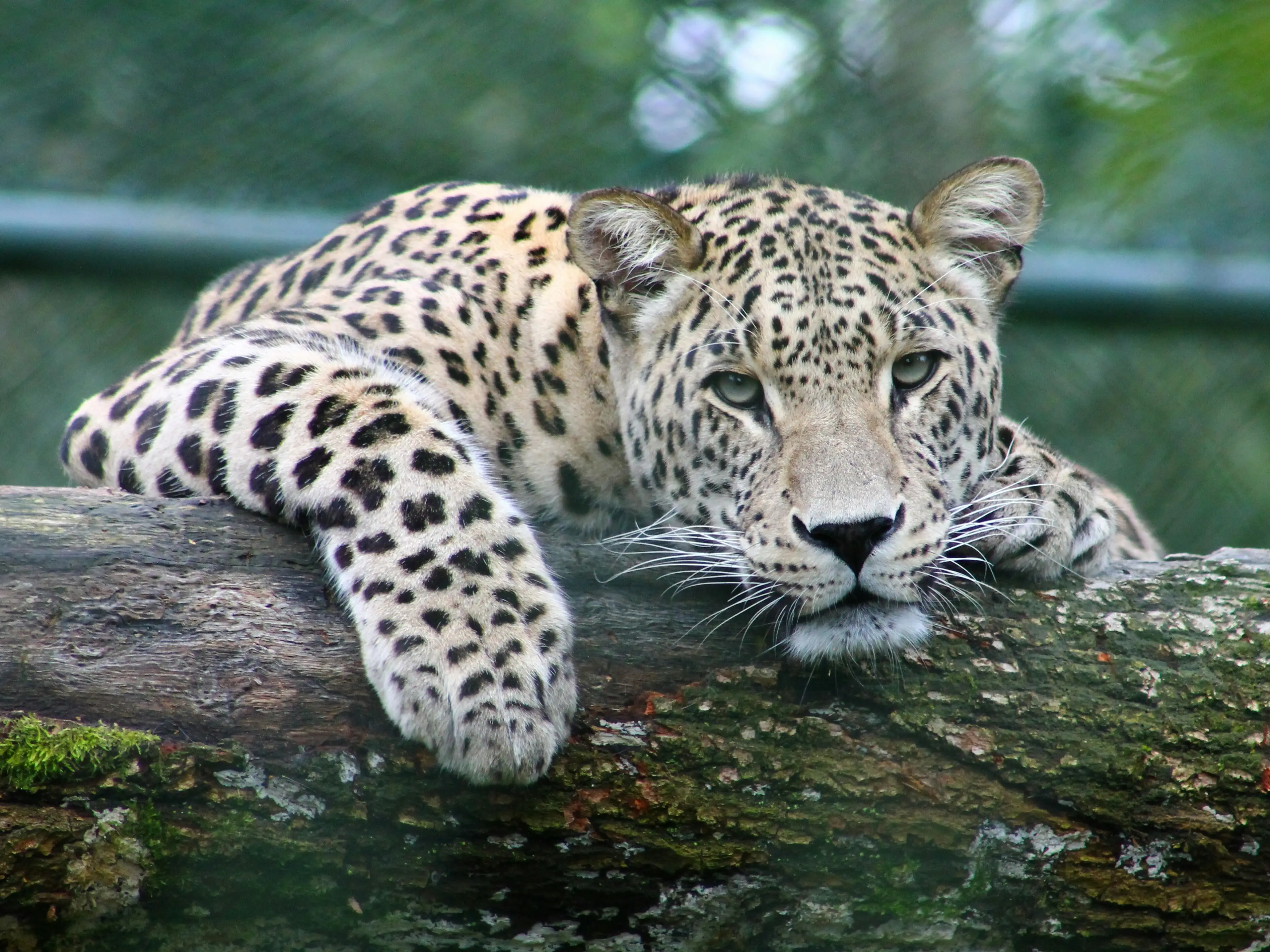
The case began with the seizure of 10 leopard skins on July 23, when four people were arrested on the Gwalior-Agra highway, according to a report by The Indian Express. The Madhya Pradesh State Tiger Strike Force (STSF) is now examining the circumstances surrounding the seizure and the alleged links of two of the arrested men with Wildlife SOS.
According to The Indian Express, the two men are Bhagwan Singh, also known as Salim, and his associate Wasim. Investigators reportedly found that both had links to Wildlife SOS, with Singh having been associated with the organisation for at least five years.
Wildlife SOS had initially claimed credit for the seizure through its Forest Watch unit, the newspaper reported.
The investigation subsequently widened as authorities began examining whether the two men's association with the organisation had any connection with the alleged poaching activity.
What investigators are examining
Trending Stories
&imwidth=180&imheight=135&format=webp&quality=medium)
Dhurandhar: The Revenge album submitted for Grammy consideration; But what does it mean?
&imwidth=180&imheight=135&format=webp&quality=medium)
'I ended 8 wars': Trump slams Nobel Peace prize decision, claims award was his due
&imwidth=180&imheight=135&format=webp&quality=medium)
Adéla gives KATSEYE’s Lara Raj and Megan Skendiel a shout-out at Fonda Theatre in LA
&imwidth=180&imheight=135&format=webp&quality=medium)
Shreyas Iyer blames dew for West Indies' record run chase in 2nd T20I in Ranchi
&imwidth=180&imheight=135&format=webp&quality=medium)
UK navy hit by espionage scandal: Sailor accused of spying for Russia | Gravitas
&imwidth=180&imheight=135&format=webp&quality=medium)
'Jantar Mantar not the story of India': BJP's Sambit Patra claims 'anarchists' tried to hold Delhi captive
&imwidth=180&imheight=135&format=webp&quality=medium)
New York protests erupt as Trump administration defends ICE shooting
&im=FitAndFill=(700,400)&imwidth=180&imheight=135&format=webp&quality=medium)
Happy Birthday Rekha: Watch these 7 evergreen Bollywood hits on Netflix, Prime Video and more
&imwidth=180&imheight=135&format=webp&quality=medium)
'Ouch!!! That must hurt': Kangana Ranaut hails Kamal Haasan's sharp reply to Elon Musk over Starlink row
&imwidth=180&imheight=135&format=webp&quality=medium)
Panama president declares ‘major disaster’ after powerful 7.7-magnitude earthquake; over 80 aftershocks recorded
&imwidth=180&imheight=135&format=webp&quality=medium)
Rahul Gandhi calls Modi, Shah ‘cowards’ amid CJP protest crackdown in Delhi

Kamal Haasan slams Elon Musk over Starlink delay row: 'Indian people, will decide our own future - not Western'
&imwidth=180&imheight=135&format=webp&quality=medium)
Two-thirds of competitive GOP candidates split with trump ahead of November midterms
&imwidth=180&imheight=135&format=webp&quality=medium)
'I am not going to be watching it': JD Vance on livestream of Nidal Hasan's firing squad execution
&imwidth=180&imheight=135&format=webp&quality=medium)
Trump honours Microsoft CEO Satya Nadella with top technology honour amid immigration scrutiny
&imwidth=180&imheight=135&format=webp&quality=medium)
Why was CJP founder Abhijeet Dipke detained? What Delhi Police said
&imwidth=180&imheight=135&format=webp&quality=medium)
SC questions closure of 57 Delhi Metro stations, asks Centre to resume services in regulated manner
&imwidth=180&imheight=135&format=webp&quality=medium)
Thai queen becomes first reigning monarch to fly jet solothailand #queen #wion
&imwidth=180&imheight=135&format=webp&quality=medium)
Flydubai co-pilot developed extremist views while studying in Australia: UAE prosecutors
&imwidth=180&imheight=135&format=webp&quality=medium)
‘250? Cool.’: Shai Hope takes swipe at Shubman Gill’s Instagram caption after Ranchi T20I masterclass
&imwidth=180&imheight=135&format=webp&quality=medium)
Ryan Reynolds’ private messages reveal his blunt views on Justin Baldoni from Blake Lively’s legal case
&im=FitAndFill=(700,400)&imwidth=180&imheight=135&format=webp&quality=medium)
Rakul Preet Singh birthday special: 7 times the Ramayana actress served glamorous looks
&imwidth=180&imheight=135&format=webp&quality=medium)
Delhi protest: Metro curbs, train cancellations, traffic diversions as protesters seek CEC Gyanesh Kumar’s resignation
&imwidth=180&imheight=135&format=webp&quality=medium)
'Modi is a dictator': Abhijeet Dipke claims govt 'scared' of youth, slams stringent measures ahead of CJP Jantar Mantar protest
&imwidth=180&imheight=135&format=webp&quality=medium)
Trump announces Russian diesel deal as Zelensky criticises move
&imwidth=180&imheight=135&format=webp&quality=medium)
‘Right to protest must be protected, but...’: Delhi Police reveals why it denied CJP permission for October 10 Jantar Mantar protest
&imwidth=180&imheight=135&format=webp&quality=medium)
'Spent Rs 2,000 cr to elect Trump': Elon Musk bought US President's loyalty by writing the biggest political cheque in human history
&im=FitAndFill=(700,400)&imwidth=180&imheight=135&format=webp&quality=medium)
New Friday OTT releases (October 9, 2026): Reporting Live, Animals, Take Charge of My Heart- 6 new titles coming on Netflix, JioHotstar and more
&imwidth=180&imheight=135&format=webp&quality=medium)
All 22 Indian seafarers safe in attack on Panama-flagged tanker off UAE coast
&imwidth=180&imheight=135&format=webp&quality=medium)
Katie Zacharia likely to succeed Karoline Leavitt as Trump's White House press secretary
&imwidth=180&imheight=135&format=webp&quality=medium)
Powerful 7.7 magnitude earthquake strikes Panama, tsunami warning issued
&imwidth=180&imheight=135&format=webp&quality=medium)
Pakistan denies reports of PAF jets being used in attacks against Iran-backed Houthis in Yemen
&imwidth=180&imheight=135&format=webp&quality=medium)
J&K Government orders major police reshuffle, transfers 100 officers across UT
&imwidth=180&imheight=135&format=webp&quality=medium)
100,000 strikes in 3 years: How October 7 redefined Israel's war
&imwidth=180&imheight=135&format=webp&quality=medium)
'Even Indira Gandhi didn't do this': Abhijeet Dipke, Saurav Das and Ashutosh Ranka detained from inside their flight | Watch video
&imwidth=180&imheight=135&format=webp&quality=medium)
Delhi on high alert for CJP protest: Delhi police to use body cams to 'prove whether we did anything’; Pink Force, RAF, 35,000 personnel deployed
&im=FitAndFill=(700,400)&imwidth=180&imheight=135&format=webp&quality=medium)
Food shortages, suicide attempts and more: USS Abraham Lincoln returns to US after 321 day deployment — What happened aboard the US carrier?
&imwidth=180&imheight=135&format=webp&quality=medium)
‘Never-ending flow of cheap labour’: JD Vance hits back at Indian-origin Congresswoman over US green card curbs for major tech companies
The central focus of the investigation is whether there was a wider network behind the seizure and what role, if any, the two men may have played. The Indian Express reported that investigators are examining claims that the arrested suspects acted on the instructions of Wildlife SOS CEO Kartick Satyanarayan.
Investigators have also reportedly collected what they describe as “substantial digital evidence”. According to the newspaper, authorities are examining whether Satyanarayan had any role in organising alleged poaching activities and subsequent seizures. Investigators are also examining whether such activities were intended to strengthen the organisation's anti-poaching credentials and help it attract institutional support, donors or grants. These are allegations being examined as part of an ongoing investigation and have not been established as facts by a court.
The MP STSF has issued a notice to Satyanarayan asking him to appear before investigators in Shivpuri on August 17.
Leopard remains and traps recovered
The investigation has also moved beyond the 10 skins seized on the highway. According to The Indian Express, investigators found several locations in the Shivpuri and Morena forest areas where leopard remains had allegedly been buried. The remains have been sent to the Wildlife Institute of India for DNA analysis. The testing could help investigators determine whether the remains are connected to the seized skins and whether there are links between different parts of the suspected wildlife-trafficking operation. Three leg-hold traps were also recovered, the newspaper reported. Investigators are examining their possible connection to the network under investigation.
At this stage, the recovered material is evidence being examined by authorities and does not by itself establish who was responsible for the alleged offences.
Why a 2023 seizure is also being examined
Investigators are also looking at an earlier wildlife seizure in Tamil Nadu. The Indian Express reported that Bhagwan Singh and Wasim were present during a 2023 seizure in the Sathyamangalam forest. Wildlife SOS had also claimed credit for that operation. Authorities are examining whether the presence of the same individuals has any relevance to the current case. Their reported presence at the earlier operation does not, on its own, establish wrongdoing. Investigators will have to determine whether there is a substantive connection between the two incidents.
Probe expands to possible trafficking links
Madhya Pradesh Chief Wildlife Warden Sameeta Rajoura told The Indian Express that the state authorities were coordinating with the Wildlife Crime Control Bureau (WCCB). The coordination is aimed at examining possible links to wildlife trafficking and strengthening efforts to secure forests in the region, according to the report. A key part of the investigation will be establishing where the leopard skins came from, how they were obtained and where they were intended to go. Those answers could help authorities determine whether the case represents an isolated incident or forms part of a larger trafficking network.
Why Wildlife SOS is part of the investigation
Wildlife SOS is a Delhi-based conservation organisation founded in 1995 by Kartick Satyanarayan and Geeta Seshamani. The organisation operates wildlife rescue and conservation programmes and has worked with government authorities through various Memorandums of Understanding and other arrangements. Its Forest Watch initiative is involved in wildlife-crime intelligence and anti-poaching activities.
The current investigation has brought some of those activities under scrutiny because of the reported links between the organisation and two of the arrested suspects. According to The Indian Express, authorities are also examining the organisation's agreements with state governments. The report said this includes a pending MoU for a proposed bear rescue centre in Bhopal. That review does not itself establish wrongdoing by Wildlife SOS or invalidate its existing conservation programmes.
Wildlife SOS rejects allegations
Wildlife SOS has rejected allegations linking it to a poaching and trafficking network and said it is cooperating with the investigation.
In a statement, the NGO said it was “shocked and deeply concerned” over what it called an “unprovoked attack” and warned that treating anti-poaching intelligence work as wildlife crime could have a “chilling effect” on enforcement efforts.
It also said such allegations could discourage informants, whistleblowers and field personnel from sharing information with authorities.
Wildlife SOS said it has records and “substantial proof” to counter the claims and is fully cooperating with investigators.
Kartick Satyanarayan, CEO and co-founder, said the allegations were “shocking” and highlighted the organisation’s work in wildlife rescue, including efforts that led to the ban on dancing bears in India.
Geeta Seshamani, co-founder and secretary, said the organisation would continue working with enforcement agencies and remain committed to wildlife protection.
The NGO said it has over 32 years of experience, operates across 19 states, and has assisted in the rescue of more than 5.31 lakh animals, according to its own figures.
The matter remains under investigation.
What happens next?
The immediate next step is Satyanarayan's scheduled appearance before the MP STSF in Shivpuri on August 17. Investigators are expected to examine the alleged links between the two arrested men and Wildlife SOS, the digital evidence referred to in the case, the leopard remains and traps recovered from the forests, and the reported connection with the 2023 Tamil Nadu seizure.
The DNA analysis of the leopard remains could provide further evidence.
For now, the seizure of 10 leopard skins is the established starting point of the case, while the wider allegations involving Wildlife SOS and its leadership remain subject to investigation. Any further conclusions will depend on the evidence collected by authorities and the subsequent legal process.
