&imwidth=800&imheight=600&format=webp&quality=medium "Bombs with wings: How glide weapons are reshaping air warfare")
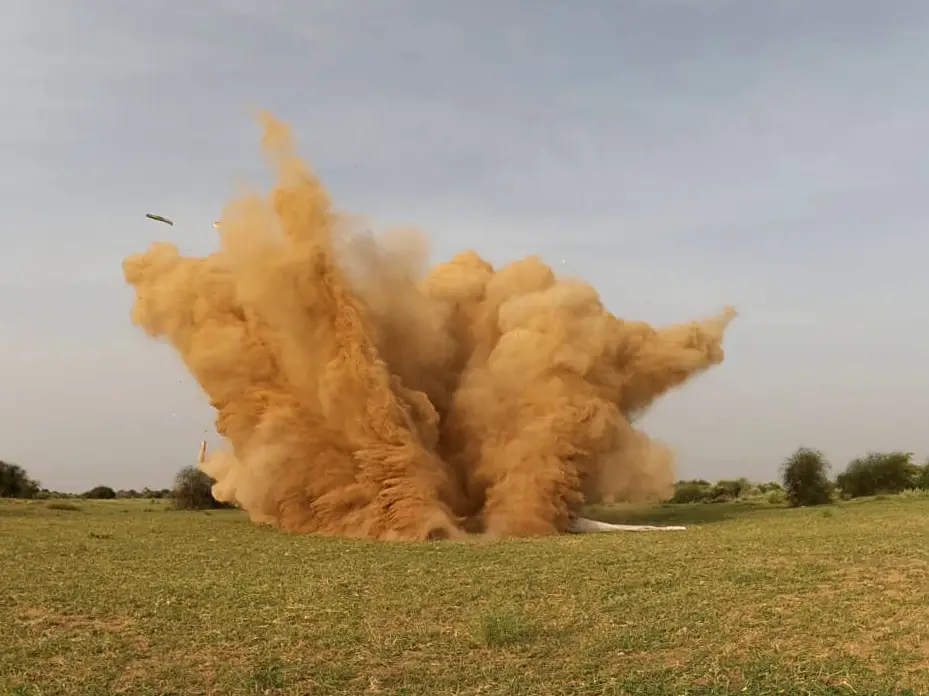
Not every weapon dropped from a fighter aircraft needs an engine to travel long distances. The growing importance of glide bombs is demonstrating how relatively simple technology can transform conventional bombs into precision stand-off weapons.
A glide bomb sits between a traditional bomb and a missile. Unlike a cruise missile, it does not require sustained propulsion. Instead, wings, navigation and precision guidance allow it to use the launching aircraft’s altitude and speed to glide towards its target.
The advantage is significant. Aircraft can potentially release these weapons from dozens or even more than a hundred kilometres away, reducing their exposure to enemy air defences. Glide bombs can also carry substantial explosive payloads while potentially costing considerably less than sophisticated powered missiles.

The Russia-Ukraine war has demonstrated their battlefield value. Russia has extensively used conventional bombs fitted with guidance and wing kits to attack Ukrainian positions, infrastructure and defensive lines from stand-off distances.
This creates an uncomfortable equation for air defence. Intercepting large numbers of comparatively inexpensive glide bombs can consume valuable surface-to-air missiles, while allowing them through can cause significant damage. Ukraine has consequently been developing its own glide weapons.
India is now expanding its capabilities in this area.
Trending Stories
)
Nigerian Navy discovers 99,000 litres of suspected stolen, illegally refined products as it intensifies anti-crude oil theft operations
)
Man pushes Russian humanoid robot. Watch what happens next
)
Coast Guard jet carrying DHS Secretary Markwayne Mullin makes emergency landing after engine failure
)
Who is Aditi Paudel? 17-year-old becomes Japan's first literacy ambassador
&im=FitAndFill=(700,400))
How the Su-30MKI flies up to 8,000 kilometres using mid-air refueling
)
Trump says he’s ‘happy’ Harry and Meghan left US , calls them disrespectful
)
Chaos in Ukraine's Kyiv: Zelensky calls shootout between spy services 'absolutely shameful'
)
Harry Potter and the Philosophers' Stone: New trailer reveals fresh look at Hogwarts, sorting ceremony and iconic moments to life
)
2,000 pairs of underwear buried in Switzerland revealed something startling
)
Pakistan faces growing hunger crisis amid rising food insecurity
)
Belgium, latest EU state cautioned by India over arms for Pakistan; gets assurances from Brussels
)
Houthis target Yemen with ballistic missiles, Yemeni army downs several drones
)
No selfies with God, no reels inside: Tamil Nadu CM bans smartphones in temples | Gravitas
)
Indian Air Force pilot Abhinandan Varthaman, who shot down Pak fighter jet retires, takes up private job
)
Report: Egypt eyes new Rafale F4 deal amid air force modernisation push
)
Rubio on Modi-Pezeshkian meeting: 'No country should help Iran evade sanctions'
)
WION Exclusive: Hasina says she reads father’s unfinished memoir while planning Dhaka return
&im=FitAndFill=(700,400))
Why the Su-30MKI uses a giant air brake on its back instead of its wings
)
Bangladesh batter Towhid Hridoy creates history with 350 not out in South Africa
)
Beginning of the end? More glacial lake outbursts threaten millions in India, Nepal and China
)
India's data centre boom: AI boom fuels $31.6 trillion data race
)
Is Trump ending Iran war? 'Operation Fury' naming ends, Hegseth extends troop plan to 2027 as prez appears tired ahead of midterms
)
Trump suggests renaming Strait of Hormuz to ‘Trump Strait’
)
Pakistanis are eating less. What they are eating instead is even more alarming
)
Nepal floods: 1,204 dead, 4,216 missing as tearful relatives pray for the missing
)
EU and NATO step up pressure on Russia after Germany ‘escalation incidents’
)
Husband uses secret camera to record wife’s affair, wins divorce case, ends up in jail for spying
)
At least 2 killed in Minneapolis shooting, suspect also dead
)
Manipur violence: 25 houses torched in Manipur’s Kangpokpi a day after 10 homes were burnt along Imphal-Tamenglong road
)
US Mint releases $1 coins featuring Donald Trump, priced up to $154.50
&im=FitAndFill=(700,400))
Why the glass canopy on the Su-30MKI has a distinct golden tint
)
India to host inaugural 2027 Women's Champions Trophy across Mumbai and Vadodara
The Indian Air Force has successfully drop-tested the indigenous Khagantak-243 from a Su-30MKI fighter. The weapon demonstrated a range exceeding 140 kilometres, while reports suggest a potential maximum range of around 180 kilometres under suitable launch conditions.
Khagantak, however, is only part of India’s emerging glide weapon arsenal.
DRDO’s Gaurav is a much heavier 1,000-kilogram-class long-range glide bomb that has demonstrated a range approaching 100 kilometres during trials.
India is also developing TARA, a glide kit intended to transform existing bombs into precision stand-off weapons. The Smart Anti-Airfield Weapon, or SAAW, provides another indigenous stand-off option designed to attack targets including airfield infrastructure.
Together, these programmes point towards a broader shift in India’s air-strike capabilities.
The future arsenal may not consist only of expensive missiles. It could increasingly include large numbers of cheaper precision weapons capable of being launched from safer distances.
Sometimes, giving a bomb wings, guidance and a longer reach may be enough to change the economics of an air war.