

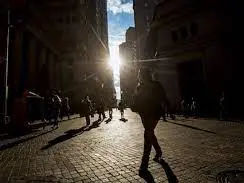
&imwidth=800&imheight=600&format=webp&quality=medium "US economy faces growing pressure as tariffs begin to show impact")
The US economy is showing signs of strain as the effects of President Donald Trump’s trade policies begin to make their mark. After months of uncertainty surrounding the administration’s sweeping tariffs, key consumer goods are starting to feel the pressure of higher import costs. As the tariff-induced price hikes gradually filter down to everyday products, economists are raising concerns about the long-term impact on household budgets and economic growth. While the broader economy has remained resilient, the growing costs of items like appliances, clothing, and electronics have pushed inflation to its highest level in four months, leading many to question how much longer the US can power through these pressures.
Inflation in the United States spiked in June, with the consumer price index (CPI) rising by 0.3 per cent, marking the largest monthly gain since January, according to the data released by the Labor Department's Bureau of Labor Statistics on July 15. This pushed the annual inflation rate to 2.7 per cent, up from 2.4 per cent in May, in line with economists’ expectations. However, the most important thing to be noted here is that the increase in prices is being largely driven by goods exposed to tariffs, including appliances, clothing, and electronics, signalling a potential for sustained inflationary pressures.
Tariff-driven inflation gains momentum
The most recent CPI data provides a clear indication that tariffs imposed by President Trump’s administration are beginning to reach the consumers. While inflation had remained subdued in earlier months due to inventory stockpiles and declining energy prices, economists now warn that the full effects of these tariffs, especially on imports from China, are becoming increasingly visible in consumer goods prices.
In particular, the costs for goods like appliances, sporting goods, toys, and apparel have risen sharply. Prices for appliances jumped by 1.9 per cent in June, marking the largest monthly increase since the pandemic’s peak in 2020. Similarly, toys saw a 1.4 per cent increase in June, continuing a trend from earlier in the year. The tariffs on steel and aluminium, which now apply to a wide array of derivative products such as washing machines, refrigerators, and dryers, have contributed significantly to these price hikes.
Experts note that these increases are likely just the beginning, and the full impact of these tariffs may not be felt immediately due to businesses’ prior stockpiling of goods, but it will gradually show up on store shelves. Economists predict that the prices of imported goods will continue to rise throughout the year, potentially keeping overall inflation elevated.
Trending Stories
&imwidth=180&imheight=135&format=webp&quality=medium)
Asian Games 2026: India face Afghanistan in quarterfinal on Sep 28; Pakistan clash with Hong Kong
&imwidth=180&imheight=135&format=webp&quality=medium)
Myanmar training camp case: US national, 6 Ukrainians allowed to meet their families abroad
&imwidth=180&imheight=135&format=webp&quality=medium)
Bigg Boss 20: Salman Khan schools Rhiti Tiwari over Qazi Touqeer clash, compares her to Dolly Bindra
&imwidth=180&imheight=135&format=webp&quality=medium)
Mushtaq Khan dies at 56: When Welcome actor opened up about his salary for iconic role Ballu
&imwidth=180&imheight=135&format=webp&quality=medium)
LPU students go on rampage, vandalise campus amid widespread protest: What's happening
&imwidth=180&imheight=135&format=webp&quality=medium)
'FIRST LOOK from inside Noah’s Ark': Researchers share video from inside mysterious mound in Turkey
&imwidth=180&imheight=135&format=webp&quality=medium)
‘Attack on Mecca a red line for Pakistan’: Shehbaz Sharif warns Houthis at UN
&imwidth=180&imheight=135&format=webp&quality=medium)
Pakistan deploys over 20,000 security personnel as PTI vows march for Imran Khan's release
&imwidth=180&imheight=135&format=webp&quality=medium)
OpenAI AI Agents hacked 4 websites before Hugging Face, researchers reveal
&imwidth=180&imheight=135&format=webp&quality=medium)
'A terrorist country is asking me that question?': Jaishankar hits back at Pakistani journalist at UN; flags attacks on commercial shipping
&imwidth=180&imheight=135&format=webp&quality=medium)
Trump-Xi summit wrap: Big pageantry, Iran talks, few major developments and more meetings planned
&imwidth=180&imheight=135&format=webp&quality=medium)
Did Hitler kill his niece Geli Raubal? Newly found records reopen a 95-year-old mystery
&imwidth=180&imheight=135&format=webp&quality=medium)
Hawaii braces for Hurricane Nolo: NOAA warns of flash flooding and mudslides
&imwidth=180&imheight=135&format=webp&quality=medium)
'What kind of confession is this?': Pakistan PM Shehbaz Sharif’s 'terrorists would be roaming New York' remark goes viral, raises alarm online. Watch
&imwidth=180&imheight=135&format=webp&quality=medium)
US-Iran war: Trump rejects Iran's Hormuz proposal, reports suggest talks expected next week
&imwidth=180&imheight=135&format=webp&quality=medium)
Bollywood x K-pop crossover! LE SSERAFIM’s Kazuha charms fans with Shah Rukh Khan’s ‘Chammak Challo’ steps
&imwidth=180&imheight=135&format=webp&quality=medium)
Gaza's war turned environmental damage into second crisis
&imwidth=180&imheight=135&format=webp&quality=medium)
‘Serial practitioner of terrorism’: Jaishankar calls out Pakistan’s ‘state-sponsored’ terror at UNGA
&imwidth=180&imheight=135&format=webp&quality=medium)
‘It is all possible’: Putin weighs next steps on Ukraine talks, rules out Europe conflict
&imwidth=180&imheight=135&format=webp&quality=medium)
Prince Harry offers rare glimpse into Archie and Lilibet’s life after UK move
&imwidth=180&imheight=135&format=webp&quality=medium)
Nigeria Navy moves to boost oil security, tackle crude theft and infrastructure threats
&imwidth=180&imheight=135&format=webp&quality=medium)
Donald Trump shares image of Xi's arrival in Washington, carries signs of AI
&imwidth=180&imheight=135&format=webp&quality=medium)
Pentagon quietly adds 37 wounded troops to Iran war tally without explaining when or how
&imwidth=180&imheight=135&format=webp&quality=medium)
US court backs Pentagon's decision to exclude Anthropic over Claude AI restrictions
&imwidth=180&imheight=135&format=webp&quality=medium)
US Supreme Court backs Trump administration's use of SAVE database to check voter citizenship
&imwidth=180&imheight=135&format=webp&quality=medium)
‘Could kill billions...’: Bill Gates backs calls to slow AI development amid fears of catastrophe
&imwidth=180&imheight=135&format=webp&quality=medium)
'Countries far from conflict are penalised': Jaishankar calls for Gulf peace, seafarer safety at UN
&imwidth=180&imheight=135&format=webp&quality=medium)
WATCH | As Shehbaz Sharif claims Pakistan’s ‘victory’ during 2025 conflict, Indian diplomat R Srinivas laughs at UN
&imwidth=180&imheight=135&format=webp&quality=medium)
Outrage erupts after 3-year-old is married to 60-year-old man in Pakistan, link to her sister's murder being probed
&im=FitAndFill=(700,400)&imwidth=180&imheight=135&format=webp&quality=medium)
New Friday OTT releases (September 25, 2026): Don’t Be Shy, Hunkkaar: The Roar, Mango Pachcha- 6 movies and TV shows on Netflix, Prime Video and more
&imwidth=180&imheight=135&format=webp&quality=medium)
Global community 'absent' in Gulf crisis: Saudi at UN calls for freedom of navigation, pre war status for Hormuz
&imwidth=180&imheight=135&format=webp&quality=medium)
Farhan, who went viral for AK47 celebration vs India in Asia Cup, hopes to lead Pakistan beyond Asian Games
&imwidth=180&imheight=135&format=webp&quality=medium)
‘I rejected it’: Trump confirms turning down Iran’s proposal to reopen Hormuz, claims Tehran is losing ‘badly’
&imwidth=180&imheight=135&format=webp&quality=medium)
Russia will achieve Ukraine war aims; Europe doing everything to block peace talks: Lavrov at UN
Labour market and consumer spending
Despite the uptick in inflation, the broader economy has shown resilience. Employment data still points to job creation, and consumer spending remains relatively strong. On July 15, several of the largest US banks reported better-than-expected quarterly earnings, bolstered by steady demand for consumer loans and credit card spending. However, concerns are growing that inflation may start to affect consumer behaviour, especially for middle-income households.
One concerning trend is the slowing growth in industries heavily reliant on immigrant labour, which could be linked to the ongoing immigration crackdown. A shrinking foreign-born labour force since March has contributed to slower job growth in sectors such as construction and hospitality. This trend has made it harder for businesses to fill low-wage positions, which could begin to weigh on overall employment figures in the coming months.
In addition, some analysts are observing signs of spending weakness among lower-income Americans, with major banks such as JPMorgan noting declines in consumer confidence in certain income groups. However, spending patterns show that wealthier Americans are still thriving, propping up overall consumer demand and helping to cushion the economy against more significant downturns.
The Yale Budget Lab recently estimated that tariffs have increased the average effective tariff rate on imported goods to 20.6 per cent, the highest level since 1910. While these tariffs are not immediately causing widespread price increases, Americans could face an effective $2,800 hit in annual household income due to higher costs on goods such as clothing, electronics, and furniture.
Federal Reserve's dilemma
The growing inflationary pressures come at a time when the Federal Reserve is caught in a delicate balancing act between fighting inflation and supporting economic growth. The June CPI data adds another layer of complexity to the Fed’s decision-making, especially as the central bank contemplates whether to continue interest rate cuts.
While the core inflation—which excludes food and energy—rose 2.9 per cent over the past year, the increase was less severe than expected, suggesting that services inflation remains relatively subdued. Housing-related costs, such as rent and home prices, have cooled off, and prices for airfares and hotel rates were weak, possibly reflecting a pullback in discretionary spending. These factors could mitigate some of the pressures from the rising prices of goods.
Some economists have noted that even though the CPI was in line with forecasts, the rise in inflation in June suggests that the Fed may pause its interest rate cuts. However, other experts suggested that the Fed may need to remain cautious, noting that there is strain on the middle-class consumer and calling for some relief to support household spending.
As the Federal Reserve mulls over its next steps, some expect a rate cut later this year to help relieve financial pressures on middle-income families. But this raises the question of how much longer the US economy can maintain its growth trajectory under the weight of rising costs.
Uncertainty and economic resilience
With a number of economic inputs seeing price hikes and wage growth slowing, the outlook for the second half of the year remains uncertain. The stock market continues to perform well, with major indices hovering near all-time highs, but Treasury yields have risen sharply, with the 30-year bond yield surpassing 5 per cent for the first time since May. This signals growing concerns about long-term economic stability.
The full impact of Trump’s trade war and tariff policies will likely take a few more months to fully materialise, but analysts caution that price increases could become a persistent feature in the economy. It’s clear that while the US economy has shown resilience so far, a prolonged period of rising inflation could become a significant challenge for policymakers, businesses, and consumers alike.