
&imwidth=800&imheight=600&format=webp&quality=medium "US court rules Trump tariff illegal: How it will impact India-US trade talks?")
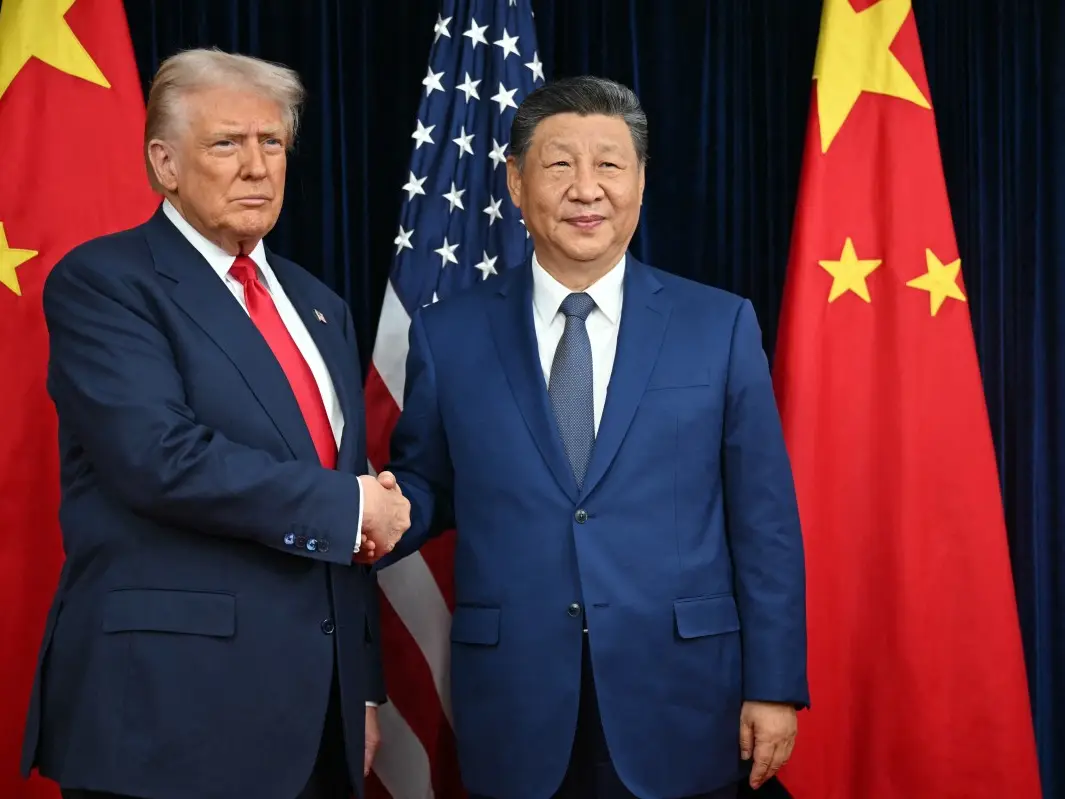
In a landmark ruling that could reshape global trade dynamics, the United States Court of International Trade has declared President Donald Trump’s reciprocal tariff regime as illegal, according to a report by Bloomberg.
The decision comes at a crucial moment in India-US trade negotiations, with Indian officials seeing it as an opportunity to reassess concessions made under pressure during the Trump era.
India and the US are now reportedly working to conclude an interim trade deal before June 25, as reciprocal tariffs imposed under Trump’s 2025 executive order remain paused until July 9. This gives negotiators a narrow window to finalise a mutually agreeable framework.

What did the US court say?
On May 28 (May 29 IST), the US Court of International Trade ruled that Trump’s reciprocal tariffs, including the 10% baseline and additional 26% duty on Indian goods,lacked legal justification under the International Emergency Economic Powers Act (IEEPA), according to Bloomberg.
The court concluded that trade deficits did not constitute the “unusual and extraordinary threat” required to invoke emergency powers. In its judgement, the court said, “IEEPA does not authorise any of the Worldwide, Retaliatory, or Trafficking Tariff Orders. The Worldwide and Retaliatory Tariff Orders exceed any authority granted to the President by IEEPA to regulate importation by means of tariffs", as quoted by Bloomberg.
Trending Stories
)
AI kill switch explained: Why shutting down a dangerous AI may not be as simple as pressing a button
)
US ships in Indian Ocean ‘will be attacked’ if war resumes, warns Iran
)
SNL UK takes aim at Ed Sheeran with AI Princess Diana sketch
)
Trump says he'll build an 'AI Force' and appoint a czar, for 'high IQ' people only
)
‘0% chance’: Nvidia CEO Jensen Huang dismisses AI extinction fears by 2030
&im=FitAndFill=(700,400))
What TSMC's 2nm technology means for Apple
)
'Were you here to sell chickpeas?': Wasim Akram criticises Babar Azam's captaincy
)
Mark Carney mimics Trump in hilarious moment over C$70 billion clean-energy investment; room erupts in laughter
&im=FitAndFill=(700,400))
Top 10 countries in mathematics: See the world’s best performers in 2026
)
Apple reportedly building AI server with M8 Ultra chips, may use Nvidia technology
)
TIFF 2026: Theja Rio’s Angh wins Platform Prize, puts Nagaland story on global stage
)
BTS' fans question iHeartRadio’s treatment of group after brief festival set
)
Samsung raises Galaxy S26 prices by Rs 20,000: Here’s what each model now costs
)
Operation Sindoor’s hidden naval dimension | MoD reveals Indian Navy Special Forces joined May 7 strikes
)
Trump-Xi summit: US Treasury Secretary holds meeting with Chinese Vice Premier
)
Bessent meets China’s He Lifeng to prepare for Trump-Xi summit
)
S Jaishankar, former Army chief among high-profile names issued Delhi SIR notices
)
CDU suffers historic defeat in eastern Germany as AfD surges, Merz vows to stay on
)
Iran sets 7 conditions to end war with US: What are Tehran’s demands?
)
Trump announces ‘AI Force’ as debate grows over AI risks and regulation
)
Arvind Kejriwal, family members, Delhi CM Rekha Gupta get SIR notices
)
AI actress Tilly Norwood glitches mid-interview, switches from English to Chinese | Watch
)
Saudi vs Houthis: Houthis claim missiles & drones used in attack on key Saudi sites
)
Ed Sheeran addresses Macklemore's removal, Gaza conflict during Philadelphia concert: 'I cannot hide how I feel'
)
Saudi Arabia exits China-led mBridge digital currency platform amid Saudi-Houthi conflict
)
Punjab man consumes poison outside DC office; Congress, BJP target AAP government
)
ICE shooting in Texas leaves man seriously injured; officials demand independent investigation and transparency
)
'Lot of things to learn from experienced players': Jayasuriya backs Rohit, Virat for 2027 ODI World Cup
)
Chancellor Friedrich Merz vows to stay on as exit polls signal major poll setback
)
North Korea's nuclear tests triggered 1,399 earthquakes: Earth is still shaking | Gravitas
)
Several petrol pumps, other businesses to refuse UPI payments above Rs 2,000 from Oct 16: Is it legal?
&im=FitAndFill=(700,400))
New OTT releases this week (September 21-27, 2026): Shaque: Trust No One, Hunkkaar, Don’t Be Shy- 5 new titles coming to Netflix, Prime Video and more
&im=FitAndFill=(700,400))
Gulshan Grover turns 70: Ram Lakhan, Gangster, Hera Pheri- Must-watch movies of the actor on OTT platforms
)
Noel Tata challenges Chandrasekaran’s reappointment as Tata Sons chairman. What happened at the board meeting
)
West Indies Squad for India Series: Hetmyer included for T20Is, Holder rested
&im=FitAndFill=(700,400))
Kareena Kapoor birthday special: Inside her net worth, best movies, luxurious lifestyle and love story with Saif Ali Khan
)
China now makes advanced memory chips without the machines it was banned from buying
)
Trump in ‘deciding mode’ on Iran, says ‘very big things’ going to happen soon
)
Jailer 2: Vidya Balan joins Rajinikanth's upcoming film as Kantha | Watch
)
Microsoft executive called AI training the ‘largest theft of labour in human history’
)
Italy moves to ban face veils in schools as Meloni pushes new integration measures
The ruling is currently under appeal, but it temporarily undermines Washington’s leverage,especially in trade talks with strategic partners like India.
How will it affect India-US trade talks?
The ruling has reportedly shifted the momentum in India’s favour, at least temporarily. With the July 9 deadline fast approaching, Indian negotiators find themselves with more room to demand balanced terms.
Ajay Srivastava, co-founder of the Global Trade Research Initiative (GTRI), said the judgmenteffectively dismantles the legal foundation of Trump-era tariff threats. “India must not enter into a one-sided deal based on illegal pressure tactics. With the Trump tariffs standing on shaky legal ground, India must pause and reassess its negotiation strategy before committing to an FTA that could disproportionately favour US interests,” Srivastava told ANI.
During earlier negotiations, Washington reportedly pushed for expansive market access in Indian sectors such as agriculture, automobiles, and government procurement, while offering limited trade concessions in return. This imbalance, experts argue, should now be revisited.
India-US interim trade deal likely before June 25
According to reports, both countries are pushing to finalise a limited trade package ahead of the July 9 tariff expiry. This interim deal is expected to be the first step toward a broader Bilateral Trade Agreement (BTA) and will cover trade in goods, non-tariff barriers, and select services, including digital trade.
India is reportedly specifically seeking a full exemption from the 26% reciprocal tariff imposed by Trump’s executive order. While the US Congress must approve any Most Favoured Nation (MFN) tariff reduction, Trump’s reciprocal tariffs were imposed under emergency provisions and can be lifted via a new executive order.
Commerce Minister Piyush Goyal, during his recent US visit, held talks with Commerce Secretary Howard Lutnick to provide political direction to the negotiations. A high-level US delegation is reportedly expected to visit India in early June to continue discussions.
What are both countries asking for?
India is reportedly seeking duty concessions for its labour-intensive export sectors, including textiles, gems and jewellery, leather goods, plastics, chemicals, shrimp, bananas, and grapes. The goal is to improve India’s competitiveness in the US market and to reach an ambitious bilateral trade target of $500 billion by 2030, up from the current level of $190 billion.
In return, the US is reportedly demanding market access and tariff reductions in sectors such as electric vehicles, wine and dairy, apples and tree nuts, and petrochemical and industrial goods.
According to data from the Ministry of Commerce and Industry, bilateral trade rose from $119.72 billion in FY24 to $131.84 billion in FY25, an increase of 10.1 per cent. Indian exports surged 11.6 per cent to $86.51 billion, while imports from the US rose 7.42 per cent to $45.33 billion.
This resulted in India’s trade surplus with the US widening to $41.18 billion, up from $35.32 billion a year earlier.
What pressure points remain?
Despite this trade surplus in goods, Trump has repeatedly criticised India’s export-driven approach, ignoring significant American revenues generated from services and intellectual property in India.
As reported by Bloomberg, US companies operating in India, from tech giants like Apple and Google to pharma and defence contractors reportedly benefit significantly from Indian market access, data, and human capital.
However, the ruling does not impact tariffs imposed through other laws, such as the 25 per cent duty on steel, aluminium and auto parts, still affecting Indian exporters. US Secretary of Commerce Howard Lutnick, in court arguments reported by Reuters, said that without IEEPA, the President lacks fast-acting tools to address trade imbalances and national security threats. He added that alternatives such as Section 232 of the Trade Expansion Act of 1962 and Section 301 of the Trade Act of 1974 are lengthy and procedurally complex.
India’s concessions have not been limited to tariffs. As per the US Trade Representative’s (USTR) 2025 Special 301 Report, the US continues to push India for reforms in data localisation, pharmaceutical patent law (specifically Section 3(d) of India’s Patents Act), and easing regulatory norms for genetically modified crops. The report accuses India of maintaining “high customs duties on IP-intensive products” and inadequate IP enforcement.
Yet, New Delhi has so far reportedly resisted attempts at so-called “evergreening”, a practice used by pharmaceutical companies to extend patents by making minor modifications to existing drugs. India remains a critical supplier of affordable generic medicines to the US and developing nations.
What lies ahead?
The US court ruling offers India a rare window to renegotiate terms on more equitable grounds. However, this window may close quickly, especially if the Trump administration’s appeal finds favour in a higher court, possibly the US Supreme Court.
For now, India’s Commerce Ministry has not issued an official statement on the judgement. But according to the report, the ruling is being seen as a strategic pause, a critical chance to reassess India’s trade priorities with its largest economic partner.