

&imwidth=800&imheight=600&format=webp&quality=medium "UPI set for major revamp from August 1. Here’s what will change")
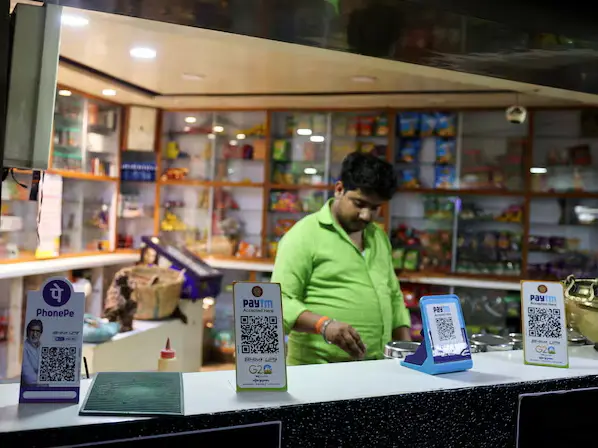
India’s most popular digital payment system, the Unified Payments Interface (UPI), is undergoing a significant backend overhaul from August 1, 2025, as the National Payments Corporation of India (NPCI) introduces a fresh set of rules aimed at making the platform faster, more secure, and less prone to overload during peak hours. The changes, although largely invisible to casual users, are expected to streamline how frequently used services such as balance checks, account fetch requests, and auto-debit transactions operate in the background.
Daily usage limits for key UPI functions
One of the most significant changes is the introduction of daily limits on UPI-related requests. Starting August 1, users will be able to:
- Check their account balance only 50 times per day on each UPI app (like PhonePe, Paytm, or Google Pay).
- Fetch linked account information (like listing bank accounts tied to the mobile number) a maximum of 25 times per day.
- Check the status of a pending transaction only 3 times, with a mandatory 90-second gap between each attempt.
NPCI believes these limits will help ease the pressure on backend servers, particularly during high-traffic periods, while maintaining smooth functionality for most users. However, to reduce the need for manual balance checks, banks will now be required to display updated balances automatically after each successful transaction.
Scheduled processing for autopay and reversals
Trending Stories
&imwidth=180&imheight=135&format=webp&quality=medium)
Other Mommy leads North American box Office as Verity, Resident Evil round out top four
&im=FitAndFill=(700,400)&imwidth=180&imheight=135&format=webp&quality=medium)
Navratri 2026: 9 days, 9 forms of Goddess Durga and 9 colours- Check the complete list
&im=FitAndFill=(700,400)&imwidth=180&imheight=135&format=webp&quality=medium)
Is sending robots to Mars easier than sending humans?
&imwidth=180&imheight=135&format=webp&quality=medium)
A watchdog rated 'ChatGPT for Teens' an unacceptable risk and says keep under-18s off it
&imwidth=180&imheight=135&format=webp&quality=medium)
1,500 drones illuminate Mumbai sky as Cordelia Cruises unveils second ship, Cordelia Sky
&imwidth=180&imheight=135&format=webp&quality=medium)
'Just coincidence': Police mistakes protester as AISA chief Neha Bora, arrests her from site
&imwidth=180&imheight=135&format=webp&quality=medium)
Anthropic's AI invented a murder witness and sent the fake tip to Philadelphia police
&imwidth=180&imheight=135&format=webp&quality=medium)
CJI Surya Kant declines INDIA bloc leaders’ request for meeting ahead of march to SC, asks them to file petition
&imwidth=180&imheight=135&format=webp&quality=medium)
'Turn approver, resign, we'll forgive you': Rahul Gandhi claims receiving messages from CEC Gyanesh Kumar
&imwidth=180&imheight=135&format=webp&quality=medium)
One Indian killed in Riyadh airport attack; 11 others injured : MEA
&imwidth=180&imheight=135&format=webp&quality=medium)
Top AI models flunked a test of inventing new AI research, so much for self-improving AI
&imwidth=180&imheight=135&format=webp&quality=medium)
Wasim Jaffer blames Ajit Agarkar-led selection panel for Virat Kohli’s Test retirement
&imwidth=180&imheight=135&format=webp&quality=medium)
'Ouch!!! That must hurt': Kangana Ranaut hails Kamal Haasan's sharp reply to Elon Musk over Starlink row
&imwidth=180&imheight=135&format=webp&quality=medium)
Sidhu Moose Wala’s younger brother wins hearts by recreating late singer’s signature move at Toronto Hologram Show
&imwidth=180&imheight=135&format=webp&quality=medium)
Meta's Muse AI could be a security nightmare for India's billion-plus users
&imwidth=180&imheight=135&format=webp&quality=medium)
UK school ditches technology, shifts from screen to pen and paper for learning
&imwidth=180&imheight=135&format=webp&quality=medium)
Telangana ATM heist: Thieves in nighties arrive in ambulance, break into SBI ATM in Kamareddy - VIDEO
&imwidth=180&imheight=135&format=webp&quality=medium)
IND vs WI, 3rd T20I: Abhishek Sharma smashes 18-ball fifty, sets record for fastest to 2,000 T20I runs
&imwidth=180&imheight=135&format=webp&quality=medium)
Prince Harry and Meghan Markle to spend Christmas away from royal family
&imwidth=180&imheight=135&format=webp&quality=medium)
Houthis claim Riyadh airport attacks, Aramco strikes; issue fresh warning to airlines, travellers and workers
&imwidth=180&imheight=135&format=webp&quality=medium)
Portugal Federation confirms Cristiano Ronaldo’s return to national team despite suspension
&imwidth=180&imheight=135&format=webp&quality=medium)
Delhi protests: 'Court should not be dragged into political activity', says CJI Surya Kant
&im=FitAndFill=(700,400)&imwidth=180&imheight=135&format=webp&quality=medium)
New OTT releases this week (October 12-18, 2026): Sacrifice, Koffee with Karan S9, Roadies Rebirth- 6 titles coming on Netflix, JioHotstar and more
&imwidth=180&imheight=135&format=webp&quality=medium)
Microsoft's Nadella says treat every AI model as already hacked, and build an 'emergency brake'
&imwidth=180&imheight=135&format=webp&quality=medium)
Delhi protest: CJI Surya Kant declines to meet India Bloc leaders
&imwidth=180&imheight=135&format=webp&quality=medium)
Telangana man allegedly recruited into Russian military dies near Ukraine border
&imwidth=180&imheight=135&format=webp&quality=medium)
China imposes first-ever sanctions on ministers from Taiwan allies: What this means
&imwidth=180&imheight=135&format=webp&quality=medium)
McSweeney reveals how studying Virat Kohli’s YouTube clips helped Australia A conquer India
&imwidth=180&imheight=135&format=webp&quality=medium)
Maharashtra appoints FDA commissioner Tukaram Mundhe as secretary of committee for MPSC overhaul amid stir
&imwidth=180&imheight=135&format=webp&quality=medium)
Iran: US accepted some conditions, Clarity needed on others
&imwidth=180&imheight=135&format=webp&quality=medium)
Nana Patekar's cause of death confirmed; here's what his postmortem report says
&imwidth=180&imheight=135&format=webp&quality=medium)
iPhone Duo price index: Tracking Apple’s latest pricing trends
&imwidth=180&imheight=135&format=webp&quality=medium)
'Say no to Muse': Meta has no control over its own moderation AI while it forces a security nightmare on everyone
&imwidth=180&imheight=135&format=webp&quality=medium)
Delhi wakes up to heavy rain, thunderstorms; yellow alert in place; temperature drops
Another major change is to UPI autopay, the feature used for subscriptions, SIPs (systematic investment plans), and recurring bill payments. These transactions will now be processed only in three fixed time slots:
- Before 10 AM
- Between 1 PM and 5 PM
- After 9:30 PM
This scheduling is aimed at reducing congestion during peak payment hours (10 AM–1 PM and 5 PM–9:30 PM), when the platform is under maximum load. In addition, payment reversal requests will be capped at 10 per month, with a maximum of 5 allowed per sender.
Stronger oversight, greater transparency
The NPCI will also be closely monitoring how UPI apps and partner banks use critical APIs (application programming interfaces), focusing on their transaction-per-second (TPS) loads and request frequency. Non-compliance could lead to penalties or restricted access.
In a welcome move for fraud prevention, users will now see the recipient’s bank name before confirming a transaction, adding another layer of transparency. The reforms come as UPI continues to surge, processing billions of transactions each month. The International Monetary Fund recently praised India’s payment infrastructure as the fastest globally, with UPI playing a central role since its launch in 2016.