

&imwidth=800&imheight=600&format=webp&quality=medium "UK wealth tax faces long odds despite pressure on Labour budget")
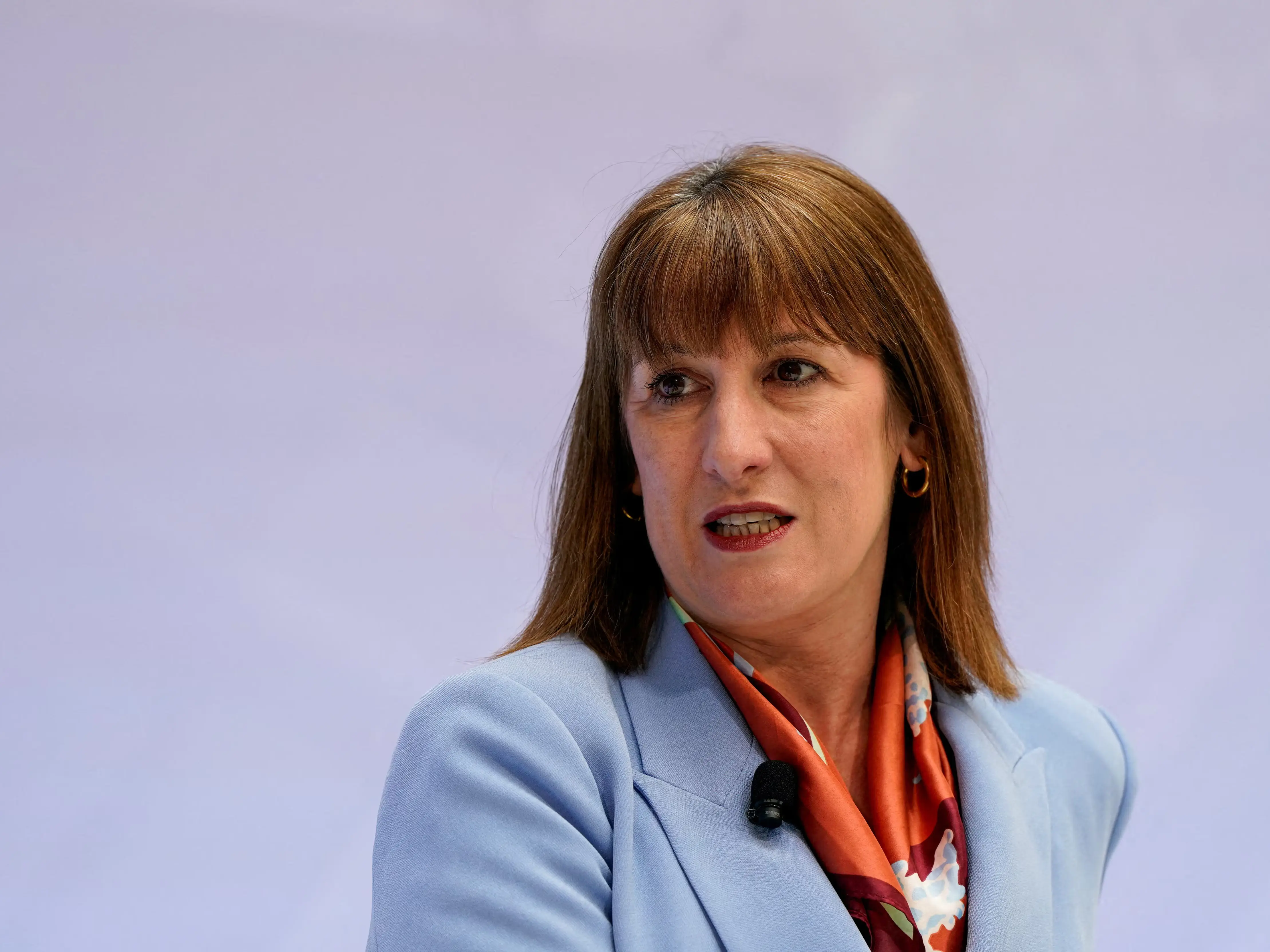
As Britain’s Labour government scrambles to plug a major fiscal gap, calls are growing for a wealth tax on the country’s richest. But according to tax experts and economists, the odds of implementing such a policy in the near term remain close to zero. Chancellor of the Exchequer Rachel Reeves may face a shortfall of up to £30 billion ($40 billion) in her autumn budget, after Labour was forced to reverse welfare cuts amid intense internal backlash. Constrained by pre-election promises not to raise key taxes like income tax, national insurance, or VAT, the government is now under pressure to explore alternative ways to raise revenue.
For many Labour backbenchers and left-leaning groups, the answer is simple: tax the wealthy. Veteran MP Diane Abbott, as well as MPs Richard Burgon, Andy McDonald, and Rebecca Long Bailey, have all floated a wealth levy on assets above £10 million. Former Labour leader Neil Kinnock, usually seen as a party moderate, also backed the idea last week, adding weight to the growing internal momentum.
Prime Minister Keir Starmer has so far refused to rule it out. When pressed by Conservative Leader Kemi Badenoch this week, Starmer deflected. His spokesperson later said only that the government was “committed to ensuring the wealthiest in society are paying their fair share of tax.”
But experts say a wealth tax is not coming any time soon.
“Zero chance” of wealth tax in next budget
Andy Summers, associate professor at the London School of Economics and co-author of the UK Wealth Tax Commission’s 2020 report, told Bloomberg that there was “zero chance” of a wealth tax being introduced in Reeves’s upcoming budget. “Unless the Treasury has been secretly working on it for many months or years, then it just can’t be done,” Summers said.
Trending Stories
&imwidth=180&imheight=135&format=webp&quality=medium)
Lula campaign accuses Meta of election interference after social media content blocked
&imwidth=180&imheight=135&format=webp&quality=medium)
US troop deaths in Iran war on rise? Pentagon reveals latest toll
&imwidth=180&imheight=135&format=webp&quality=medium)
100,000 strikes in 3 years: How October 7 redefined Israel's war
&imwidth=180&imheight=135&format=webp&quality=medium)
‘Your people don’t even let us near it’: IAF chief’s blunt response on US F-35; India yet to decide on Russia’s Su-57
&imwidth=180&imheight=135&format=webp&quality=medium)
Real or fake? PIB fact-checks protest videos; Delhi Police clarifies on Gurdwara Bangla Sahib clip
&imwidth=180&imheight=135&format=webp&quality=medium)
UK navy hit by espionage scandal: Sailor accused of spying for Russia | Gravitas
&imwidth=180&imheight=135&format=webp&quality=medium)
Saudi Arabia's King Khalid International Airport attack kills 12, injures 309; India calls it 'unacceptable'
&imwidth=180&imheight=135&format=webp&quality=medium)
‘Never-ending flow of cheap labour’: JD Vance hits back at Indian-origin Congresswoman over US green card curbs for major tech companies
&imwidth=180&imheight=135&format=webp&quality=medium)
Panama president declares ‘major disaster’ after powerful 7.7-magnitude earthquake; over 80 aftershocks recorded
&imwidth=180&imheight=135&format=webp&quality=medium)
HYBE’s Weverse Con India sets ticket sale date for March 2027 festival
&imwidth=180&imheight=135&format=webp&quality=medium)
Messi scores twice in Inter Miami return following final match for Argentina
&imwidth=180&imheight=135&format=webp&quality=medium)
CJP's Abhijeet Dipke, Ashutosh Ranka, Saurav Das released 22 hours after flight detention
&imwidth=180&imheight=135&format=webp&quality=medium)
'Unwarranted interference': India slams UN human rights office over remarks on Delhi protests
&imwidth=180&imheight=135&format=webp&quality=medium)
'Jantar Mantar not the story of India': BJP's Sambit Patra claims 'anarchists' tried to hold Delhi captive
&imwidth=180&imheight=135&format=webp&quality=medium)
Nicolas Cage refuses AI waiver for Spider-Noir, hints at Amazon exit and True Detective role
&imwidth=180&imheight=135&format=webp&quality=medium)
Riyadh airport hit in missile attack, dozens injured; 5 in intensive care
&imwidth=180&imheight=135&format=webp&quality=medium)
'Spent Rs 2,000 cr to elect Trump': Elon Musk bought US President's loyalty by writing the biggest political cheque in human history
&imwidth=180&imheight=135&format=webp&quality=medium)
Powerful 7.7 magnitude earthquake strikes Panama, tsunami warning issued
&imwidth=180&imheight=135&format=webp&quality=medium)
US mid-term elections: What are PACs - Unique American System that lets corporates shape voting
&imwidth=180&imheight=135&format=webp&quality=medium)
'Ouch!!! That must hurt': Kangana Ranaut hails Kamal Haasan's sharp reply to Elon Musk over Starlink row
&imwidth=180&imheight=135&format=webp&quality=medium)
Barry Manilow cuts short Las Vegas comeback show, cancels next concert over Bronchitis
&imwidth=180&imheight=135&format=webp&quality=medium)
Hamas used double agents, deceived Israel to carry out October 7 massacre
&imwidth=180&imheight=135&format=webp&quality=medium)
Bigg Boss 20: Who is Manish Goel? Meet the new wild card contestant on Salman Khan’s show
&imwidth=180&imheight=135&format=webp&quality=medium)
Portugal Federation confirms Cristiano Ronaldo’s return to national team despite suspension
&imwidth=180&imheight=135&format=webp&quality=medium)
Kim Kardashian brings glamour to Singapore Grand Prix while supporting boyfriend Lewis Hamilton
&imwidth=180&imheight=135&format=webp&quality=medium)
All 22 Indian seafarers safe in attack on Panama-flagged tanker off UAE coast
&imwidth=180&imheight=135&format=webp&quality=medium)
‘Time for Ukraine to get a new president’: Trump lashes out at Zelensky over Russia strikes
&im=FitAndFill=(700,400)&imwidth=180&imheight=135&format=webp&quality=medium)
Amitabh Bachchan @ 84: A look at his most iconic on-screen avatars - Anthony Gonsalves, Vijay Kumar and more
&imwidth=180&imheight=135&format=webp&quality=medium)
BTS’ RM raises privacy concerns over drones, lasers outside hotel amid Lima concert, urges fan respect
&imwidth=180&imheight=135&format=webp&quality=medium)
Thai queen becomes first reigning monarch to fly jet solothailand #queen #wion
&im=FitAndFill=(700,400)&imwidth=180&imheight=135&format=webp&quality=medium)
Food shortages, suicide attempts and more: USS Abraham Lincoln returns to US after 321 day deployment — What happened aboard the US carrier?
&imwidth=180&imheight=135&format=webp&quality=medium)
Rahul Gandhi calls Modi, Shah ‘cowards’ amid CJP protest crackdown in Delhi
&imwidth=180&imheight=135&format=webp&quality=medium)
‘Had he known, would have been here’: CJP Chief Abhijeet Dipke denied news of grandmother's death, family claims
&imwidth=180&imheight=135&format=webp&quality=medium)
Where are Abhijeet Dipke, Ashutosh Ranka, Saurav Das? CJP gives big update after flight detention
&imwidth=180&imheight=135&format=webp&quality=medium)
Putin conveys Iran’s proposal to Trump, offers to take Tehran’s enriched uranium
His view is echoed by Stuart Adam, senior economist at the Institute for Fiscal Studies, who noted that it would take “several years” to build the data infrastructure and legal frameworks needed to value and track individual wealth. In the UK, there is no current requirement to report total net worth, making the starting point difficult. Summers also warned that valuation challenges, especially of property, pensions, and non-liquid assets, would make implementation costly and complex. His commission had recommended taxing wealth above £10 million, as doing so at lower levels would be economically inefficient.
Pandemic-era proposals no longer viable
While the idea of a one-off wealth tax gained traction during the COVID-19 pandemic, experts say the political and economic conditions have shifted. In 2020, Summers’ team estimated that a five-year levy of 1% on assets over £10 million could raise £43 billion. But, according to him, the credibility of such a “one-off” has weakened. “The wealthy are less likely to believe it would stay as a one-off,” he told Bloomberg.
Still, proposals continue to resurface. Kinnock recently backed a 2% annual levy on wealth above £10 million, a figure mirrored by several Labour MPs in recent debates.
A symbol more than a policy?
Despite its political appeal, many economists remain sceptical. Dan Neidle, founder of Tax Policy Associates, described a wealth tax as “a cute political slogan, but not a tax policy.” He recommended focusing on tightening existing taxes, like capital gains and inheritance tax, to raise revenue more effectively and quickly.
Indeed, the global track record for wealth taxes is patchy. Germany, France, Sweden, and the Netherlands all tried them, only to repeal the measures due to loopholes, exemptions, and capital flight. Summers warned that the same fate could await any UK version. “When you start to leave those gaps, the whole thing collapses,” he said.
Political pressure mounting
Despite the practical hurdles, Labour may continue to float the idea of a wealth tax for symbolic reasons. The left wing of the party, which played a key role in forcing Reeves to reverse disability benefit cuts earlier this month, is keen to see a stronger stance on economic fairness. Rob Ford, professor of political science at the University of Manchester, told Bloomberg: “What Starmer and Reeves have learned the very hard way is that symbolic politics matters as much as substance.”
He added: “Everybody to the left likes the idea of a wealth tax and it’s an easy political argument to make. Political symbolism is not nothing.” But symbolism alone won’t plug a £30 billion budget hole. And without the legal and data frameworks in place, experts say a wealth tax may remain more of a political talking point than a realistic fiscal solution, at least for now.