

&imwidth=800&imheight=600&format=webp&quality=medium "UK unveils $370 million skills investment as cornerstone of 10-year industrial strategy")
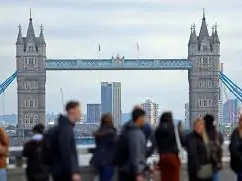
Prime Minister Keir Starmer’s government has unveiled the first major pillar of its long-promised industrial strategy, with a £275 million ($370 million) investment package aimed at addressing chronic skills shortages and preparing the UK workforce for future industries.
Business Secretary Jonathan Reynolds announced the initiative on June 22, calling it the foundation of a broader 10-year industrial blueprint designed to overhaul the skills system, reduce reliance on foreign labour, and support growth in high-priority sectors such as engineering, defence, AI, and advanced manufacturing.
“Our modern industrial strategy will be powered by investing in British people,” Reynolds said. “It will help transform our skills system to end the overreliance on foreign labour and ensure British workers can secure good, well-paid jobs in the industries of tomorrow.”
Focus on skills and technical training
The £275 million ($370 million) investment will fund the creation of new technical excellence colleges, short courses in digital manufacturing and artificial intelligence (AI), and capital upgrades to existing training providers across England. The goal is to address a persistent skills gap in key sectors viewed as central to Britain’s future economic resilience and competitiveness.
The package is expected to benefit thousands of learners and create pathways to employment in sectors identified as growth engines under the Labour Party’s “plan for change”. The funding also builds on previous announcements, including a £3 billion ($4 billion) apprenticeship package and a £187 million ($251 million) fund for AI training.
Trending Stories
&imwidth=180&imheight=135&format=webp&quality=medium)
Lula campaign accuses Meta of election interference after social media content blocked
&imwidth=180&imheight=135&format=webp&quality=medium)
US troop deaths in Iran war on rise? Pentagon reveals latest toll
&imwidth=180&imheight=135&format=webp&quality=medium)
100,000 strikes in 3 years: How October 7 redefined Israel's war
&imwidth=180&imheight=135&format=webp&quality=medium)
‘Your people don’t even let us near it’: IAF chief’s blunt response on US F-35; India yet to decide on Russia’s Su-57
&imwidth=180&imheight=135&format=webp&quality=medium)
Real or fake? PIB fact-checks protest videos; Delhi Police clarifies on Gurdwara Bangla Sahib clip
&imwidth=180&imheight=135&format=webp&quality=medium)
UK navy hit by espionage scandal: Sailor accused of spying for Russia | Gravitas
&imwidth=180&imheight=135&format=webp&quality=medium)
Saudi Arabia's King Khalid International Airport attack kills 12, injures 309; India calls it 'unacceptable'
&imwidth=180&imheight=135&format=webp&quality=medium)
‘Never-ending flow of cheap labour’: JD Vance hits back at Indian-origin Congresswoman over US green card curbs for major tech companies
&imwidth=180&imheight=135&format=webp&quality=medium)
Panama president declares ‘major disaster’ after powerful 7.7-magnitude earthquake; over 80 aftershocks recorded
&imwidth=180&imheight=135&format=webp&quality=medium)
HYBE’s Weverse Con India sets ticket sale date for March 2027 festival
&imwidth=180&imheight=135&format=webp&quality=medium)
Messi scores twice in Inter Miami return following final match for Argentina
&imwidth=180&imheight=135&format=webp&quality=medium)
CJP's Abhijeet Dipke, Ashutosh Ranka, Saurav Das released 22 hours after flight detention
&imwidth=180&imheight=135&format=webp&quality=medium)
'Unwarranted interference': India slams UN human rights office over remarks on Delhi protests
&imwidth=180&imheight=135&format=webp&quality=medium)
'Jantar Mantar not the story of India': BJP's Sambit Patra claims 'anarchists' tried to hold Delhi captive
&imwidth=180&imheight=135&format=webp&quality=medium)
Nicolas Cage refuses AI waiver for Spider-Noir, hints at Amazon exit and True Detective role
&imwidth=180&imheight=135&format=webp&quality=medium)
Riyadh airport hit in missile attack, dozens injured; 5 in intensive care
&imwidth=180&imheight=135&format=webp&quality=medium)
'Spent Rs 2,000 cr to elect Trump': Elon Musk bought US President's loyalty by writing the biggest political cheque in human history
&imwidth=180&imheight=135&format=webp&quality=medium)
Powerful 7.7 magnitude earthquake strikes Panama, tsunami warning issued
&imwidth=180&imheight=135&format=webp&quality=medium)
US mid-term elections: What are PACs - Unique American System that lets corporates shape voting
&imwidth=180&imheight=135&format=webp&quality=medium)
'Ouch!!! That must hurt': Kangana Ranaut hails Kamal Haasan's sharp reply to Elon Musk over Starlink row
&imwidth=180&imheight=135&format=webp&quality=medium)
Barry Manilow cuts short Las Vegas comeback show, cancels next concert over Bronchitis
&imwidth=180&imheight=135&format=webp&quality=medium)
Hamas used double agents, deceived Israel to carry out October 7 massacre
&imwidth=180&imheight=135&format=webp&quality=medium)
Bigg Boss 20: Who is Manish Goel? Meet the new wild card contestant on Salman Khan’s show
&imwidth=180&imheight=135&format=webp&quality=medium)
Portugal Federation confirms Cristiano Ronaldo’s return to national team despite suspension
&imwidth=180&imheight=135&format=webp&quality=medium)
Kim Kardashian brings glamour to Singapore Grand Prix while supporting boyfriend Lewis Hamilton
&imwidth=180&imheight=135&format=webp&quality=medium)
All 22 Indian seafarers safe in attack on Panama-flagged tanker off UAE coast
&imwidth=180&imheight=135&format=webp&quality=medium)
‘Time for Ukraine to get a new president’: Trump lashes out at Zelensky over Russia strikes
&im=FitAndFill=(700,400)&imwidth=180&imheight=135&format=webp&quality=medium)
Amitabh Bachchan @ 84: A look at his most iconic on-screen avatars - Anthony Gonsalves, Vijay Kumar and more
&imwidth=180&imheight=135&format=webp&quality=medium)
BTS’ RM raises privacy concerns over drones, lasers outside hotel amid Lima concert, urges fan respect
&imwidth=180&imheight=135&format=webp&quality=medium)
Thai queen becomes first reigning monarch to fly jet solothailand #queen #wion
&im=FitAndFill=(700,400)&imwidth=180&imheight=135&format=webp&quality=medium)
Food shortages, suicide attempts and more: USS Abraham Lincoln returns to US after 321 day deployment — What happened aboard the US carrier?
&imwidth=180&imheight=135&format=webp&quality=medium)
Rahul Gandhi calls Modi, Shah ‘cowards’ amid CJP protest crackdown in Delhi
&imwidth=180&imheight=135&format=webp&quality=medium)
‘Had he known, would have been here’: CJP Chief Abhijeet Dipke denied news of grandmother's death, family claims
&imwidth=180&imheight=135&format=webp&quality=medium)
Where are Abhijeet Dipke, Ashutosh Ranka, Saurav Das? CJP gives big update after flight detention
&imwidth=180&imheight=135&format=webp&quality=medium)
Putin conveys Iran’s proposal to Trump, offers to take Tehran’s enriched uranium
Education Secretary Bridget Phillipson described the strategy as an “economic and social reset”, noting that one in seven young people in the UK are currently not in education or employment.
A political counter to reform UK’s rise
The timing of the announcement is seen as a direct response to the growing influence of Nigel Farage’s Reform UK party in some parts. With the strategy aimed at revitalising traditional manufacturing heartlands, ministers hope to regain support in so-called red wall constituencies where the Labour Party has faced electoral pressure.
Officials say the plan is not only economic but political—part of a broader attempt to challenge Farage’s message of national decline and regain the confidence of working-class voters hit hardest by decades of industrial erosion.
Industrial strategy still evolving
While the £275 million ($370 million) pledge is being positioned as a headline-grabbing first step, it is not a comprehensive funding package. The full strategy, to be published next week, will include new trade and export policies and efforts to strengthen UK supply chains and connectivity.
Business groups and unions are expected to push for further measures, particularly in the areas of energy costs and industrial decarbonisation. A June report by Make UK warned that without intervention, energy-intensive sectors could face long-term decline.
Finance minister Rachel Reeves has acknowledged these challenges, announcing more than £10 billion ($13.45 billion) in green infrastructure spending and confirming the creation of a British Industrial Strategy Council to oversee delivery and ensure accountability.
Despite the modest size of the skills package, the Labour Party hopes the plan marks a shift away from what Reynolds called “decades of managed decline” and signals a new direction for industrial policy in the UK.