
&imwidth=800&imheight=600&format=webp&quality=medium "UK regulator clears Boeing’s $4.7 billion acquisition of Spirit AeroSystems")
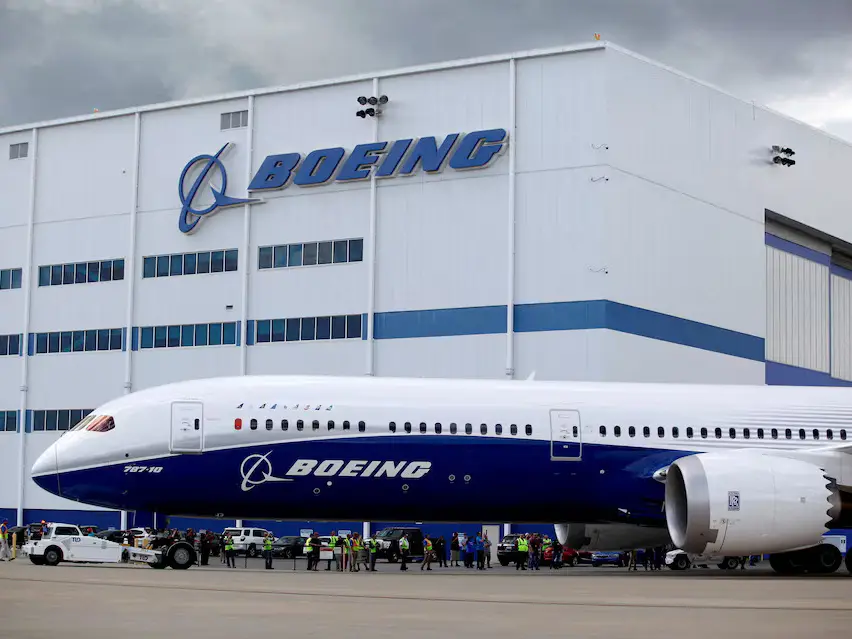
Britain’s competition watchdog, the Competition and Markets Authority (CMA), has cleared Boeing’s proposed $4.7 billion acquisition of Spirit AeroSystems, marking a significant step forward in the deal. The CMA, which began its investigation in June, decided against launching a deeper “Phase 2” review, meaning the deal does not pose a substantial risk to competition in the UK. This decision, expected to reassure investors, sets the stage for Boeing’s reintegration of Spirit, a move designed to bolster its supply chain, improve quality control, and restore investor confidence.
“We’re pleased with the outcome and continue to work through the remaining regulatory processes,” Boeing stated in response to the CMA’s clearance. However, the deal still awaits approval from two other major regulators: the European Commission and the US Federal Trade Commission. Both have the final say on whether Boeing can proceed with this major acquisition.
Strategic move to strengthen Boeing’s supply chain

The acquisition will bring Spirit AeroSystems, one of the world’s largest aerostructures manufacturers, back into Boeing’s fold, ending nearly two decades of the company's independence since its spin-off in 2005. Spirit’s production plants, which have been a critical source of fuselage parts and other aerospace components, will now be under Boeing’s control. These operations, based in Wichita and Tulsa, have been essential for Boeing’s 737 and 787 programmes. Boeing’s decision to buy Spirit comes after years of production challenges, including quality issues with parts supplied by Spirit, such as the fuselage involved in a 737 MAX incident with Alaska Airlines.
Boeing CEO Dave Calhoun emphasised that reintegrating Spirit would help align production systems, enhance safety protocols, and streamline quality programmes. The move is also part of Boeing’s strategy to stabilise its supply chain after the crises that have rocked the company in recent years, including the 737 MAX grounding and significant financial setbacks. By reacquiring Spirit, Boeing hopes to regain direct control of critical aerostructures production and reduce reliance on external suppliers.
Airbus moves to secure own supply chain with Spirit Divestitures
Trending Stories
)
Nigeria: Protesters take to the streets, police fire shots
)
US-Iran war: Tehran draws red lines — seven demands before any peace talks
)
Russia-Europe tensions: Polish PM warns Russian attacks could test NATO's unity
&im=FitAndFill=(700,400))
‘Not the US or China’: These are the countries leading the world in arable land
)
EXCLUSIVE | Singer Hanita Bhambri on her Toxic debut, working with Vishal Mishra and more
)
Mark Carney mimics Trump in hilarious moment over C$70 billion clean-energy investment; room erupts in laughter
)
Delhi voter roll shake-up: 3.31 million electors flagged in SIR review
)
Aravana prasadam shortage at Sabarimala temple in Kerala triggers protests, TDB questioned
)
‘End of my career...’: NSA Doval recalls tense Sikkim mission when China captured Indian intelligence team
)
Report: Iran rebuilding Taleghan 2, nuclear site tied to past weapons research, hit twice by Israel
)
Trump defends AI amid growing alarm, announces new 'AI force' and promises an 'AI czar'
)
Iran sets 7 conditions to end war with US: What are Tehran’s demands?
)
Trump announces ‘AI Force’ as debate grows over AI risks and regulation
)
China may have gained access to US's classified F-35 jets; parts meant for repairs diverted to Hong Kong, sparking Pentagon inquiry
)
Gaza under attack: Health chief's son killed in IDF strikes
)
Man breaks open wall hiding hundreds of books since 15 years
)
Arvind Kejriwal, family members, Delhi CM Rekha Gupta get SIR notices
)
AI actress Tilly Norwood glitches mid-interview, switches from English to Chinese | Watch
)
Saudi vs Houthis: Houthis claim missiles & drones used in attack on key Saudi sites
)
Ed Sheeran addresses Macklemore's removal, Gaza conflict during Philadelphia concert: 'I cannot hide how I feel'
)
Nepal forms 7-member panel to probe August 26 Bhotekoshi flood from source to downstream
)
‘Will go to any extent’: Pakistan vows to defend Saudi Arabia amid Houthi attacks
66 years of the Indus Waters Treaty: How India and Pakistan settled a bitter river dispute
)
The Verdict | When precision fails: US commits war crime in Minab school strike, UN finds
)
9 women found dead near Johannesburg: South Africans rally, demand 'enough' to femicide
)
Kampala-Ankara rift deepens: Uganda suspends military ties, seeks Fred Lumbuye's extradition
)
Several petrol pumps, other businesses to refuse UPI payments above Rs 2,000 from Oct 16: Is it legal?
)
US-Iran war: Tehran sets seven conditions to re-engage in talks with US
)
Reacher star Alan Ritchson opens up about alleged blackmail, suicide attempt during difficult period
)
Africa is splitting, and a lot sooner than estimated, giving way to a new ocean
)
Flying cars in UAE: Ras Al Khaimah signs deal with Chinese company to test new transport
)
West Indies Squad for India Series: Hetmyer included for T20Is, Holder rested
)
Trump bans CNN, MS NOW and Politico from White House over ‘FAKE NEWS’
)
Trump 2.0: Dark days ahead for America’s ‘imperial presidency’
&im=FitAndFill=(700,400))
How many F-35s does Britain, Japan and Israel have?
)
Harry Brook targets long reign at top of T20I rankings after Sri Lanka sweep
)
Russia's deadly Ukraine strikes kill 2 in Sumy, hit Dnipro mall
)
Russia holds first parliamentary elections since the beginning of the Ukraine war
&im=FitAndFill=(700,400))
Meet top 5 Indian batters with fastest T20I centuries
)
While Boeing is working to secure its acquisition, rival Airbus is also strengthening its position by acquiring certain Spirit facilities. In April, Airbus reached a deal to take over Spirit's US operations that supply components for Airbus’s A220 and A350 programmes. This move is aimed at stabilising Airbus’s own supply chain, which has faced pressure from delays and quality concerns related to Spirit’s manufacturing.
Meanwhile, Spirit is also offloading some of its non-Boeing-related operations. The company announced it will sell its facility in Subang, Malaysia, for $95.3 million to Composites Technology Research Malaysia (CTRM), which will continue producing parts for Boeing’s 737 and 787 programmes, as well as Airbus’s A220, A320, and A350.
What’s next for Boeing and Spirit
Although the CMA’s clearance is a major milestone, the deal still needs approval from the European Commission and the US Federal Trade Commission. Boeing hopes to finalise the transaction by the fourth quarter of 2025, contingent on these remaining regulatory approvals. This acquisition is expected to yield several benefits for Boeing, including more efficient operations, improved quality control, and greater supply chain resilience. However, challenges remain, particularly labour issues in Belfast and uncertainties regarding the integration of Spirit’s diverse operations.
(With inputs from agencies)