

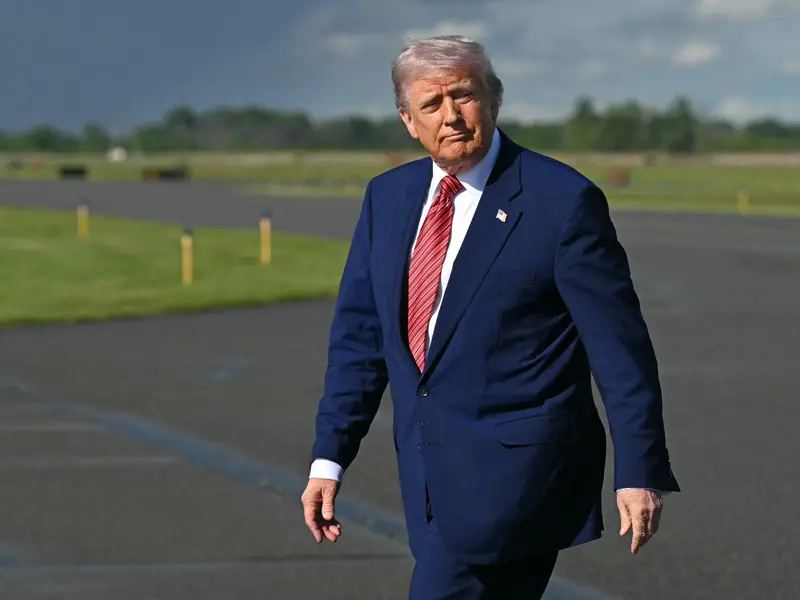
US President Donald Trump has escalated his stance against Russia by threatening to impose severe financial penalties if Moscow fails to reach a peace agreement with Ukraine within the next 50 days. Speaking to reporters on July 14 during a meeting with NATO Secretary-General Mark Rutte, Trump warned that the United States would introduce “secondary tariffs” on countries that continue to buy Russian energy, including oil and gas, unless President Vladimir Putin agrees to end his invasion of Ukraine.
Trump’s threat includes imposing tariffs of up to 100 per cent on Russian trade partners, a move that would significantly disrupt the global supply chain, particularly for nations that rely on Russian fossil fuels. The US president expressed growing frustration with Putin’s refusal to negotiate a ceasefire, adding that he was “disappointed” by the lack of progress toward a resolution despite earlier talks between the two leaders.
In addition to the tariff threat, Trump confirmed that the US would supply Ukraine with advanced military equipment through NATO nations, with European countries covering the costs. This combination of economic penalties and military support marks a significant shift in the US approach to the conflict and places further pressure on Russia.
Secondary tariffs target key energy buyers: India and China
The threat of 100 per cent secondary tariffs is likely to hit the countries that continue to buy Russian energy, particularly China and India, the two largest importers of Russian crude oil. Since the onset of the Ukraine war, both nations have dramatically increased their oil purchases from Russia, benefiting from discounted prices as Western sanctions have made it difficult for Moscow to sell to European nations.
India, for example, now sources more than a third of its crude oil from Russia, a stark contrast to the less than 1 per cent share prior to the war, according to data from Kpler. In May 2025, India imported more than 2 million barrels of Russian oil per day, and China’s purchases have similarly remained robust, making up almost half of Russia’s total crude exports. These energy deals have allowed both countries to bypass Western sanctions and secure cheaper energy supplies.
Trending Stories
&imwidth=180&imheight=135&format=webp&quality=medium)
China's counter-surveillance industry booms amid heightened espionage fears | Gravitas
&im=FitAndFill=(700,400)&imwidth=180&imheight=135&format=webp&quality=medium)
Navratri 2026: 9 days, 9 forms of Goddess Durga and 9 colours- Check the complete list
&imwidth=180&imheight=135&format=webp&quality=medium)
Trump accuses Houthis of driving up oil prices before US midterms, warns of consequences
&imwidth=180&imheight=135&format=webp&quality=medium)
Russian woman and Bihar boy's love story goes viral after she reaches India to marry him
&imwidth=180&imheight=135&format=webp&quality=medium)
Arijit Singh 9-city India stadium tour to start from January: Check venue and ticket prices
&imwidth=180&imheight=135&format=webp&quality=medium)
US Midterms 2026: In Alaska, cost-of-living anxiety meets strangest ballot in high-stakes Senate race
&imwidth=180&imheight=135&format=webp&quality=medium)
F1 set to return to Africa for first time since 1993
&imwidth=180&imheight=135&format=webp&quality=medium)
'Don't ever mess with nature!': Trump’s tiger attack post triggers social media backlash as victim's family issues heartbreaking tribute
&imwidth=180&imheight=135&format=webp&quality=medium)
CMs Vijay-Naidu meet in Vijayawada, discuss water sharing, river-linking
&imwidth=180&imheight=135&format=webp&quality=medium)
Air India Flight from Frankfurt diverted to Jaipur after hijack alert, probe on
&imwidth=180&imheight=135&format=webp&quality=medium)
1,500 drones illuminate Mumbai sky as Cordelia Cruises unveils second ship, Cordelia Sky
&imwidth=180&imheight=135&format=webp&quality=medium)
Delhi Police arrest Cockroach Janta Party's Saurav Das, Ashutosh Ranka, Ajinkya Shinde in Jantar Mantar case, to be produced before court
&imwidth=180&imheight=135&format=webp&quality=medium)
‘Rise up, young patriots!’: American singer Mary Millben says US donors funding CJP, backs Modi govt
&imwidth=180&imheight=135&format=webp&quality=medium)
Nobel Peace Prize winner Navi Pillay calls on US to 'get back to' being defender of human rights
&imwidth=180&imheight=135&format=webp&quality=medium)
France accuses Musk of ‘online harassment’ of European leaders, warns of poll interference
&imwidth=180&imheight=135&format=webp&quality=medium)
'Turn approver, resign, we'll forgive you': Rahul Gandhi claims receiving messages from CEC Gyanesh Kumar
&imwidth=180&imheight=135&format=webp&quality=medium)
MI5 chief warns Russia is UK’s ‘aggressor number one’ as Iran and AI threats grow
&imwidth=180&imheight=135&format=webp&quality=medium)
Trump reconsidering calling off Nidal Hasan's execution livestream. Here's why
&imwidth=180&imheight=135&format=webp&quality=medium)
‘My president, I mean my husband’: Trump's new press secretary Katie Zacharia's first briefing goes off the rails in 14 minutes
&imwidth=180&imheight=135&format=webp&quality=medium)
‘How many people did she illegally bring from Somalia?’ Trump targets Ilhan Omar, questions her net worth
&imwidth=180&imheight=135&format=webp&quality=medium)
Marco Rubio to visit India next week, focus on energy cooperation and strategic ties
&imwidth=180&imheight=135&format=webp&quality=medium)
US politicians mistakenly use Indian, Russian warship images for Navy's birthday posts
&imwidth=180&imheight=135&format=webp&quality=medium)
'Ouch!!! That must hurt': Kangana Ranaut hails Kamal Haasan's sharp reply to Elon Musk over Starlink row
&imwidth=180&imheight=135&format=webp&quality=medium)
Girl 'dead' for 8 hours wakes up at her own funeral, dad insists she wasn't breathing
&imwidth=180&imheight=135&format=webp&quality=medium)
Sidhu Moose Wala’s younger brother wins hearts by recreating late singer’s signature move at Toronto Hologram Show
&imwidth=180&imheight=135&format=webp&quality=medium)
UK school ditches technology, shifts from screen to pen and paper for learning
&imwidth=180&imheight=135&format=webp&quality=medium)
Durga Puja 2026: Kolkata roads get a splash of colours
&im=FitAndFill=(700,400)&imwidth=180&imheight=135&format=webp&quality=medium)
New OTT releases this week (October 12-18, 2026): Sacrifice, Koffee with Karan S9, Roadies Rebirth- 6 titles coming on Netflix, JioHotstar and more
&imwidth=180&imheight=135&format=webp&quality=medium)
Inside Aneet Padda's 24th birthday bash with rumoured boyfriend Ahaan Panday and Alia Bhatt
&imwidth=180&imheight=135&format=webp&quality=medium)
New Cold War: Why is China buying more gold? Explained
&imwidth=180&imheight=135&format=webp&quality=medium)
Netanyahu wants to join Saudi's war on Houthis, but Crown Prince denies: Report
&imwidth=180&imheight=135&format=webp&quality=medium)
Anupam Kher joins Ranbir Kapoor's Ramayana as Jatayu, new poster unveiled
&imwidth=180&imheight=135&format=webp&quality=medium)
Measles kills again: 6 dead in Pennsylvania as America faces its worst outbreak in decades | Gravitas
&imwidth=180&imheight=135&format=webp&quality=medium)
Cornell University suspends fraternity parties over 2024 gang rape allegations
The imposition of secondary tariffs could make Russian oil imports significantly more expensive for both India and China, with potential ripple effects on their economies. If these countries continue to buy oil from Russia, US companies would face hefty import taxes on goods produced in those countries, potentially making their products uncompetitive in US markets. This could strain both the economies, especially India, which is heavily reliant on imports to meet its energy needs.
However, experts suggest that while the tariffs could inflict damage on Russian trade partners, both India and China would likely find alternative suppliers, though at a higher cost. For India, the West Asian and African nations could provide substitutes for Russian oil, but these imports come at a premium. Saudi Arabian oil, for instance, costs about $5 more per barrel than Russian oil, which could lead to higher energy prices for Indian consumers and industries.
Despite the economic implications, the immediate reaction from global oil markets has been relatively muted. Brent crude prices fell by nearly 2 per cent following Trump’s remarks, suggesting that traders are sceptical about the immediate impact of the tariff threat on Russian oil flows.
US arms support to Ukraine
Alongside his economic measures, Trump also announced a significant new arms package for Ukraine, signalling continued US support for Kyiv as it battles Russian forces. The US will send “top-of-the-line weapons,” including missiles, ammunition, and air defence systems, to be supplied via NATO allies. European countries will cover the costs of these supplies, but the US is expected to ensure that Ukraine receives the necessary military equipment to bolster its defence.
NATO Secretary-General Mark Rutte confirmed that European nations would contribute Patriot air defence systems, which are vital for Ukraine in defending against Russian missile and air strikes. This new wave of military aid comes at a critical moment for Ukraine, which has faced increasing Russian assaults on its infrastructure. The US’s commitment underscores the importance of NATO solidarity in maintaining Ukraine’s defence capabilities.
Economic and military pressure on Russia
Trump’s new measures represent a heightened level of pressure on Russia and its allies, with the goal of forcing Moscow to the negotiating table. Whether these tariffs will have the desired effect on countries like India and China remains to be seen. However, the prospect of higher oil prices and disrupted trade could alter the calculus for Moscow’s economic partners.
For Ukraine, the continued flow of military support from the US and NATO is vital for its defence. While Trump’s stance on Russia has hardened, the outcome of his tariff threat will depend on whether Russia can sustain its oil trade with key buyers or whether the US can effectively use economic leverage to shift the balance in favour of a peaceful resolution.