

&imwidth=800&imheight=600&format=webp&quality=medium "Trump’s aluminium tariffs unintentionally fuel US recycling boom")
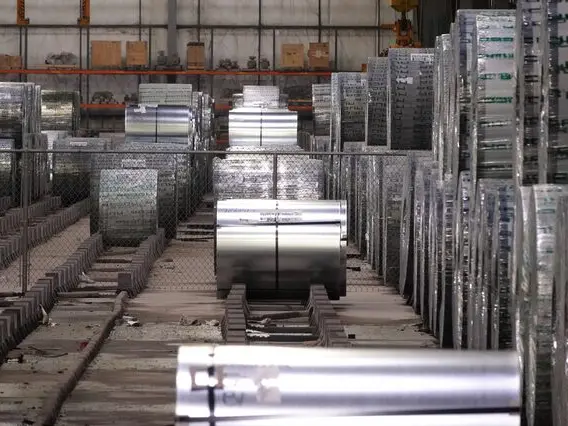
The US aluminium industry is experiencing a surprising effect of President Donald Trump’s steep 50 per cent tariffs on imported primary aluminium: a surge in domestic recycling. While the tariffs were originally intended to revitalise US smelters and reduce reliance on foreign aluminium, they are also driving a boom in recycling activity, turning scrap yards into unexpected beneficiaries of trade protectionism. With aluminium import prices spiking, particularly in the US Midwest, where premiums have surged compared to 2024 levels, downstream manufacturers are facing higher production costs.
As companies like beverage and food packaging firms contend with increased prices on cans and tinplate steel, many are seeking cheaper, more sustainable alternatives. That shift is accelerating demand for recycled aluminium, which consumes just 5 per cent of the energy needed to produce primary aluminium and is not subject to the same tariff restrictions. Adding to the momentum is the growing interest in low-carbon materials from automakers and global brands. This trend makes the recycled aluminium sector not only cost-effective but also environmentally aligned with broader industrial goals.
Scrap market reverses flow as local demand soars
A critical driver of the shift is the policy loophole exempting scrap metal from tariffs. While primary aluminium imports face a 50 per cent surcharge, scrap metal does not, allowing recyclers to profit from remelted aluminium sold at tariff-inflated prices. This dynamic has caused a sharp drop in US scrap exports, once totalling about 2 million tonnes annually, as more material is diverted to domestic use.
The emerging economics have made US recycling facilities highly competitive, prompting discussions about implementing scrap export controls to retain supply. Analysts estimate that fully utilising scrap aluminium in the US could offset nearly half of the country’s 5.5-million-tonne annual import deficit, potentially replacing the need for four new primary smelters. Meanwhile, global suppliers eyeing the US market are constrained by volatile transatlantic trade conditions. Exporters in Europe, in particular, face uncertainty as the future of tariff alignments and trade agreements remains unsettled.
Low-cost, low-carbon facilities attract investment
Trending Stories
&imwidth=180&imheight=135&format=webp&quality=medium)
Nathan Lyon completes 1,000 Test runs at No. 10 to script rare cricket feat
&imwidth=180&imheight=135&format=webp&quality=medium)
McSweeney reveals how studying Virat Kohli’s YouTube clips helped Australia A conquer India
&imwidth=180&imheight=135&format=webp&quality=medium)
Houthis claim Riyadh airport attacks, Aramco strikes; issue fresh warning to airlines, travellers and workers
&imwidth=180&imheight=135&format=webp&quality=medium)
China imposes first-ever sanctions on ministers from Taiwan allies: What this means
&imwidth=180&imheight=135&format=webp&quality=medium)
Anthropic's AI invented a murder witness and sent the fake tip to Philadelphia police
&imwidth=180&imheight=135&format=webp&quality=medium)
Sidhu Moose Wala’s younger brother wins hearts by recreating late singer’s signature move at Toronto Hologram Show
&imwidth=180&imheight=135&format=webp&quality=medium)
Wasim Jaffer blames Ajit Agarkar-led selection panel for Virat Kohli’s Test retirement
&imwidth=180&imheight=135&format=webp&quality=medium)
Are Gold and Silver poised for a rebound soon?
&imwidth=180&imheight=135&format=webp&quality=medium)
Top AI models flunked a test of inventing new AI research, so much for self-improving AI
&imwidth=180&imheight=135&format=webp&quality=medium)
'Say no to Muse': Meta has no control over its own moderation AI while it forces a security nightmare on everyone
&imwidth=180&imheight=135&format=webp&quality=medium)
iPhone Duo price index: Tracking Apple’s latest pricing trends
&im=FitAndFill=(700,400)&imwidth=180&imheight=135&format=webp&quality=medium)
Navratri 2026: 9 days, 9 forms of Goddess Durga and 9 colours- Check the complete list
&imwidth=180&imheight=135&format=webp&quality=medium)
UK school ditches technology, shifts from screen to pen and paper for learning
&im=FitAndFill=(700,400)&imwidth=180&imheight=135&format=webp&quality=medium)
Is sending robots to Mars easier than sending humans?
&imwidth=180&imheight=135&format=webp&quality=medium)
The street cannot govern India, but the government cannot ignore it either
&imwidth=180&imheight=135&format=webp&quality=medium)
Meta's Muse AI could be a security nightmare for India's billion-plus users
&imwidth=180&imheight=135&format=webp&quality=medium)
Iran: US accepted some conditions, Clarity needed on others
&imwidth=180&imheight=135&format=webp&quality=medium)
Microsoft's Nadella says treat every AI model as already hacked, and build an 'emergency brake'
&imwidth=180&imheight=135&format=webp&quality=medium)
Imran Khan released hours after Mumbai Police detain him during CJP protest
&imwidth=180&imheight=135&format=webp&quality=medium)
One Indian killed in Riyadh airport attack; 11 others injured : MEA
&imwidth=180&imheight=135&format=webp&quality=medium)
Nana Patekar's cause of death confirmed; here's what his postmortem report says
&imwidth=180&imheight=135&format=webp&quality=medium)
'Just coincidence': Police mistakes protester as AISA chief Neha Bora, arrests her from site
&imwidth=180&imheight=135&format=webp&quality=medium)
Delhi wakes up to heavy rain, thunderstorms; yellow alert in place; temperature drops
&imwidth=180&imheight=135&format=webp&quality=medium)
Delhi Protest: Congress calls for march to Supreme court
&imwidth=180&imheight=135&format=webp&quality=medium)
Delhi protest: CJI Surya Kant declines to meet India Bloc leaders
&imwidth=180&imheight=135&format=webp&quality=medium)
1,500 drones illuminate Mumbai sky as Cordelia Cruises unveils second ship, Cordelia Sky
&im=FitAndFill=(700,400)&imwidth=180&imheight=135&format=webp&quality=medium)
New OTT releases this week (October 12-18, 2026): Sacrifice, Koffee with Karan S9, Roadies Rebirth- 6 titles coming on Netflix, JioHotstar and more
&imwidth=180&imheight=135&format=webp&quality=medium)
A watchdog rated 'ChatGPT for Teens' an unacceptable risk and says keep under-18s off it
&imwidth=180&imheight=135&format=webp&quality=medium)
Other Mommy leads North American box Office as Verity, Resident Evil round out top four
&imwidth=180&imheight=135&format=webp&quality=medium)
IND vs WI, 3rd T20I: Abhishek Sharma smashes 18-ball fifty, sets record for fastest to 2,000 T20I runs
&imwidth=180&imheight=135&format=webp&quality=medium)
'Ouch!!! That must hurt': Kangana Ranaut hails Kamal Haasan's sharp reply to Elon Musk over Starlink row
&imwidth=180&imheight=135&format=webp&quality=medium)
Maharashtra appoints FDA commissioner Tukaram Mundhe as secretary of committee for MPSC overhaul amid stir
&imwidth=180&imheight=135&format=webp&quality=medium)
CJI Surya Kant declines INDIA bloc leaders’ request for meeting ahead of march to SC, asks them to file petition
&imwidth=180&imheight=135&format=webp&quality=medium)
Portugal Federation confirms Cristiano Ronaldo’s return to national team despite suspension
The current environment favours recycling over new smelter construction. A new recycling plant requires only 10 per cent of the capital investment and can be completed in one to two years, compared to five or more for a traditional smelter. Companies like Hydro have already scaled up US operations, commissioning new facilities with over 300,000 tonnes of annual capacity.
This rapid deployment is especially valuable as the energy-intensive aluminium industry competes for power with AI data centres and other emerging sectors. In this context, the energy efficiency of recycling adds to its appeal, not only for producers but also for investors and regulators focused on sustainability and supply resilience.
In effect, while the tariffs are raising costs and adding complexity across the value chain, could they be setting the stage for a greener, more self-sufficient aluminium ecosystem in the US and reshaping the long-term trajectory of the industry?
(With inputs from agencies)