Robots in homes, offices can be hacked: Study

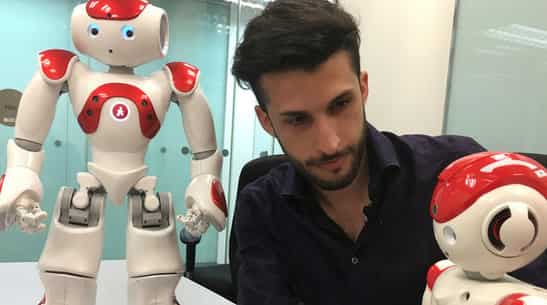
Cybersecurity experts said the robot vulnerabilities were alarming
"Our research shows proof that even non-military robots could be weaponized to cause harm," Lucas Apa said in an interview
Researchers who warned half a dozenrobotmanufacturers in January about nearly 50 vulnerabilities in their home, business and industrialrobots, say only a few of the problems have been addressed.
The researchers, Cesar Cerrudo and Lucas Apa of cybersecurity firm IOActive, said the vulnerabilities would allow hackers to spy on users, disable safety features and makerobots lurch and move violently, putting users and bystanders in danger.
While they say there are no signs that hackers have exploited the vulnerabilities, they say the fact that therobots were hacked so easily and the manufacturers' lack of response raise questions about allowingrobots in homes, offices and factories.

"Our research shows proof that even non-militaryrobots could be weaponized to cause harm," Apa said in an interview.
"Theserobots don't use bullets or explosives, but microphones, cameras, arms and legs. The difference is that they will be soon around us and we need to secure them now before it's too late."
Some of therobotmanufacturers defended themselves, saying they had fixed some or all of the issues raised.
&imwidth=180&imheight=135&format=webp&quality=medium)
China's counter-surveillance industry booms amid heightened espionage fears | Gravitas
&im=FitAndFill=(700,400)&imwidth=180&imheight=135&format=webp&quality=medium)
Navratri 2026: 9 days, 9 forms of Goddess Durga and 9 colours- Check the complete list
&imwidth=180&imheight=135&format=webp&quality=medium)
Trump accuses Houthis of driving up oil prices before US midterms, warns of consequences
&imwidth=180&imheight=135&format=webp&quality=medium)
Russian woman and Bihar boy's love story goes viral after she reaches India to marry him
&imwidth=180&imheight=135&format=webp&quality=medium)
Arijit Singh 9-city India stadium tour to start from January: Check venue and ticket prices
&imwidth=180&imheight=135&format=webp&quality=medium)
US Midterms 2026: In Alaska, cost-of-living anxiety meets strangest ballot in high-stakes Senate race
&imwidth=180&imheight=135&format=webp&quality=medium)
F1 set to return to Africa for first time since 1993
&imwidth=180&imheight=135&format=webp&quality=medium)
'Don't ever mess with nature!': Trump’s tiger attack post triggers social media backlash as victim's family issues heartbreaking tribute
&imwidth=180&imheight=135&format=webp&quality=medium)
CMs Vijay-Naidu meet in Vijayawada, discuss water sharing, river-linking
&imwidth=180&imheight=135&format=webp&quality=medium)
Air India Flight from Frankfurt diverted to Jaipur after hijack alert, probe on
&imwidth=180&imheight=135&format=webp&quality=medium)
1,500 drones illuminate Mumbai sky as Cordelia Cruises unveils second ship, Cordelia Sky
&imwidth=180&imheight=135&format=webp&quality=medium)
Delhi Police arrest Cockroach Janta Party's Saurav Das, Ashutosh Ranka, Ajinkya Shinde in Jantar Mantar case, to be produced before court
&imwidth=180&imheight=135&format=webp&quality=medium)
‘Rise up, young patriots!’: American singer Mary Millben says US donors funding CJP, backs Modi govt
&imwidth=180&imheight=135&format=webp&quality=medium)
Nobel Peace Prize winner Navi Pillay calls on US to 'get back to' being defender of human rights
&imwidth=180&imheight=135&format=webp&quality=medium)
France accuses Musk of ‘online harassment’ of European leaders, warns of poll interference
&imwidth=180&imheight=135&format=webp&quality=medium)
'Turn approver, resign, we'll forgive you': Rahul Gandhi claims receiving messages from CEC Gyanesh Kumar
&imwidth=180&imheight=135&format=webp&quality=medium)
MI5 chief warns Russia is UK’s ‘aggressor number one’ as Iran and AI threats grow
&imwidth=180&imheight=135&format=webp&quality=medium)
Trump reconsidering calling off Nidal Hasan's execution livestream. Here's why
&imwidth=180&imheight=135&format=webp&quality=medium)
‘My president, I mean my husband’: Trump's new press secretary Katie Zacharia's first briefing goes off the rails in 14 minutes
&imwidth=180&imheight=135&format=webp&quality=medium)
‘How many people did she illegally bring from Somalia?’ Trump targets Ilhan Omar, questions her net worth
&imwidth=180&imheight=135&format=webp&quality=medium)
Marco Rubio to visit India next week, focus on energy cooperation and strategic ties
&imwidth=180&imheight=135&format=webp&quality=medium)
US politicians mistakenly use Indian, Russian warship images for Navy's birthday posts
&imwidth=180&imheight=135&format=webp&quality=medium)
'Ouch!!! That must hurt': Kangana Ranaut hails Kamal Haasan's sharp reply to Elon Musk over Starlink row
&imwidth=180&imheight=135&format=webp&quality=medium)
Girl 'dead' for 8 hours wakes up at her own funeral, dad insists she wasn't breathing
&imwidth=180&imheight=135&format=webp&quality=medium)
Sidhu Moose Wala’s younger brother wins hearts by recreating late singer’s signature move at Toronto Hologram Show
&imwidth=180&imheight=135&format=webp&quality=medium)
UK school ditches technology, shifts from screen to pen and paper for learning
&imwidth=180&imheight=135&format=webp&quality=medium)
Durga Puja 2026: Kolkata roads get a splash of colours
&im=FitAndFill=(700,400)&imwidth=180&imheight=135&format=webp&quality=medium)
New OTT releases this week (October 12-18, 2026): Sacrifice, Koffee with Karan S9, Roadies Rebirth- 6 titles coming on Netflix, JioHotstar and more
&imwidth=180&imheight=135&format=webp&quality=medium)
Inside Aneet Padda's 24th birthday bash with rumoured boyfriend Ahaan Panday and Alia Bhatt
&imwidth=180&imheight=135&format=webp&quality=medium)
New Cold War: Why is China buying more gold? Explained
&imwidth=180&imheight=135&format=webp&quality=medium)
Netanyahu wants to join Saudi's war on Houthis, but Crown Prince denies: Report
&imwidth=180&imheight=135&format=webp&quality=medium)
Anupam Kher joins Ranbir Kapoor's Ramayana as Jatayu, new poster unveiled
&imwidth=180&imheight=135&format=webp&quality=medium)
Measles kills again: 6 dead in Pennsylvania as America faces its worst outbreak in decades | Gravitas
&imwidth=180&imheight=135&format=webp&quality=medium)
Cornell University suspends fraternity parties over 2024 gang rape allegations
Apa's comments come in the wake of a letter signed by more than 100 leadingrobotic experts urging the United Nations to ban the development of killer militaryrobots, or autonomous weapons.
Apa, a senior security consultant, said that of the six manufacturers contacted, only one, RethinkRobotics, said some of the problems had been fixed. He said he had not been able to confirm that as his team does not have access to that particularrobot.
A spokesman for RethinkRobotics, which makes the Baxter and Sawyer assembly-linerobots, said all but two issues - in the education and research versions of itsrobots - had been fixed.
Apa said a review of updates from the other five manufacturers - UniversalRobots of Denmark, SoftBankRobotics and Asratec Corp of Japan, Ubtech of China, andRobotis Inc of South Korea - led him to believe none of the issues he had raised had been fixed.
Asratec said that software released for itsrobots so far was limited to "hobby use sample programs", and it believed IOActive was pointing to security vulnerabilities in those. Software it planned to release for commercial use would be different, it said.
SoftBankRobotics said it had already identified the vulnerabilities and fixed them. Ubtech said it had "fully addressed any concerns raised by IoActive that do not limit our developers from programming" theirrobots.
UniversalRobots did not respond to emailed requests for comment.Robotis Inc declined to comment.
The slow reaction by therobotindustry was not surprising, said Joshua Ziering, founder of Kittyhawk.io, a commercial drone software company. "A new technology bursts on to the market and people fail to secure it," he said.
Cybersecurity experts said therobotvulnerabilities were alarming, and cyber criminals could use them to disrupt factories by ransomware attacks, or withrobots slowed down or forced to embed flaws in the products they are programmed to build.
"The potential impact to companies, and even countries, could be massive," said Nathan Wenzler, chief security strategist at AsTech, a San Francisco-based security consulting company, "should an attacker exploit the vulnerability within the applications that control theserobots."
Even in the home, danger lurks, said Apa, demonstrating how a 17-inch (43.18 cm) tall Alpha 2robotfrom Ubtech could be programmed to violently jab a screwdriver.
"Maybe it's small and it's not really going to hurt right now, but the trend is that therobots are going to be more powerful," he said. "We tested industrial ones which are really heavy and powerful, and some of the attacks work with them."
Apa and Cerrudo released their initial findings in January.
This week, they released details about the specific vulnerabilities they found, including one case where they mix several of those vulnerabilities together to hijack a UniversalRobotfactoryrobot, making it lurch about and be a potential threat.