

&imwidth=800&imheight=600&format=webp&quality=medium "Tesla strikes $4.3 billion battery deal with LG Energy Solution to cut reliance on China")
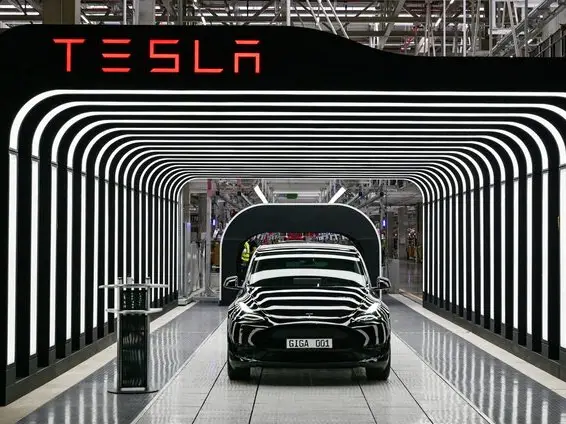
Tesla Inc. has signed a $4.3 billion agreement with South Korea’s LG Energy Solution (LGES) to supply lithium iron phosphate (LFP) batteries for its energy storage systems, marking a strategic move by the EV giant to localise its supply chain and reduce dependence on Chinese imports amid growing tariff headwinds. According to media reports, the deal will see LGES provide LFP batteries from its US-based facility in Michigan over a three-year period beginning in August 2027, with provisions for a potential seven-year extension and increased volumes depending on future demand. While neither Tesla nor LGES publicly named the customer, sources and market analysts widely point to Tesla as the buyer.
The deal underscores Tesla’s accelerating pivot toward localised battery sourcing, particularly for its energy storage segment, which includes products like the Powerwall and Megapack. It is also the second major South Korea-linked agreement for the company this month, following a $16.5 billion chip supply partnership with Samsung Electronics to support Tesla’s next-generation AI chips.
Shift toward LFP and local supply chains
LFP batteries, while lower in energy density compared to nickel-based alternatives, offer significant advantages in cost, safety, and durability, making them increasingly attractive for stationary energy storage solutions. Unlike traditional lithium-ion batteries that rely on costly materials like cobalt and nickel, LFP batteries use more abundant and cheaper elements such as iron and phosphate.
Tesla currently imports LFP batteries primarily from China, particularly from top supplier CATL. However, with tariffs on Chinese-made EV components rising, the economics of relying on Chinese imports have become less viable. Tesla Chief Financial Officer Vaibhav Taneja acknowledged in April that the company was actively seeking non-Chinese battery suppliers, though he noted it would take time to fully transition.
LGES began LFP production at its Michigan factory in May and is one of the few manufacturers outside of China with significant US-based LFP capacity. Its existing $1.4 billion investment in the facility positions it well to capitalise on federal incentives under the Inflation Reduction Act (IRA), which encourages localised clean energy manufacturing through tax credits and other policy tools.
Trending Stories
&imwidth=180&imheight=135&format=webp&quality=medium)
Other Mommy leads North American box Office as Verity, Resident Evil round out top four
&im=FitAndFill=(700,400)&imwidth=180&imheight=135&format=webp&quality=medium)
Navratri 2026: 9 days, 9 forms of Goddess Durga and 9 colours- Check the complete list
&imwidth=180&imheight=135&format=webp&quality=medium)
Anti-SIR protest in Mumbai: Protestors wear black masks & ribbons in Mumbai
&imwidth=180&imheight=135&format=webp&quality=medium)
BCCI rejects venue shift reports, India vs Sri Lanka 1st ODI to remain in Delhi
&imwidth=180&imheight=135&format=webp&quality=medium)
Diljit Dosanjh’s Delhi concert gets a new date: When and where to catch the singer
&im=FitAndFill=(700,400)&imwidth=180&imheight=135&format=webp&quality=medium)
Is sending robots to Mars easier than sending humans?
&imwidth=180&imheight=135&format=webp&quality=medium)
A watchdog rated 'ChatGPT for Teens' an unacceptable risk and says keep under-18s off it
&imwidth=180&imheight=135&format=webp&quality=medium)
1,500 drones illuminate Mumbai sky as Cordelia Cruises unveils second ship, Cordelia Sky
&imwidth=180&imheight=135&format=webp&quality=medium)
'Just coincidence': Police mistakes protester as AISA chief Neha Bora, arrests her from site
&imwidth=180&imheight=135&format=webp&quality=medium)
Anthropic's AI invented a murder witness and sent the fake tip to Philadelphia police
&imwidth=180&imheight=135&format=webp&quality=medium)
Congress demands action against chief election commissioner
&imwidth=180&imheight=135&format=webp&quality=medium)
CJI Surya Kant declines INDIA bloc leaders’ request for meeting ahead of march to SC, asks them to file petition
&imwidth=180&imheight=135&format=webp&quality=medium)
Saif Ali Khan is finally on Instagram! Here's what he shared in his first post
&imwidth=180&imheight=135&format=webp&quality=medium)
'Turn approver, resign, we'll forgive you': Rahul Gandhi claims receiving messages from CEC Gyanesh Kumar
&imwidth=180&imheight=135&format=webp&quality=medium)
One Indian killed in Riyadh airport attack; 11 others injured : MEA
&imwidth=180&imheight=135&format=webp&quality=medium)
Top AI models flunked a test of inventing new AI research, so much for self-improving AI
&imwidth=180&imheight=135&format=webp&quality=medium)
Wasim Jaffer blames Ajit Agarkar-led selection panel for Virat Kohli’s Test retirement
&imwidth=180&imheight=135&format=webp&quality=medium)
'Ouch!!! That must hurt': Kangana Ranaut hails Kamal Haasan's sharp reply to Elon Musk over Starlink row
&imwidth=180&imheight=135&format=webp&quality=medium)
Sidhu Moose Wala’s younger brother wins hearts by recreating late singer’s signature move at Toronto Hologram Show
&imwidth=180&imheight=135&format=webp&quality=medium)
UK school ditches technology, shifts from screen to pen and paper for learning
&imwidth=180&imheight=135&format=webp&quality=medium)
Telangana ATM heist: Thieves in nighties arrive in ambulance, break into SBI ATM in Kamareddy - VIDEO
&imwidth=180&imheight=135&format=webp&quality=medium)
Houthis claim Riyadh airport attacks, Aramco strikes; issue fresh warning to airlines, travellers and workers
&imwidth=180&imheight=135&format=webp&quality=medium)
Portugal Federation confirms Cristiano Ronaldo’s return to national team despite suspension
&imwidth=180&imheight=135&format=webp&quality=medium)
Delhi protests: 'Court should not be dragged into political activity', says CJI Surya Kant
&im=FitAndFill=(700,400)&imwidth=180&imheight=135&format=webp&quality=medium)
New OTT releases this week (October 12-18, 2026): Sacrifice, Koffee with Karan S9, Roadies Rebirth- 6 titles coming on Netflix, JioHotstar and more
&imwidth=180&imheight=135&format=webp&quality=medium)
Microsoft's Nadella says treat every AI model as already hacked, and build an 'emergency brake'
&imwidth=180&imheight=135&format=webp&quality=medium)
Delhi protest: CJI Surya Kant declines to meet India Bloc leaders
&imwidth=180&imheight=135&format=webp&quality=medium)
Telangana man allegedly recruited into Russian military dies near Ukraine border
&imwidth=180&imheight=135&format=webp&quality=medium)
China imposes first-ever sanctions on ministers from Taiwan allies: What this means
&imwidth=180&imheight=135&format=webp&quality=medium)
McSweeney reveals how studying Virat Kohli’s YouTube clips helped Australia A conquer India
&imwidth=180&imheight=135&format=webp&quality=medium)
Maharashtra appoints FDA commissioner Tukaram Mundhe as secretary of committee for MPSC overhaul amid stir
&imwidth=180&imheight=135&format=webp&quality=medium)
Iran: US accepted some conditions, Clarity needed on others
&imwidth=180&imheight=135&format=webp&quality=medium)
Nana Patekar's cause of death confirmed; here's what his postmortem report says
&imwidth=180&imheight=135&format=webp&quality=medium)
iPhone Duo price index: Tracking Apple’s latest pricing trends
&imwidth=180&imheight=135&format=webp&quality=medium)
'Say no to Muse': Meta has no control over its own moderation AI while it forces a security nightmare on everyone
Strategic implications for the battery industry
For LGES, the deal is a significant step forward in its broader strategy to expand its footprint in the US energy storage market. The South Korean firm, which counts General Motors and Tesla among its top clients, has been exploring converting some EV battery production lines for energy storage systems in response to slowing global EV demand and growing demand for grid-scale storage.
Industry analysts view the agreement as part of a broader reshaping of global battery supply chains, with companies and governments alike aiming to diversify away from Chinese dominance. The implications extend beyond the battery sector. Tesla’s twin deals with LGES and Samsung this month highlight the growing importance of South Korea in the company’s supply chain strategy, spanning both energy storage and artificial intelligence. With the global energy transition accelerating and trade policies becoming more fragmented, battery suppliers like LGES that can offer localised, scalable solutions are poised to gain substantial competitive advantage.
A new era for energy storage
As governments push for decarbonisation and grid modernisation, the need for reliable and affordable energy storage systems is surging. Tesla’s deal with LGES is a strategic response to this trend, ensuring supply chain resilience while aligning with US industrial policy. For LGES, it cements its place as a key player in North America’s energy transition.
The deal also signals a shift in how automakers view batteries, not just as components for vehicles but as foundational technology for broader clean energy infrastructure. As such, the companies that adapt fastest to changing technologies and geopolitical realities will shape the future of the energy economy.