

&imwidth=800&imheight=600&format=webp&quality=medium "Southeast Asia’s budget airlines battle for the skies amid soaring costs and shrinking margins")
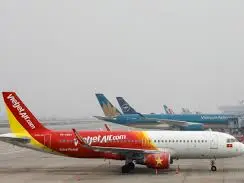
Southeast Asia’s low-cost airline industry is entering a high-stakes phase of rapid expansion, with leading budget carriers racing to increase capacity despite intensifying cost pressures and increasingly thin profit margins.
The closure of Qantas Airways’ Singapore-based subsidiary Jetstar Asia has underscored the mounting challenges in one of the world’s most competitive aviation markets.
The surge in disposable incomes, tourism growth, especially from China, and rapid regional economic development have fuelled an aviation boom in Southeast Asia over the past two decades.
According to projections, the flights market in Southeast Asia is set to generate $33.76 billion in revenue in 2025, with that number expected to climb to $41.60 billion by 2029, reflecting a CAGR of 5.36 per cent.
As demand grows, so do the ambitions of the region’s major low-cost carriers. Vietnam’s VietJet Aviation and Malaysia’s AirAsia are significantly expanding their fleets to capture a larger share of the burgeoning market.
VietJet recently signed a provisional agreement to buy up to 150 Airbus single-aisle aircraft at the Paris Airshow, just weeks after ordering 20 A330neo wide-body jets and maintaining an outstanding order for 200 Boeing 737 MAX planes.
Trending Stories
&imwidth=180&imheight=135&format=webp&quality=medium)
Other Mommy leads North American box Office as Verity, Resident Evil round out top four
&im=FitAndFill=(700,400)&imwidth=180&imheight=135&format=webp&quality=medium)
Navratri 2026: 9 days, 9 forms of Goddess Durga and 9 colours- Check the complete list
&imwidth=180&imheight=135&format=webp&quality=medium)
Anti-SIR protest in Mumbai: Protestors wear black masks & ribbons in Mumbai
&imwidth=180&imheight=135&format=webp&quality=medium)
Diljit Dosanjh’s Delhi concert gets a new date: When and where to catch the singer
&im=FitAndFill=(700,400)&imwidth=180&imheight=135&format=webp&quality=medium)
Is sending robots to Mars easier than sending humans?
&imwidth=180&imheight=135&format=webp&quality=medium)
A watchdog rated 'ChatGPT for Teens' an unacceptable risk and says keep under-18s off it
&imwidth=180&imheight=135&format=webp&quality=medium)
1,500 drones illuminate Mumbai sky as Cordelia Cruises unveils second ship, Cordelia Sky
&imwidth=180&imheight=135&format=webp&quality=medium)
'Just coincidence': Police mistakes protester as AISA chief Neha Bora, arrests her from site
&imwidth=180&imheight=135&format=webp&quality=medium)
Anthropic's AI invented a murder witness and sent the fake tip to Philadelphia police
&imwidth=180&imheight=135&format=webp&quality=medium)
Congress demands action against chief election commissioner
&imwidth=180&imheight=135&format=webp&quality=medium)
CJI Surya Kant declines INDIA bloc leaders’ request for meeting ahead of march to SC, asks them to file petition
&imwidth=180&imheight=135&format=webp&quality=medium)
Saif Ali Khan is finally on Instagram! Here's what he shared in his first post
&imwidth=180&imheight=135&format=webp&quality=medium)
'Turn approver, resign, we'll forgive you': Rahul Gandhi claims receiving messages from CEC Gyanesh Kumar
&imwidth=180&imheight=135&format=webp&quality=medium)
One Indian killed in Riyadh airport attack; 11 others injured : MEA
&imwidth=180&imheight=135&format=webp&quality=medium)
Top AI models flunked a test of inventing new AI research, so much for self-improving AI
&imwidth=180&imheight=135&format=webp&quality=medium)
Wasim Jaffer blames Ajit Agarkar-led selection panel for Virat Kohli’s Test retirement
&imwidth=180&imheight=135&format=webp&quality=medium)
'Ouch!!! That must hurt': Kangana Ranaut hails Kamal Haasan's sharp reply to Elon Musk over Starlink row
&imwidth=180&imheight=135&format=webp&quality=medium)
Sidhu Moose Wala’s younger brother wins hearts by recreating late singer’s signature move at Toronto Hologram Show
&imwidth=180&imheight=135&format=webp&quality=medium)
UK school ditches technology, shifts from screen to pen and paper for learning
&imwidth=180&imheight=135&format=webp&quality=medium)
Telangana ATM heist: Thieves in nighties arrive in ambulance, break into SBI ATM in Kamareddy - VIDEO
&imwidth=180&imheight=135&format=webp&quality=medium)
Houthis claim Riyadh airport attacks, Aramco strikes; issue fresh warning to airlines, travellers and workers
&imwidth=180&imheight=135&format=webp&quality=medium)
Portugal Federation confirms Cristiano Ronaldo’s return to national team despite suspension
&imwidth=180&imheight=135&format=webp&quality=medium)
Delhi protests: 'Court should not be dragged into political activity', says CJI Surya Kant
&im=FitAndFill=(700,400)&imwidth=180&imheight=135&format=webp&quality=medium)
New OTT releases this week (October 12-18, 2026): Sacrifice, Koffee with Karan S9, Roadies Rebirth- 6 titles coming on Netflix, JioHotstar and more
&imwidth=180&imheight=135&format=webp&quality=medium)
Microsoft's Nadella says treat every AI model as already hacked, and build an 'emergency brake'
&imwidth=180&imheight=135&format=webp&quality=medium)
Delhi protest: CJI Surya Kant declines to meet India Bloc leaders
&imwidth=180&imheight=135&format=webp&quality=medium)
Telangana man allegedly recruited into Russian military dies near Ukraine border
&imwidth=180&imheight=135&format=webp&quality=medium)
China imposes first-ever sanctions on ministers from Taiwan allies: What this means
&imwidth=180&imheight=135&format=webp&quality=medium)
McSweeney reveals how studying Virat Kohli’s YouTube clips helped Australia A conquer India
&imwidth=180&imheight=135&format=webp&quality=medium)
Maharashtra appoints FDA commissioner Tukaram Mundhe as secretary of committee for MPSC overhaul amid stir
&imwidth=180&imheight=135&format=webp&quality=medium)
Iran: US accepted some conditions, Clarity needed on others
&imwidth=180&imheight=135&format=webp&quality=medium)
Nana Patekar's cause of death confirmed; here's what his postmortem report says
&imwidth=180&imheight=135&format=webp&quality=medium)
iPhone Duo price index: Tracking Apple’s latest pricing trends
&imwidth=180&imheight=135&format=webp&quality=medium)
'Say no to Muse': Meta has no control over its own moderation AI while it forces a security nightmare on everyone
&imwidth=180&imheight=135&format=webp&quality=medium)
Delhi wakes up to heavy rain, thunderstorms; yellow alert in place; temperature drops
AirAsia, Southeast Asia’s largest budget airline, is also negotiating the purchase of 50 to 70 long-range single-aisle aircraft and 100 regional jets to expand its destination network. CEO Tony Fernandes framed the strategy succinctly: “At the end of the day, it is go big or go home.”
Thin margins in a growing market
Despite the region’s potential, profitability remains a serious concern. The International Air Transport Association (IATA) expects Asia-Pacific airlines to post a net profit margin of just 1.9 per cent in 2025, well below the global average of 3.7 per cent.
International airfares in Asia dropped 12 per cent in 2024 compared to 2023, according to data from ForwardKeys. AirAsia itself reported a 9 per cent decline in average fares in Q1 2024 as it ramped up capacity and passed fuel cost savings onto customers. While this has made flying more accessible for millions, it has added further pressure to already tight margins.
Meanwhile, costs are climbing. Labour, airport charges, security fees, and aircraft leasing rates are all rising, compounded by a global shortage of new planes that is driving up maintenance and leasing expenses.
Jetstar Asia closure highlights market stress
The challenges became too much for some, as demonstrated by Qantas’ recent decision to shutter Jetstar Asia by the end of July 2025. The airline, which had operated for nearly two decades out of Singapore, was unable to remain viable amid escalating costs and intense competition.
Rising costs of fuel, airport, and handling charges played a key role in its closure, according to the airline’s official statement.
Qantas plans to redeploy Jetstar Asia’s aircraft to more profitable operations in Australia and New Zealand. Analysts suggest the move is a pragmatic response to a market where scale and efficiency are critical to survival.
Jetstar Asia’s relatively small fleet of 13 aircraft paled in comparison to competitors like Scoot (53 planes), AirAsia (225), VietJet (117, including Thai operations), and Cebu Pacific of the Philippines (99).
Budget airlines dominate Southeast Asian skies
Southeast Asia has a uniquely high concentration of low-cost international flights. According to CAPA Centre for Aviation, budget carriers account for two-thirds of international seat capacity within the region, twice the global average.
This saturation has been a double-edged sword: while consumers benefit from cheap fares and frequent flights, airlines are locked in a battle for survival in a cost-heavy, price-sensitive environment.
To succeed, carriers are doubling down on efficiency, focusing on single-type aircraft fleets to lower operational costs and exploring new routes. The region’s digital-savvy population is also driving online sales, with 87 per cent of total revenue expected to be generated through online channels by 2029.
Southeast Asia’s airline market is expected to serve 119.57 million users by 2029, with an average revenue per user (ARPU) of $366.95. Indonesia, in particular, is showing strong growth in its domestic aviation sector, led largely by budget carriers.
However, while growth opportunities are abundant, the road ahead is fraught with risks. Airlines must strike a delicate balance between expanding fast enough to seize market share and avoiding overextension in an environment where costs are volatile and margins are minimal.