

&imwidth=800&imheight=600&format=webp&quality=medium "Southeast Asia dodges worst-case US tariff impact, but challenges remain")
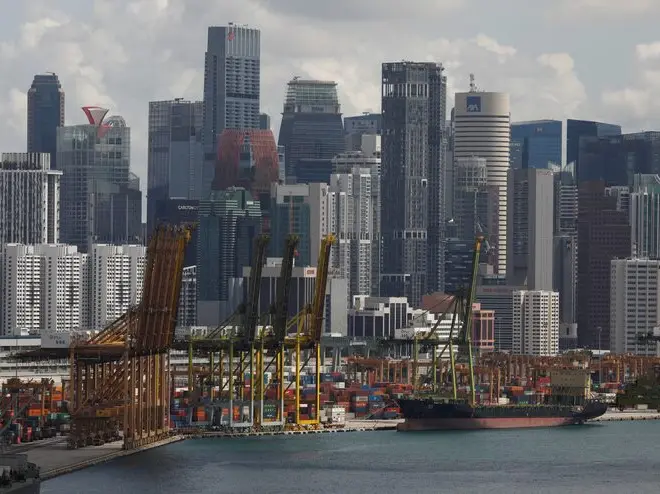
Southeast Asian countries are breathing a sigh of relief after the US unveiled its revised tariff schedule, slashing the initially feared higher rates and offering a somewhat more manageable outcome. Though US President Donald Trump’s tariffs will still hit the region’s key exports hard, the adjustments are seen as less severe than expected, especially for nations like Singapore and Malaysia. The final tariff rates, which range from 10 per cent to 40 per cent depending on the country, were unveiled late on July 31, setting the stage for a new phase in the ongoing global trade tensions.
For most of Southeast Asia, the revised tariffs are more tolerable than the original threat of punitive measures that could have harmed their economies. Singapore, which had previously feared a 25 per cent tariff on its goods, is set to face a baseline tariff of just 10 per cent. Prime Minister Lawrence Wong expressed that this outcome, while still impactful, is manageable for the city-state, which maintains a robust trade surplus with the US and stands to lose relatively little. The 10 per cent rate is far lower than the 19 per cent imposed on other regional heavyweights, including Malaysia, Indonesia, Thailand, and the Philippines. This adjustment, while significant, spares Singapore from the worst-case scenario of even higher tariffs.
How do things stand now?
While the 10 per cent tariff will affect Singapore’s export-driven economy, the damage is expected to be less severe than the rates imposed on neighbouring countries. The situation could have been far worse, with countries like Laos and Myanmar facing tariffs as high as 40 per cent. Both economies are much smaller than their regional peers, but these tariffs still pose a significant burden. Myanmar, which continued its controversial military junta rule amid Western sanctions, will face particularly heavy consequences despite a modest $734 million trade relationship with the US.
The situation remains complex, and for many nations in the region, it’s still too early to gauge the full economic impact. Vietnam, for instance, had initially been targeted with a 46 per cent tariff but successfully negotiated this down to 20 per cent. However, Vietnam’s status as a primary beneficiary of trade from China means that its exporters may still be vulnerable to additional scrutiny as the US targets goods transshipped from China. The move to impose a 40 per cent tariff on such goods adds another layer of uncertainty, especially for countries with complex supply chains that include Chinese components. Despite this, Vietnam’s position as a key trading hub in the region makes it unlikely that its exports will be completely sidelined.
For Thailand and Malaysia, the new tariff levels represent a much-needed boost to their manufacturing sectors, especially in industries like electronics, textiles, and garments. Thailand’s economy, which is heavily reliant on exports, stands to benefit from the 19 per cent tariff rate, down from the threatened 36 per cent. Thailand’s finance minister, Pichai Chunhavajira, welcomed the move, saying it would help restore the country’s competitiveness. Similarly, Malaysia’s government expressed satisfaction with its tariff reduction to 19 per cent, down from 25 per cent. Both nations are poised to maintain their standing in the global market, ensuring they are not placed at a disadvantage relative to each other.
Trending Stories
&imwidth=180&imheight=135&format=webp&quality=medium)
US troop deaths in Iran war on rise? Pentagon reveals latest toll
&imwidth=180&imheight=135&format=webp&quality=medium)
Lula campaign accuses Meta of election interference after social media content blocked
&imwidth=180&imheight=135&format=webp&quality=medium)
100,000 strikes in 3 years: How October 7 redefined Israel's war
&imwidth=180&imheight=135&format=webp&quality=medium)
‘Your people don’t even let us near it’: IAF chief’s blunt response on US F-35; India yet to decide on Russia’s Su-57
&imwidth=180&imheight=135&format=webp&quality=medium)
Saudi Arabia's King Khalid International Airport attack kills 12, injures 309; India calls it 'unacceptable'
&imwidth=180&imheight=135&format=webp&quality=medium)
‘Never-ending flow of cheap labour’: JD Vance hits back at Indian-origin Congresswoman over US green card curbs for major tech companies
&imwidth=180&imheight=135&format=webp&quality=medium)
HYBE’s Weverse Con India sets ticket sale date for March 2027 festival
&imwidth=180&imheight=135&format=webp&quality=medium)
Messi scores twice in Inter Miami return following final match for Argentina
&imwidth=180&imheight=135&format=webp&quality=medium)
CJP's Abhijeet Dipke, Ashutosh Ranka, Saurav Das released 22 hours after flight detention
&imwidth=180&imheight=135&format=webp&quality=medium)
'Unwarranted interference': India slams UN human rights office over remarks on Delhi protests
&imwidth=180&imheight=135&format=webp&quality=medium)
'Jantar Mantar not the story of India': BJP's Sambit Patra claims 'anarchists' tried to hold Delhi captive
&imwidth=180&imheight=135&format=webp&quality=medium)
3rd T20I Preview: Another run-fest on cards as India face West Indies in Indore
&imwidth=180&imheight=135&format=webp&quality=medium)
Nicolas Cage refuses AI waiver for Spider-Noir, hints at Amazon exit and True Detective role
&imwidth=180&imheight=135&format=webp&quality=medium)
Riyadh airport hit in missile attack, dozens injured; 5 in intensive care
&imwidth=180&imheight=135&format=webp&quality=medium)
'Spent Rs 2,000 cr to elect Trump': Elon Musk bought US President's loyalty by writing the biggest political cheque in human history
&imwidth=180&imheight=135&format=webp&quality=medium)
Powerful 7.7 magnitude earthquake strikes Panama, tsunami warning issued
&imwidth=180&imheight=135&format=webp&quality=medium)
US mid-term elections: What are PACs - Unique American System that lets corporates shape voting
&imwidth=180&imheight=135&format=webp&quality=medium)
Nathan Lyon completes 1,000 Test runs at No. 10 to script rare cricket feat
&imwidth=180&imheight=135&format=webp&quality=medium)
'Ouch!!! That must hurt': Kangana Ranaut hails Kamal Haasan's sharp reply to Elon Musk over Starlink row
&imwidth=180&imheight=135&format=webp&quality=medium)
Barry Manilow cuts short Las Vegas comeback show, cancels next concert over Bronchitis
&imwidth=180&imheight=135&format=webp&quality=medium)
Hamas used double agents, deceived Israel to carry out October 7 massacre
&imwidth=180&imheight=135&format=webp&quality=medium)
Bigg Boss 20: Who is Manish Goel? Meet the new wild card contestant on Salman Khan’s show
&imwidth=180&imheight=135&format=webp&quality=medium)
Portugal Federation confirms Cristiano Ronaldo’s return to national team despite suspension
&imwidth=180&imheight=135&format=webp&quality=medium)
Kim Kardashian brings glamour to Singapore Grand Prix while supporting boyfriend Lewis Hamilton
&imwidth=180&imheight=135&format=webp&quality=medium)
‘Time for Ukraine to get a new president’: Trump lashes out at Zelensky over Russia strikes
&im=FitAndFill=(700,400)&imwidth=180&imheight=135&format=webp&quality=medium)
Amitabh Bachchan @ 84: A look at his most iconic on-screen avatars - Anthony Gonsalves, Vijay Kumar and more
&imwidth=180&imheight=135&format=webp&quality=medium)
BTS’ RM raises privacy concerns over drones, lasers outside hotel amid Lima concert, urges fan respect
&imwidth=180&imheight=135&format=webp&quality=medium)
Thai queen becomes first reigning monarch to fly jet solothailand #queen #wion
&im=FitAndFill=(700,400)&imwidth=180&imheight=135&format=webp&quality=medium)
Food shortages, suicide attempts and more: USS Abraham Lincoln returns to US after 321 day deployment — What happened aboard the US carrier?
&imwidth=180&imheight=135&format=webp&quality=medium)
Rahul Gandhi calls Modi, Shah ‘cowards’ amid CJP protest crackdown in Delhi
&imwidth=180&imheight=135&format=webp&quality=medium)
‘Had he known, would have been here’: CJP Chief Abhijeet Dipke denied news of grandmother's death, family claims
&imwidth=180&imheight=135&format=webp&quality=medium)
Delhi Police arrest 4 men seen in viral video allegedly assaulting women protesters during CJP protest
&imwidth=180&imheight=135&format=webp&quality=medium)
Where are Abhijeet Dipke, Ashutosh Ranka, Saurav Das? CJP gives big update after flight detention
&imwidth=180&imheight=135&format=webp&quality=medium)
Putin conveys Iran’s proposal to Trump, offers to take Tehran’s enriched uranium
&im=FitAndFill=(700,400)&imwidth=180&imheight=135&format=webp&quality=medium)
Amitabh Bachchan turns 84: A look at Big B’s iconic dialogues that continue to win hearts
Cambodia, too, was granted some respite as its tariff was cut to 19 per cent from the much higher 49 per cent, a decision that saved its garment industry, its largest economic driver, from potentially disastrous consequences. The reduction has been hailed as a critical lifeline for Cambodia, with its trade negotiators, including Deputy Prime Minister Sun Chanthol, declaring the outcome to be a major win for the country’s manufacturing sector.
The effect on Southeast Asia’s exports
Yet, while many Southeast Asian countries can take comfort in the adjustments, not all have escaped unscathed. Laos and Myanmar’s high tariffs could dampen their export-driven economies further, and analysts fear these nations will be unable to cope with such significant trade barriers. Myanmar, in particular, could face considerable economic strain as it attempts to deal with the fallout of the sanctions and the global trade restrictions imposed by the US.
Despite the relative success of Southeast Asian negotiations, US officials continue to leave the door open for further tariffs, particularly in sectors where national security is a concern. For instance, semiconductor and pharmaceutical industries in some countries are still under investigation by the US government for potential national security risks. While some analysts see this as a negotiating tactic, others worry about further disruptions to supply chains that already face significant strain from ongoing geopolitical tensions.
For the region’s larger economies, like Singapore and Malaysia, the 10-20 per cent tariff range presents new challenges but also a kind of stability, providing some clarity after months of uncertainty. As many businesses adjust their strategies in response to the new tariffs, the challenge for Southeast Asia will be to navigate these shifting rules while still maintaining strong economic ties with the US.
So, while Southeast Asia has avoided the worst-case scenario of even steeper tariffs, the economic challenges posed by Trump’s tariff strategy remain. The region's economies will likely feel the effects over the coming months and years, particularly as global supply chains continue to shift and countries adjust to the new rules. Though the region has secured more favourable tariff terms than expected, the longer-term impacts will depend on how effectively governments can adapt to a world where tariffs and trade relations remain in constant flux.
(With inputs from agencies)