South Korea’s economy rebounds with strong exports and consumer spending

&imwidth=600&imheight=450&format=webp&quality=medium "South Korea’s economy rebounds with strong exports and consumer spending")
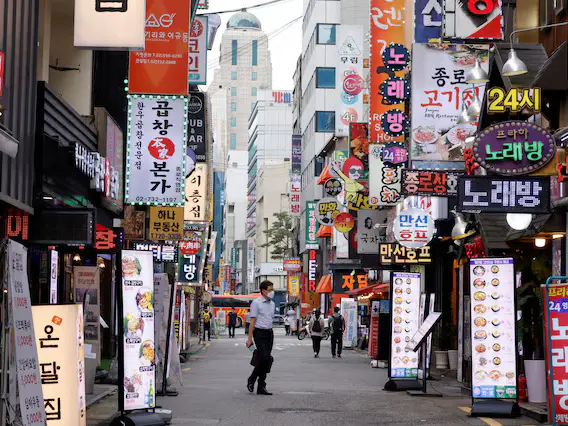
A man walks on a nearly empty street in Seoul, South Korea, July 12, 2021. Photograph: (Reuters)
Analysts have warned that while South Korea's government spending may provide a temporary boost, growth could soften in the coming quarters, especially with the looming risk of higher tariffs from the US.
South Korea’s economy showed resilience in the second quarter of 2025, posting a 0.6 per cent growth compared to the previous quarter, reversing a 0.2 per cent contraction. The rebound was driven by stronger-than-expected exports, particularly in semiconductors, and a boost in consumer spending. The growth surpassed analysts' expectations, offering a glimmer of hope amid ongoing trade tensions and domestic financial risks. The economic bounce-back was largely fuelled by exports, which rose 4.2 per cent quarter-on-quarter in the April-June period. This surge was particularly notable in semiconductor shipments, which jumped significantly due to heightened global demand for AI-related technologies.
Despite the looming risk of renewed tariffs from the United States, South Korea’s exports showed remarkable resilience. “In the second quarter, the impact of tariffs was limited, thanks to robust semiconductor exports and front-loading by businesses ahead of the expected tariff adjustments,” said a Bank of Korea official. The trade-reliant economy has been under pressure due to the US’s imposition of tariffs, with additional tariffs on products like autos and steel. However, the latest surge in exports suggests that the country’s technological edge remains a key asset.
Strong consumer spending, but risks loom on the horizon
Private consumption was another bright spot, rising by 0.5 per cent quarter-over-quarter. This improvement came as consumer sentiment picked up, buoyed by political stability after President Lee Jae Myung’s election in early June. Lee’s administration introduced a supplementary budget, including a consumer voucher program, to stimulate domestic demand.
Despite this recovery in consumption, domestic investment in construction and facilities fell by 1.5 per cent, indicating that the economy's growth remains uneven. Analysts have warned that while government spending may provide a temporary boost, growth could soften in the coming quarters, especially with the looming risk of higher tariffs from the US.
Central bank holds steady, eyes on tariff talks
Trending Stories
)
)
)
&im=FitAndFill=(700,400))
)
)
)
)
)
)
)
)
)
)
)
)
)
)
)
)
)
)
)
)
)
)
)
)
)
)
)
)
&im=FitAndFill=(700,400))
)
)
)
&im=FitAndFill=(700,400))
)
The growth figures offer some relief to the Bank of Korea (BOK), which has been balancing concerns about financial stability and economic recovery. The central bank held interest rates steady in July, citing concerns over the overheated housing market and rising household debt. However, with the economy showing signs of growth, the BOK may delay further rate cuts, at least until the fall.
The government’s supplementary budget is expected to provide a modest lift to GDP, but economists caution that the slowdown in construction and investment may act as a drag on growth in the latter part of 2025.
South Korea’s economy continues to be highly vulnerable to external pressures, particularly from the United States, which has threatened to impose a 25 per cent tariff on South Korean exports from August 1 if trade negotiations do not yield results. While semiconductor exports may cushion the blow, other sectors like automotive and steel remain at risk.
As the government and central bank continue to navigate these challenges, much of the country’s economic momentum in the second half of 2025 will hinge on the outcome of ongoing trade talks with Washington.