

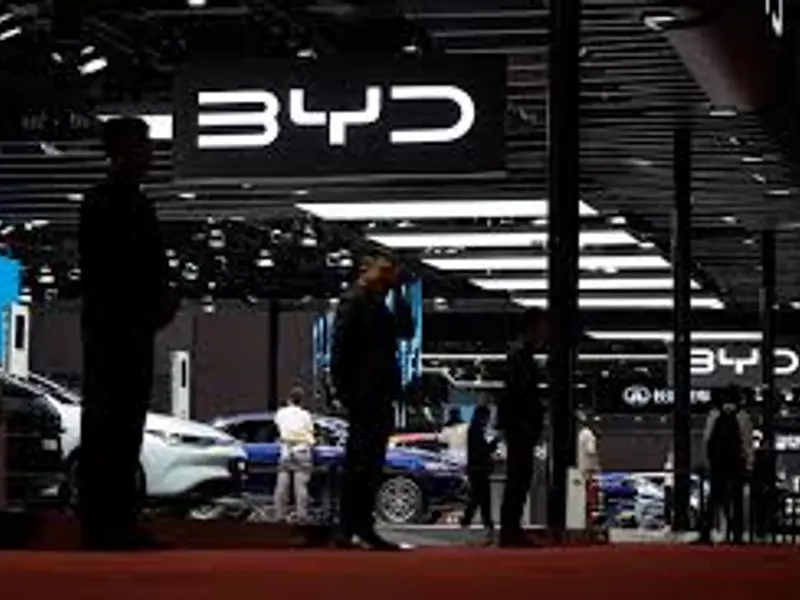
China’s electric vehicle (EV) industry is facing significant challenges as fierce price competition, declining profit margins, and mounting costs put pressure on manufacturers.
According to a recent report by J.P. Morgan Chase, average discounts on vehicles reached a record high of 16.8 per cent in April, nearly double the 8.3 per cent discount seen in 2024 overall. This aggressive price war has slashed profit margins for most EV makers to around 10 per cent this year, a significant decline from about 20 per cent just four years ago.
The situation is worsened by the fact that only three out of more than 50 EV manufacturers in China—BYD, Li Auto, and Seres—are currently profitable. These companies, along with a handful of others, are navigating a brutally competitive market that has made it more difficult to balance development and marketing costs while maintaining any semblance of profitability.
Small players struggling
As the price war intensifies, many smaller EV startups are struggling to survive. With a combination of high development costs, increased marketing spend, and shrinking margins, many smaller manufacturers have yet to post a profit. The situation has led analysts to predict consolidation in the sector, with smaller players likely to be either acquired or forced out of the market altogether.
In response to the mounting pressure, several of China’s four major publicly traded premium EV makers—including Nio, Xpeng, Geely’s Zeekr unit, and Stellantis-backed Leapmotor—have announced restructuring plans to stem their losses.
Trending Stories
&im=FitAndFill=(700,400)&imwidth=180&imheight=135&format=webp&quality=medium)
Navratri 2026: 9 days, 9 forms of Goddess Durga and 9 colours- Check the complete list
&imwidth=180&imheight=135&format=webp&quality=medium)
Russian woman and Bihar boy's love story goes viral after she reaches India to marry him
&imwidth=180&imheight=135&format=webp&quality=medium)
Arijit Singh 9-city India stadium tour to start from January: Check venue and ticket prices
&imwidth=180&imheight=135&format=webp&quality=medium)
F1 set to return to Africa for first time since 1993
&imwidth=180&imheight=135&format=webp&quality=medium)
'Don't ever mess with nature!': Trump’s tiger attack post triggers social media backlash as victim's family issues heartbreaking tribute
&imwidth=180&imheight=135&format=webp&quality=medium)
US judge blocks Trump administration sanctions on human rights groups supporting Gaza war crimes investigation
&imwidth=180&imheight=135&format=webp&quality=medium)
Washington calls for 'de-escalation' as Ethiopia-Eritrea tensions fuel war fears
&im=FitAndFill=(700,400)&imwidth=180&imheight=135&format=webp&quality=medium)
Which jobs are safest from humanoid robots?
&imwidth=180&imheight=135&format=webp&quality=medium)
US midterms: Trump rallies behind Husted as Brown mounts challenge in crucial Ohio race
&imwidth=180&imheight=135&format=webp&quality=medium)
US police foil alleged mass shooting plot targeting Illinois Hindu temple during Navratri; 19-year-old’s manifesto called Indians ‘subhumans’
&imwidth=180&imheight=135&format=webp&quality=medium)
‘Rise up, young patriots!’: American singer Mary Millben says US donors funding CJP, backs Modi govt
&imwidth=180&imheight=135&format=webp&quality=medium)
Nobel Peace Prize winner Navi Pillay calls on US to 'get back to' being defender of human rights
&imwidth=180&imheight=135&format=webp&quality=medium)
Iran war: Will Trump, Netanyahu escalate conflict ahead of crucial elections? | Race to Power
&imwidth=180&imheight=135&format=webp&quality=medium)
Who is Abu Dhabi royal Mahrah Al Nahyan, found unconscious on London street with toddler after cocaine use
&imwidth=180&imheight=135&format=webp&quality=medium)
Iranian woman, 23, handed death sentence for ‘blasphemy’ in social media post; appeals for help
&imwidth=180&imheight=135&format=webp&quality=medium)
'Turn approver, resign, we'll forgive you': Rahul Gandhi claims receiving messages from CEC Gyanesh Kumar
&imwidth=180&imheight=135&format=webp&quality=medium)
'Leakers should be shot': Trump rages over leak of US military plans to attack Iran, slams media
&imwidth=180&imheight=135&format=webp&quality=medium)
Somaliland celebrates after Trump calls it 'a totally different country', raise hopes of US recognition
&imwidth=180&imheight=135&format=webp&quality=medium)
Bangladesh man killed after mob storms hospital, drags him away over blasphemy allegations
&imwidth=180&imheight=135&format=webp&quality=medium)
‘My president, I mean my husband’: Trump's new press secretary Katie Zacharia's first briefing goes off the rails in 14 minutes
&imwidth=180&imheight=135&format=webp&quality=medium)
Mars is not for man: Human heart is too weak to survive the trip, study shows
&imwidth=180&imheight=135&format=webp&quality=medium)
Sheikh Hasina warns of 'deep sense of insecurity' among Bangladesh's minorities in Durga Puja message
&imwidth=180&imheight=135&format=webp&quality=medium)
FBI refutes media report claiming Kash Patel is in Russia for talks, says he is in Virginia
&imwidth=180&imheight=135&format=webp&quality=medium)
'Ouch!!! That must hurt': Kangana Ranaut hails Kamal Haasan's sharp reply to Elon Musk over Starlink row
&imwidth=180&imheight=135&format=webp&quality=medium)
Girl 'dead' for 8 hours wakes up at her own funeral, dad insists she wasn't breathing
&im=FitAndFill=(700,400)&imwidth=180&imheight=135&format=webp&quality=medium)
New OTT releases this week (October 12-18, 2026): Sacrifice, Koffee with Karan S9, Roadies Rebirth- 6 titles coming on Netflix, JioHotstar and more
&imwidth=180&imheight=135&format=webp&quality=medium)
Did the US withhold missile warnings? Ukraine questions Washington's 'bad weather' explanation after Russian strikes kill six, cut power to 600,000
&imwidth=180&imheight=135&format=webp&quality=medium)
US Singer Mary Millben alleges foreign funding for CJP, warns against anti-Modi forces: All you need to know
&imwidth=180&imheight=135&format=webp&quality=medium)
Global energy crisis hits Indian economy
&imwidth=180&imheight=135&format=webp&quality=medium)
Hidden video recording device found on Australian Navy ship amid claims of secret filming
&imwidth=180&imheight=135&format=webp&quality=medium)
'White supremacist' terror plot against Illinois Hindu temple foiled by jammed gun: Who is Alexandros Paporakis?
&imwidth=180&imheight=135&format=webp&quality=medium)
Zelensky feels betrayed by Trump, urges Musk to restore Starlink in Ukraine; Musk responds
&imwidth=180&imheight=135&format=webp&quality=medium)
'Girls are uncomfortable': Salman Khan calls out paparazzi for bad angles, speaks on PR on Koffee With Karan
&imwidth=180&imheight=135&format=webp&quality=medium)
After flydubai co-pilot attack, Air France bans Pakistani, Muslim-majority crew on Israel flights
&imwidth=180&imheight=135&format=webp&quality=medium)
US midterms 2026: Trump under election watch? Democrats deploy 100 observers across nine states
Despite these financial challenges, the Chinese government has not been able to rein in the price war. Industry officials and the government in Beijing have called for an end to the price war, but the market has failed to respond. Even with calls for price discipline, the brutal discounts continue, and there has been little sign of a significant surge in demand for EVs.
Exports provide a potential lifeline
While domestic pressures remain severe, Chinese EV manufacturers have found some relief in export markets. The demand for Chinese-made electric cars abroad has been growing steadily, with EVs accounting for 33 per cent of China’s total vehicle exports in the first four months of 2025. This figure is up from around 25 per cent in the past two years. In April, pure electric and plug-in hybrid vehicles accounted for 38 per cent of the country’s outbound shipments.
Analysts believe that exports could help shore up profitability for Chinese EV manufacturers in the face of fierce domestic competition.
JPMorgan has forecast that Chinese EVs will comprise 80 per cent of China's car market by 2030, a significant leap from the 43 per cent share they held between January and April of 2025. However, even as exports rise, the path to profitability for domestic EV makers remains a challenge.
BYD changing gears quickly
Amid these financial pressures, BYD, China’s largest electric vehicle assembler, is attempting to stay ahead of the competition by offering advanced autonomous driving features in many of its models, including those priced as low as $9,555. BYD has rolled out its “God’s Eye” advanced driver-assistance system (ADAS) across nearly all its models priced above 100,000 yuan ($13,688), including some of its most affordable vehicles like the Seagull, which starts at just 69,800 yuan.
This move, which undercuts competitors such as Tesla, has sparked excitement in the market, as analysts believe it could help BYD differentiate itself and avoid the margins squeeze currently affecting many of its rivals.
BYD’s founder, Wang Chuanfu, has even suggested that smart driving features could become as essential as seatbelts or airbags in the future, further cementing the company's position as a leader in the EV sector. However, other manufacturers, including Xpeng, will face tremendous pressure to keep up with these advancements, especially given BYD’s ability to offer such technologies at lower price points.
The road ahead for China's EV makers
Despite the intense price war and declining margins, there is a clear path forward for Chinese EV makers. Experts believe that exports will be crucial for the future profitability of Chinese manufacturers. Meanwhile, the continued rise of smart driving and technological innovations from companies like BYD could help drive sales in both domestic and international markets.
Nevertheless, the short-term outlook for Chinese EV manufacturers remains clouded. With most players in the sector struggling to achieve profitability, the ongoing price war shows little sign of abating, leaving many smaller firms vulnerable. As the market consolidates, it will be interesting to see whether the winners of the EV battle will be those who can offer affordable prices or those who can innovate and bring new technologies to the table.