
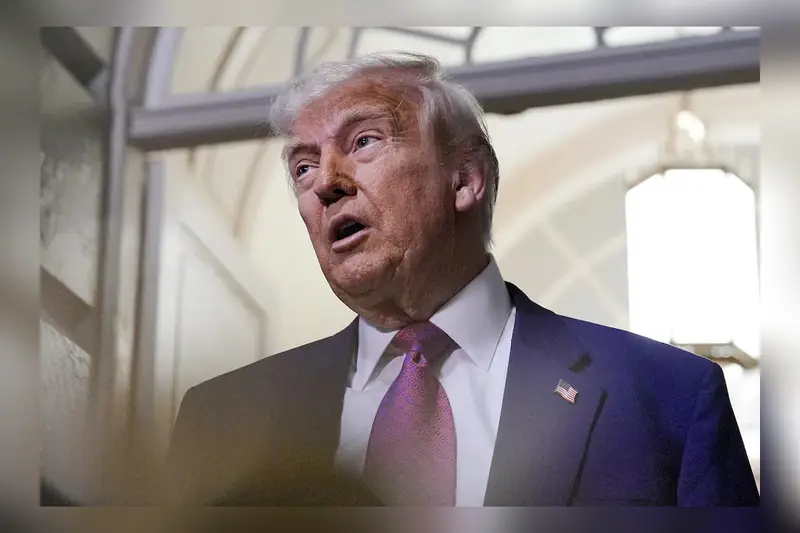
In a surprise move, on July 30, US President Donald Trump announced that the United States had reached a trade deal with Pakistan, agreeing to jointly develop the South Asian nation’s underexplored oil reserves. The deal, touted by Trump as a major step forward in bilateral relations, aims to unlock Pakistan’s “massive” oil potential, which remains largely untapped due to limited technical expertise and infrastructure challenges.
In a post on Truth Social, Trump expressed optimism about the partnership: “We have just concluded a deal with the country of Pakistan, whereby Pakistan and the United States will work together on developing their massive oil reserves.” He added that officials were in the process of selecting the oil company that would lead the effort, hinting at a future where Pakistan might even sell oil to India. “Who knows, maybe they’ll be selling oil to India some day!” he said, a remark likely aimed at putting pressure on neighbouring India over its continued purchase of Russian energy.
Oil reserves and unclear prospects

Details of the agreement remain sparse, particularly regarding the size of Pakistan’s oil reserves. While Trump referred to them as “massive,” Pakistan's proven reserves are much smaller than India’s. As of 2016, Pakistan’s reserves stood at around 353 million barrels, just under 10 per cent of India’s reserves, which were estimated at 4.8 billion barrels. However, Pakistan has made recent offshore discoveries that could potentially increase its oil reserves, although the full extent remains uncertain.
What is clear is that Pakistan’s energy sector faces considerable hurdles. The country has historically relied on oil imports from West Asia, and although it has identified offshore oil deposits, limited technical expertise and financial resources have hindered the development of these reserves. Pakistan has made several attempts to attract foreign investment, but these efforts have faced challenges, including geopolitical instability and security concerns, especially in its offshore areas.
Even if the US helps Pakistan unlock these reserves, the oil market dynamics suggest limited impact on India’s energy needs. India remains heavily dependent on oil imports, but it is far better positioned than Pakistan to meet its own energy demands, producing significantly more crude oil per day and holding much larger proven reserves. India’s proven reserves and daily production far exceed Pakistan's, with India producing over 600,000 barrels per day in February 2025 compared to Pakistan’s 68,000.
Trending Stories
)
The Early Spring is proof not everyone can talk about their real feelings, and it is perfectly OK
)
UN votes to ‘correct the map’ as India backs fairer world view
)
Nigerian Navy discovers 99,000 litres of suspected stolen, illegally refined products as it intensifies anti-crude oil theft operations
)
Who is Aditi Paudel? 17-year-old becomes Japan's first literacy ambassador
)
Bengaluru: Officials find 40 kg expired chilli at chairman's club
)
Jaishankar rejects trade link to ending Ukraine war
)
Israeli strikes on Lebanon kill three, injure 23 despite truce
)
Alpine glacier was covered with sheep wool sheets to prevent melting. It worked
)
South Korea mulls deploying military assets to Strait of Hormuz
)
World's fifth-largest economy, British army can't afford to train
)
Breaking | Vance takes the podium: First White House briefing since Leavitt's exit
)
Taiwan raises 'concerns' over China's missile test
)
BRICS 2026: $1 trillion sovereign capital set to converge in Delhi for first iBRICS Summit
)
What is Iran's Pickaxe Mountain that Trump has again threatened to bomb?
)
UN votes to correct world map that visually shrank Africa for 450 years
)
Former NewJeans member Danielle launches YouTube channel, hints at new solo journey
)
Bangladesh batter Towhid Hridoy creates history with 350 not out in South Africa
)
Brendan Fraser’s transformation fuels The Mummy 4 excitement as fans welcome back Rick O’Connell
&im=FitAndFill=(700,400))
Krishna Janmashtami 2026: From Dhaniya Panjiri to Makhana Kheer- 5 best sweet dishes perfect for celebrating Lord Krishna’s birth
)
Donald Trump plans to travel to Ireland on Qatari-donated jet amid security concerns
)
Nazi-looted art to return to Jewish heirs
)
Eight killed in Kerala’s Thrissur after car rams into lorry parked on highway
&im=FitAndFill=(700,400))
Why Russian fighter jets use bulky, low-pressure tyres compared to US jets
)
FBI-wanted fraud accused arrested in Jalandhar over $600,000 scam
&im=FitAndFill=(700,400))
Why US tanks weigh over 20 tons more than Russian tanks
&im=FitAndFill=(700,400))
New Friday OTT releases (September 4, 2026): GDN, Dhamaal 4, Jagamae Sangeetham- Watch 6 new movies and TV shows on Netflix, Prime Video and more
)
Killing the Himalayas slowly: Human urine is melting a glacier on Mount Everest
Trump's criticism of India and trade tensions
The announcement of the oil deal with Pakistan coincided with President Trump’s sharp criticism of India. In a separate Truth Social post, Trump declared a 25 per cent reciprocal tariff on all Indian goods and a penalty for India’s ongoing purchases of Russian military equipment and energy. Trump accused India of being one of Russia’s largest energy customers, alongside China, and suggested that the country’s continued reliance on Russian oil amid sanctions was unacceptable.
Trump’s jibe at India, which has long been a strategic partner of the US in the Indo-Pacific region, reflects growing trade tensions. His administration has been vocal about India’s tariffs on American goods and its reluctance to open its agricultural and dairy markets to American imports. Trump’s new trade measures, set to take effect from August 1, could significantly impact India’s exports to the US, particularly as the two nations had been negotiating a broader trade deal.
While the US helping Pakistan develop its oil resources could have some economic benefits for the country, analysts suggest that the main motivation for the deal is geopolitical. The US is likely seeking to strengthen Pakistan’s energy sector while applying pressure on India to diversify its energy imports away from Russia and consider purchasing more oil from the United States. This could reduce India’s dependence on Russian energy and, in turn, improve the prospects for American oil exports.
A new era of US-Pakistan ties?
The oil deal is seen as a sign of thawing relations between the US and Pakistan, which have long been marred by tension over issues like counterterrorism and military cooperation. Just weeks ago, President Trump hosted Pakistan’s army chief, Field Marshal Asim Munir, for rare talks at the White House, signalling a shift in diplomatic ties. The two countries have also been discussing expanding cooperation in critical minerals, with Pakistan offering to boost American imports of cotton and soybeans.
The deal to develop Pakistan’s oil reserves may not drastically change the regional energy landscape, but it could mark the beginning of a new chapter in US-Pakistan relations, with economic and geopolitical implications for the wider South Asian region.
(With inputs from agencies)