
&imwidth=800&imheight=600&format=webp&quality=medium "Nippon Steel seals $14.9 billion US Steel deal with Trump’s golden share veto: CEO says ‘we won’t be constrained’")
Japanese steel giant Nippon Steel has completed its $14.9 billion acquisition of US Steel, capping off an 18-month saga that reshaped the geopolitics of steel and placed sweeping new oversight powers in the hands of the Trump administration.
As confirmed by both companies and first reported by Reuters, the deal,which was initially opposed under President Biden, secured final approval after Nippon agreed to a rare national security agreement. It includes a “golden share” held by the US government, granting it veto power over critical business decisions at the iconic Pittsburgh-based steelmaker.
What is the golden share, and why does it matter

Under the agreement inked with the Trump administration, the golden share gives Washington the authority to veto any relocation of US Steel’s headquarters, changes to its name, job offshoring, or acquisitions of rival firms. President Trump will also name a board member to oversee the terms of the deal, according to Reuters.
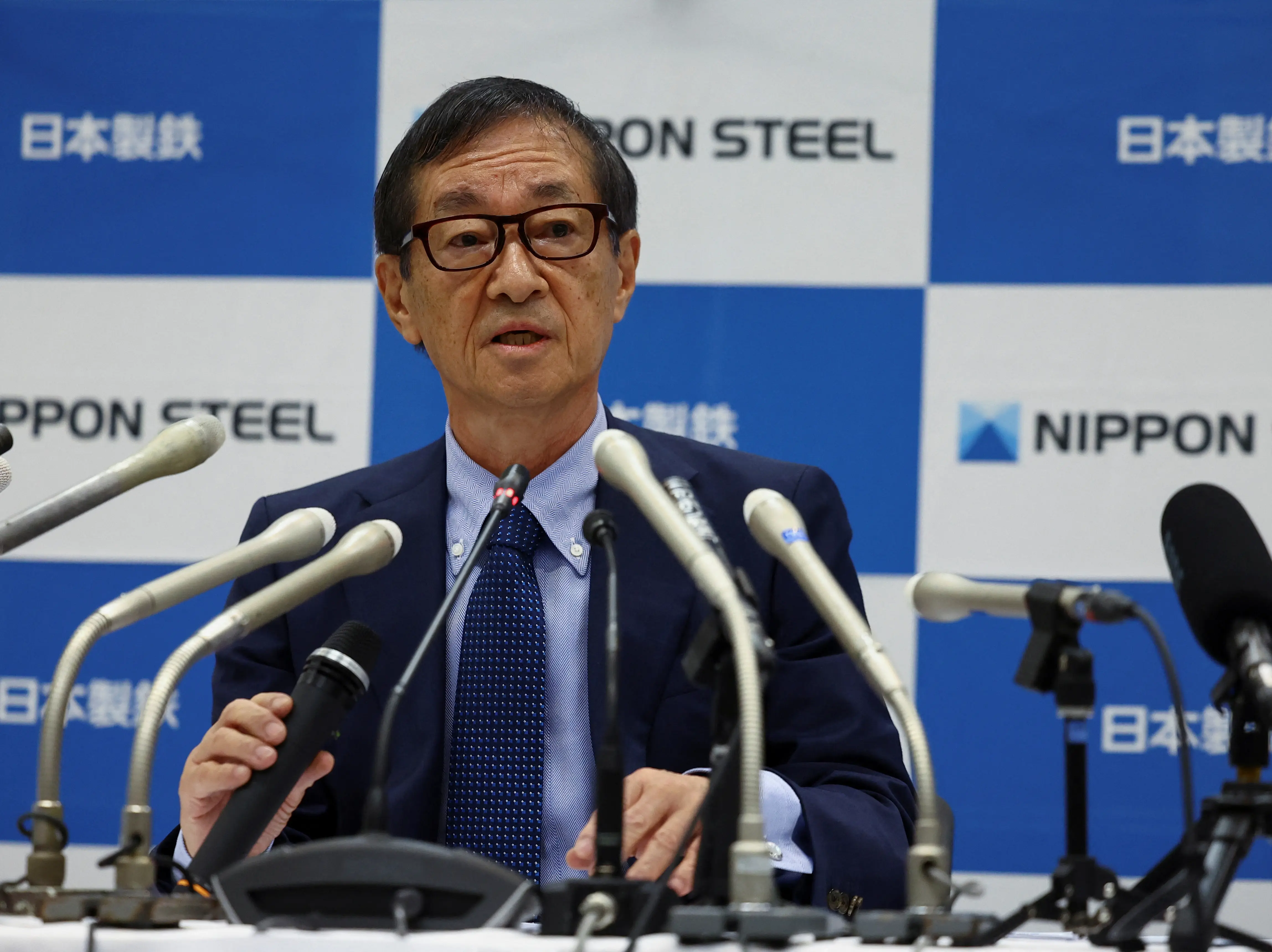
Nippon Steel’s CEO Eiji Hashimoto, however, downplayed concerns about management constraints.
“We won’t be constrained in pursuing anything we aim to do… We retain sufficient managerial freedom,” Hashimoto told reporters at a Tokyo press conference on Thursday, as quoted by Reuters. He said the golden share structure was proposed by the Japanese side to meet US expectations over investment oversight.
Trending Stories
)
Nigeria: Protesters take to the streets, police fire shots
)
US-Iran war: Tehran draws red lines — seven demands before any peace talks
)
Russia-Europe tensions: Polish PM warns Russian attacks could test NATO's unity
&im=FitAndFill=(700,400))
‘Not the US or China’: These are the countries leading the world in arable land
)
Trump says he'll build an 'AI Force' and appoint a czar, for 'high IQ' people only
)
EXCLUSIVE | Singer Hanita Bhambri on her Toxic debut, working with Vishal Mishra and more
)
Sikh bus driver assaulted, bus stolen and rammed into cars in England; video surfaces
)
Mark Carney mimics Trump in hilarious moment over C$70 billion clean-energy investment; room erupts in laughter
&im=FitAndFill=(700,400))
Before Extraordinary Minami Minami, these popular K-dramas got Japanese versions
)
'Were you here to sell chickpeas?': Wasim Akram criticises Babar Azam's captaincy
)
Aravana prasadam shortage at Sabarimala temple in Kerala triggers protests, TDB questioned
)
‘End of my career...’: NSA Doval recalls tense Sikkim mission when China captured Indian intelligence team
)
Report: Iran rebuilding Taleghan 2, nuclear site tied to past weapons research, hit twice by Israel
)
Trump defends AI amid growing alarm, announces new 'AI force' and promises an 'AI czar'
)
Iran sets 7 conditions to end war with US: What are Tehran’s demands?
)
Trump announces ‘AI Force’ as debate grows over AI risks and regulation
)
China may have gained access to US's classified F-35 jets; parts meant for repairs diverted to Hong Kong, sparking Pentagon inquiry
)
Man breaks open wall hiding hundreds of books since 15 years
)
Gaza under attack: Health chief's son killed in IDF strikes
)
S Jaishankar, former Army chief among high-profile names issued Delhi SIR notices
)
Arvind Kejriwal, family members, Delhi CM Rekha Gupta get SIR notices
)
AI actress Tilly Norwood glitches mid-interview, switches from English to Chinese | Watch
)
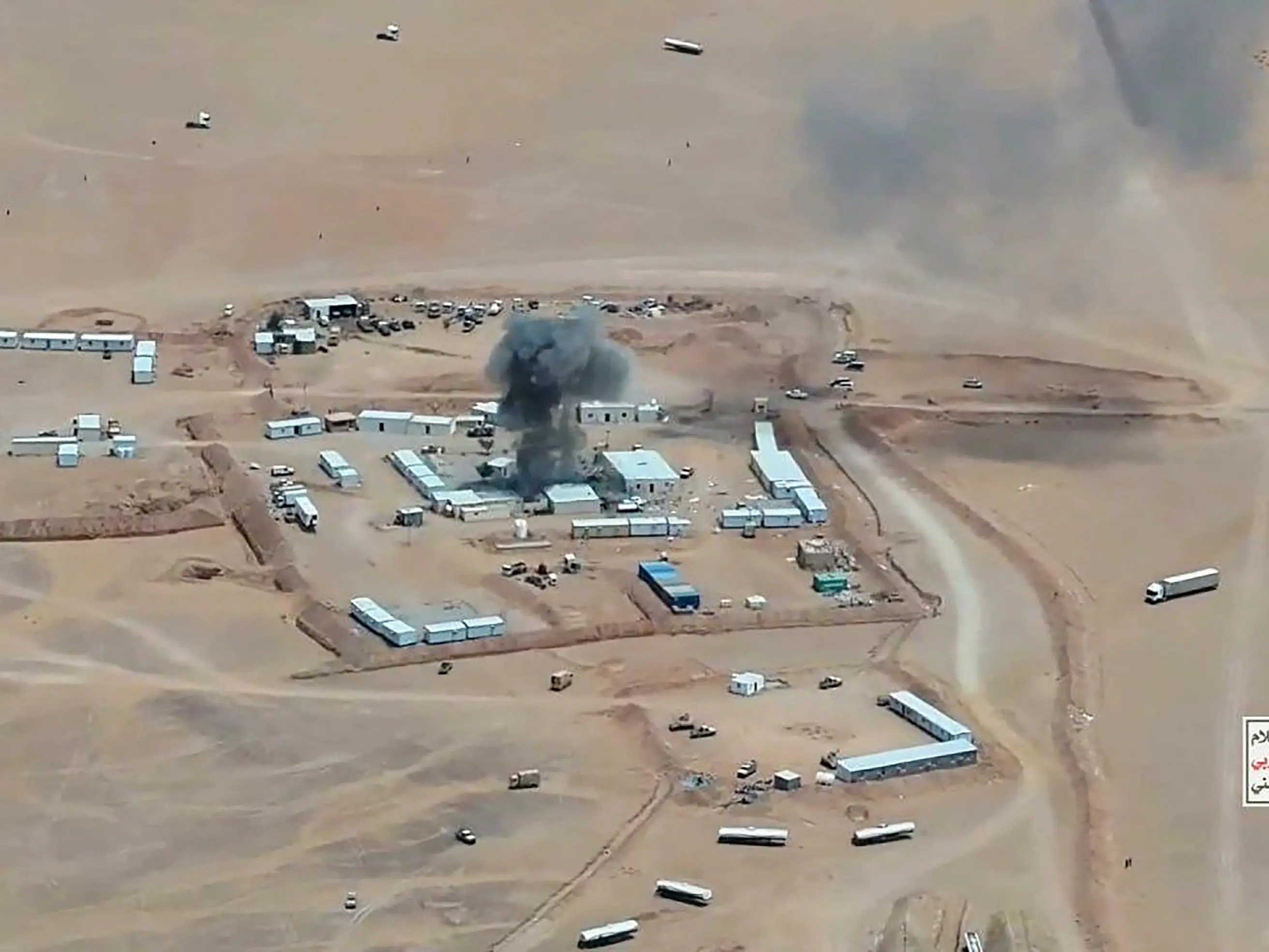
Saudi vs Houthis: Houthis claim missiles & drones used in attack on key Saudi sites
)
Ed Sheeran addresses Macklemore's removal, Gaza conflict during Philadelphia concert: 'I cannot hide how I feel'
)
‘Will go to any extent’: Pakistan vows to defend Saudi Arabia amid Houthi attacks
66 years of the Indus Waters Treaty: How India and Pakistan settled a bitter river dispute
)
The Verdict | When precision fails: US commits war crime in Minab school strike, UN finds
)
9 women found dead near Johannesburg: South Africans rally, demand 'enough' to femicide
)
Kampala-Ankara rift deepens: Uganda suspends military ties, seeks Fred Lumbuye's extradition
)
Several petrol pumps, other businesses to refuse UPI payments above Rs 2,000 from Oct 16: Is it legal?
)
US-Iran war: Tehran sets seven conditions to re-engage in talks with US
)
Reacher star Alan Ritchson opens up about alleged blackmail, suicide attempt during difficult period
)
West Indies Squad for India Series: Hetmyer included for T20Is, Holder rested
)
China now makes advanced memory chips without the machines it was banned from buying
&im=FitAndFill=(700,400))
How many F-35s does Britain, Japan and Israel have?
)
Harry Brook targets long reign at top of T20I rankings after Sri Lanka sweep
)
Russia's deadly Ukraine strikes kill 2 in Sumy, hit Dnipro mall
)
Russia holds first parliamentary elections since the beginning of the Ukraine war
&im=FitAndFill=(700,400))
Meet top 5 Indian batters with fastest T20I centuries
)
Raphinha hat-trick powers Barcelona to 3-1 win over Sevilla in La Liga
)
Trump’s key role
The Nippon–US Steel deal was initially in jeopardy. Both Trump and then-President Joe Biden opposed the merger during the 2024 election campaign, citing national security and voter sentiment in battleground states like Pennsylvania.
Biden’s administration ultimately blocked the deal, prompting legal challenges. But once Trump returned to office, his team reopened a 45-day national security review. By May 2025, Trump had signalled support, calling Nippon Steel a “great partner” at a campaign rally, according to a report by CNN.
The final agreement represents a significant win for the Trump administration’s industrial policy, which combines protectionism with foreign investment, so long as it meets US strategic goals.
$11 billion investment, no offshoring promises
Nippon Steel has committed to investing $11 billion in the US by 2028. These funds will go toward expanding capacity, building new mills, and bolstering the American steel supply chain.
“This deal is not only a necessary and effective strategy to restore our company to the number one position globally, but also the only path for US Steel to revitalise and grow,” Hashimoto told reporters, as per Reuters.
Importantly, Hashimoto pledged that there would be no relocation of headquarters or offshore job transfers. > “We have no intention of relocating its headquarters or shifting production or jobs overseas,” he stated.
Vice Chairman Takahiro Mori added that Nippon Steel may consider capital raising options to fund its US expansion.
Strategic move amid tariff walls
Moody’s Ratings analyst Roman Schorr flagged the increased debt burden as a “clear credit negative” but acknowledged that strategic benefits from expanding into the US market, shielded by Trump-era 50 per cent steel tariffs, could offset the risk.
“US Steel brings a strong asset base following recent investments, complementing Nippon Steel’s portfolio,” Schorr said in a note, as quoted by Reuters.
Shares of Nippon Steel rose 2.1 per cent following the deal’s announcement, outperforming Japan’s Nikkei 225 index, which fell 0.7 per cent.
Union opposition and a political backdrop
The United Steelworkers union had previously opposed the sale, fearing job losses and foreign control. However, the deal’s survival hinged on assurances built into the golden share arrangement, a compromise designed to protect domestic interests and ensure long-term investment in the US steel sector.
The merger also reflects a growing global trend: strategic foreign acquisitions are increasingly subject to political scrutiny, particularly when they involve critical sectors like steel, semiconductors, or energy.
Nippon Steel's global vision
With this acquisition, Nippon Steel, currently the world’s fourth-largest steelmaker, gains a stronger foothold in the United States, tapping into the Biden-era infrastructure boom and reshaping global supply chains under Trump’s renewed tariff regime.
“Our global strategy is starting to take shape,” Hashimoto said. “We struggled to complete this deal, but now we can move forward.”
(With inputs from the agencies)