

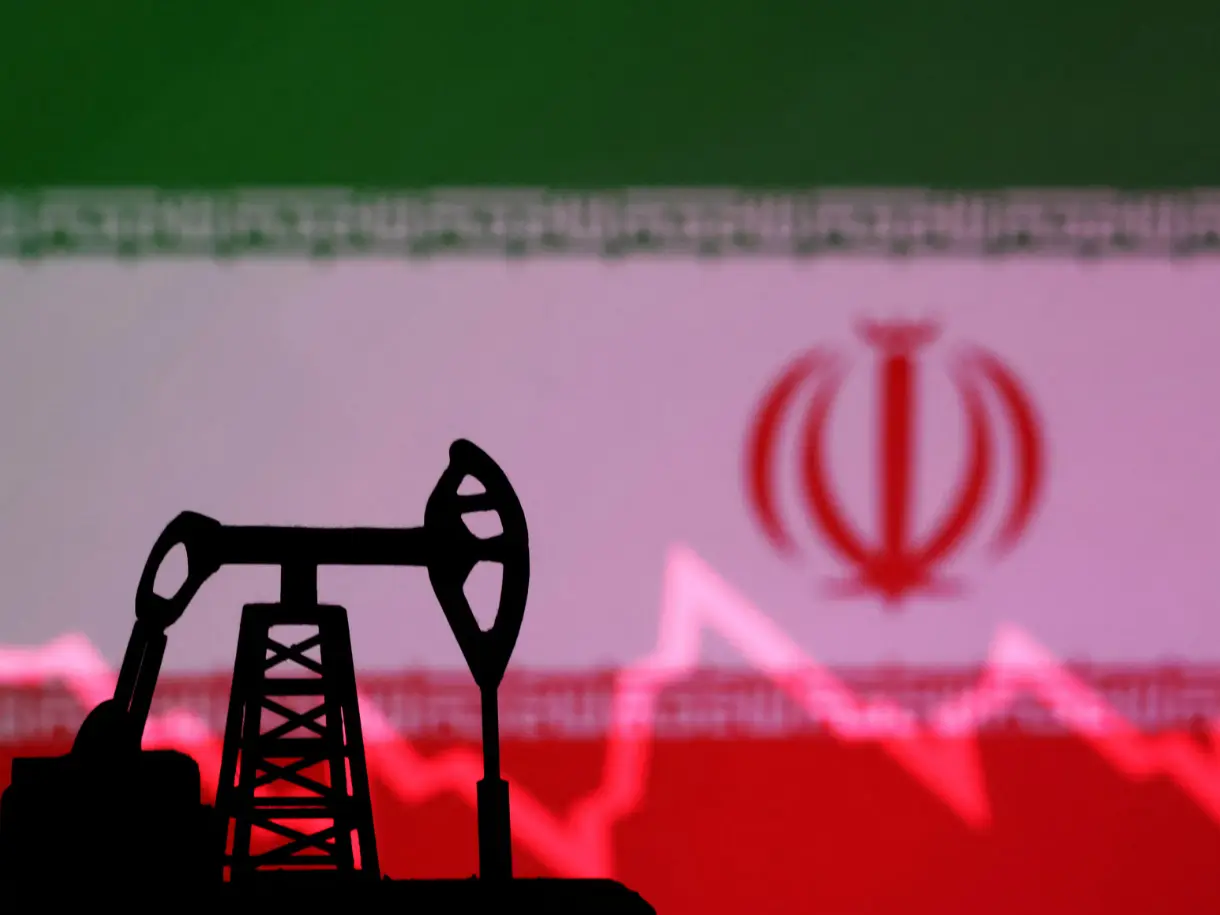
&imwidth=800&imheight=600&format=webp&quality=medium "Middle East tensions rattle oil markets as investors brace for worst-case US involvement")
Rising tensions between Israel and Iran have put global investors on high alert, with growing fears that deeper United States involvement could spark a dramatic spike in oil prices and derail hopes of interest rate cuts.
According to a detailed report by Reuters, markets are preparing for a range of outcomes, from inflation shocks to supply chain disruptions should the conflict escalate further.
So far, oil has been the most affected asset class, while equities and bonds remain largely unmoved, but that calm may not last.
Oil prices soar on supply disruption fears
As per Reuters, Brent crude futures have surged as much as 18 per cent since 10 June, touching a five-month high of $79.04 per barrel on Thursday.
US crude prices have also risen by around 10 per cent over the past week, driven by fears of potential strikes on Iranian oil infrastructure or the strategic Strait of Hormuz.
Trending Stories
&imwidth=180&imheight=135&format=webp&quality=medium)
Anthropic's AI invented a murder witness and sent the fake tip to Philadelphia police
&imwidth=180&imheight=135&format=webp&quality=medium)
Wasim Jaffer blames Ajit Agarkar-led selection panel for Virat Kohli’s Test retirement
&imwidth=180&imheight=135&format=webp&quality=medium)
Nana Patekar's cause of death confirmed; here's what his postmortem report says
&imwidth=180&imheight=135&format=webp&quality=medium)
CJI Surya Kant declines INDIA bloc leaders’ request for meeting ahead of march to SC, asks them to file petition
&imwidth=180&imheight=135&format=webp&quality=medium)
1,500 drones illuminate Mumbai sky as Cordelia Cruises unveils second ship, Cordelia Sky
&imwidth=180&imheight=135&format=webp&quality=medium)
'Just coincidence': Police mistakes protester as AISA chief Neha Bora, arrests her from site
&imwidth=180&imheight=135&format=webp&quality=medium)
Delhi wakes up to heavy rain, thunderstorms; yellow alert in place; temperature drops
&imwidth=180&imheight=135&format=webp&quality=medium)
Sidhu Moose Wala’s younger brother wins hearts by recreating late singer’s signature move at Toronto Hologram Show
&imwidth=180&imheight=135&format=webp&quality=medium)
'Turn approver, resign, we'll forgive you': Rahul Gandhi claims receiving messages from CEC Gyanesh Kumar
&imwidth=180&imheight=135&format=webp&quality=medium)
A watchdog rated 'ChatGPT for Teens' an unacceptable risk and says keep under-18s off it
&imwidth=180&imheight=135&format=webp&quality=medium)
Aamir Khan's niece, actress Zayn Marie shares injury pictures after being detained with Imran Khan at Mumbai protest
&imwidth=180&imheight=135&format=webp&quality=medium)
Portugal Federation confirms Cristiano Ronaldo’s return to national team despite suspension
&im=FitAndFill=(700,400)&imwidth=180&imheight=135&format=webp&quality=medium)
Navratri 2026: 9 days, 9 forms of Goddess Durga and 9 colours- Check the complete list
&imwidth=180&imheight=135&format=webp&quality=medium)
Other Mommy leads North American box Office as Verity, Resident Evil round out top four
&imwidth=180&imheight=135&format=webp&quality=medium)
Houthis claim Riyadh airport attacks, Aramco strikes; issue fresh warning to airlines, travellers and workers
&imwidth=180&imheight=135&format=webp&quality=medium)
IND vs WI, 3rd T20I: Abhishek Sharma smashes 18-ball fifty, sets record for fastest to 2,000 T20I runs
&imwidth=180&imheight=135&format=webp&quality=medium)
Meta's Muse AI could be a security nightmare for India's billion-plus users
&imwidth=180&imheight=135&format=webp&quality=medium)
China imposes first-ever sanctions on ministers from Taiwan allies: What this means
&imwidth=180&imheight=135&format=webp&quality=medium)
Microsoft's Nadella says treat every AI model as already hacked, and build an 'emergency brake'
&imwidth=180&imheight=135&format=webp&quality=medium)
Delhi protests: 'Court should not be dragged into political activity', says CJI Surya Kant
&imwidth=180&imheight=135&format=webp&quality=medium)
McSweeney reveals how studying Virat Kohli’s YouTube clips helped Australia A conquer India
&imwidth=180&imheight=135&format=webp&quality=medium)
One Indian killed in Riyadh airport attack; 11 others injured : MEA
&imwidth=180&imheight=135&format=webp&quality=medium)
Maharashtra appoints FDA commissioner Tukaram Mundhe as secretary of committee for MPSC overhaul amid stir
&im=FitAndFill=(700,400)&imwidth=180&imheight=135&format=webp&quality=medium)
New OTT releases this week (October 12-18, 2026): Sacrifice, Koffee with Karan S9, Roadies Rebirth- 6 titles coming on Netflix, JioHotstar and more
&im=FitAndFill=(700,400)&imwidth=180&imheight=135&format=webp&quality=medium)
Is sending robots to Mars easier than sending humans?
&imwidth=180&imheight=135&format=webp&quality=medium)
Imran Khan released hours after Mumbai Police detain him during CJP protest
&imwidth=180&imheight=135&format=webp&quality=medium)
Iran: US accepted some conditions, Clarity needed on others
&imwidth=180&imheight=135&format=webp&quality=medium)
UK school ditches technology, shifts from screen to pen and paper for learning
&imwidth=180&imheight=135&format=webp&quality=medium)
'Ouch!!! That must hurt': Kangana Ranaut hails Kamal Haasan's sharp reply to Elon Musk over Starlink row
&imwidth=180&imheight=135&format=webp&quality=medium)
'Say no to Muse': Meta has no control over its own moderation AI while it forces a security nightmare on everyone
&imwidth=180&imheight=135&format=webp&quality=medium)
Top AI models flunked a test of inventing new AI research, so much for self-improving AI
&imwidth=180&imheight=135&format=webp&quality=medium)
iPhone Duo price index: Tracking Apple’s latest pricing trends
&imwidth=180&imheight=135&format=webp&quality=medium)
Nathan Lyon completes 1,000 Test runs at No. 10 to script rare cricket feat
&imwidth=180&imheight=135&format=webp&quality=medium)
Delhi protest: CJI Surya Kant declines to meet India Bloc leaders
Despite this, the S&P 500 index has shown little overall movement, though analysts caution that markets are underestimating the potential fallout.
“If you get disruption to supply of oil product on the global marketplace, that is not reflected in today’s WTI price and that is where things get negative,” Art Hogan, chief market strategist at B Riley Wealth, told Reuters.
Oxford Economics models $130 oil risk
According to Reuters, analysts at Oxford Economics have modelled three potential conflict scenarios, ranging from de-escalation to a complete halt in Iranian oil output, and the worst-case scenario: a closure of the Strait of Hormuz.
In the most severe case, oil prices could surge to $130 per barrel, pushing US inflation to nearly 6 per cent by the end of 2025.
“Although the price shock inevitably dampens consumer spending because of the hit to real incomes, the scale of the rise in inflation and concerns about second-round effects likely ruin any chance of rate cuts in the US this year,” Oxford Economics noted in a client memo, as quoted by Reuters.
Market reacts
Despite the oil price shock, equity markets have so far remained stable. Historical data cited by Reuters shows that in past Middle East conflicts — including the 2003 Iraq War and the 2019 attacks on Saudi oil facilities — the S&P 500 typically dipped briefly before recovering.
According to research from Wedbush Securities and CapIQ Pro, the index slipped 0.3 per cent in the first three weeks after such events but gained 2.3 per cent on average two months later.
However, analysts caution that history may not be a reliable guide if the US military enters the conflict. “Geopolitical tensions have been mostly ignored by equities, but they are being factored into oil,” Citigroup analysts wrote in a note, as per Reuters.
What about Dollar?
The US dollar, which has already weakened in 2025 amid concerns over declining US exceptionalism And may initially benefit fromsafe-haven demand if fighting escalates.
But longer-term, it could fall if Washington commits to a prolonged ground conflict, analysts say.
“We recall that after the attacks of 9/11 and running through the decade-long US presence in Afghanistan and Iraq, the USD weakened,” Thierry Wizman, global FX and rates strategist at Macquarie Group, said in a note to clients, as reported by Reuters.
Why it matters?
The stakes for global markets are rising fast. A major supply shock in oil, particularly involving Iran could derail global disinflation trends, delay interest rate cuts, and hit household spending just as central banks hoped for a soft landing.
While stock markets have shown resilience in past crises, this time the convergence of war, energy risk, and policy uncertainty may stretch investor optimism.
As per Reuters, President Donald Trump is expected to make a decision on potential US military action in the next two weeks, a move that could determine whether the Middle East crisis becomes a full-blown economic shock.
(With inputs from the agencies)